NASA's Next Flagship Telescope Just Arrived in Florida. It's Launching 8 Months Ahead of Schedule.
The Nancy Grace Roman Space Telescope arrived at Kennedy Space Center on June 21 aboard the Pegasus barge after an eight-day journey from Maryland. With a field of view 100 times larger than Hubble and a launch date of August 30, 2026, the observatory is eight months ahead of schedule and will survey a billion galaxies.
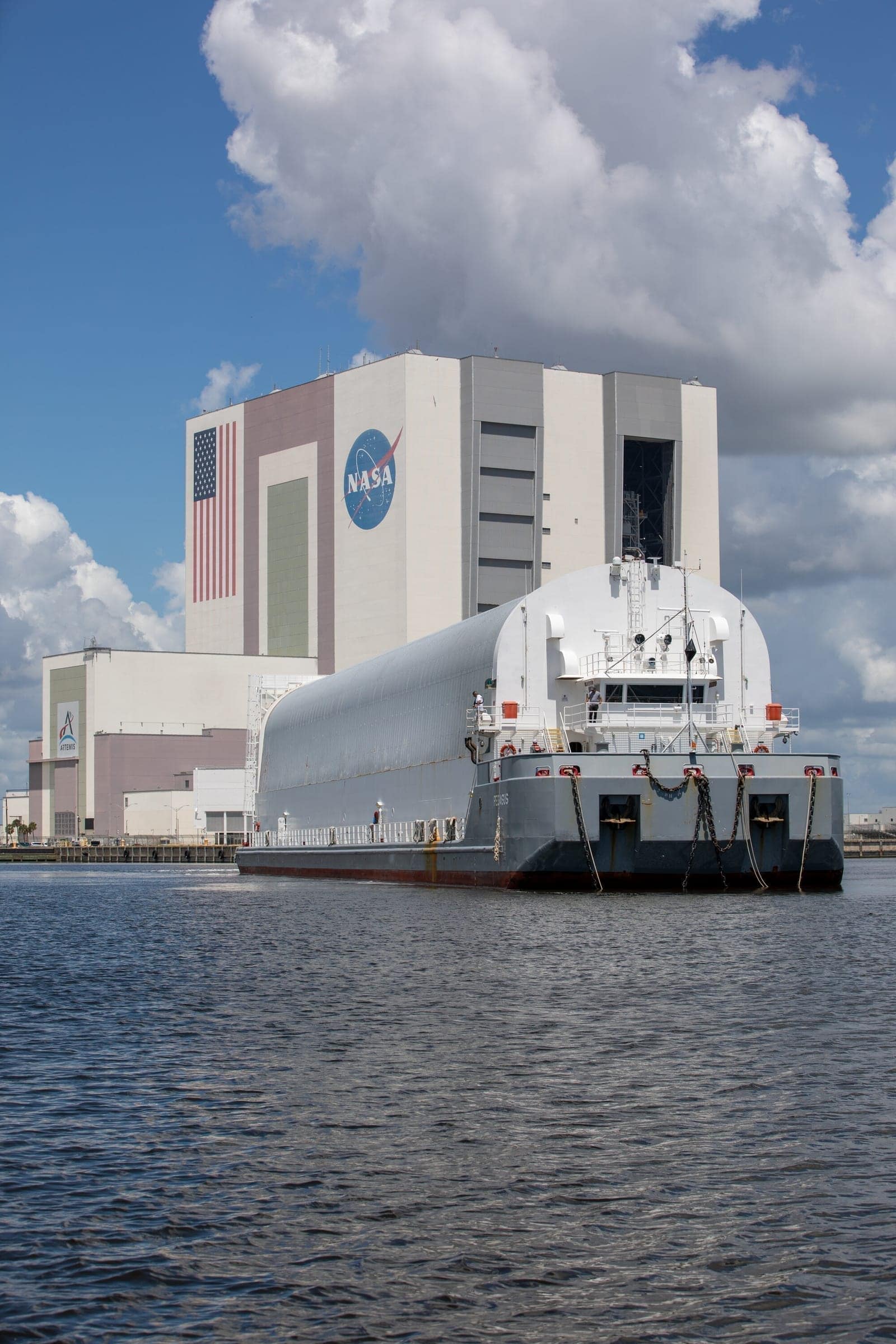
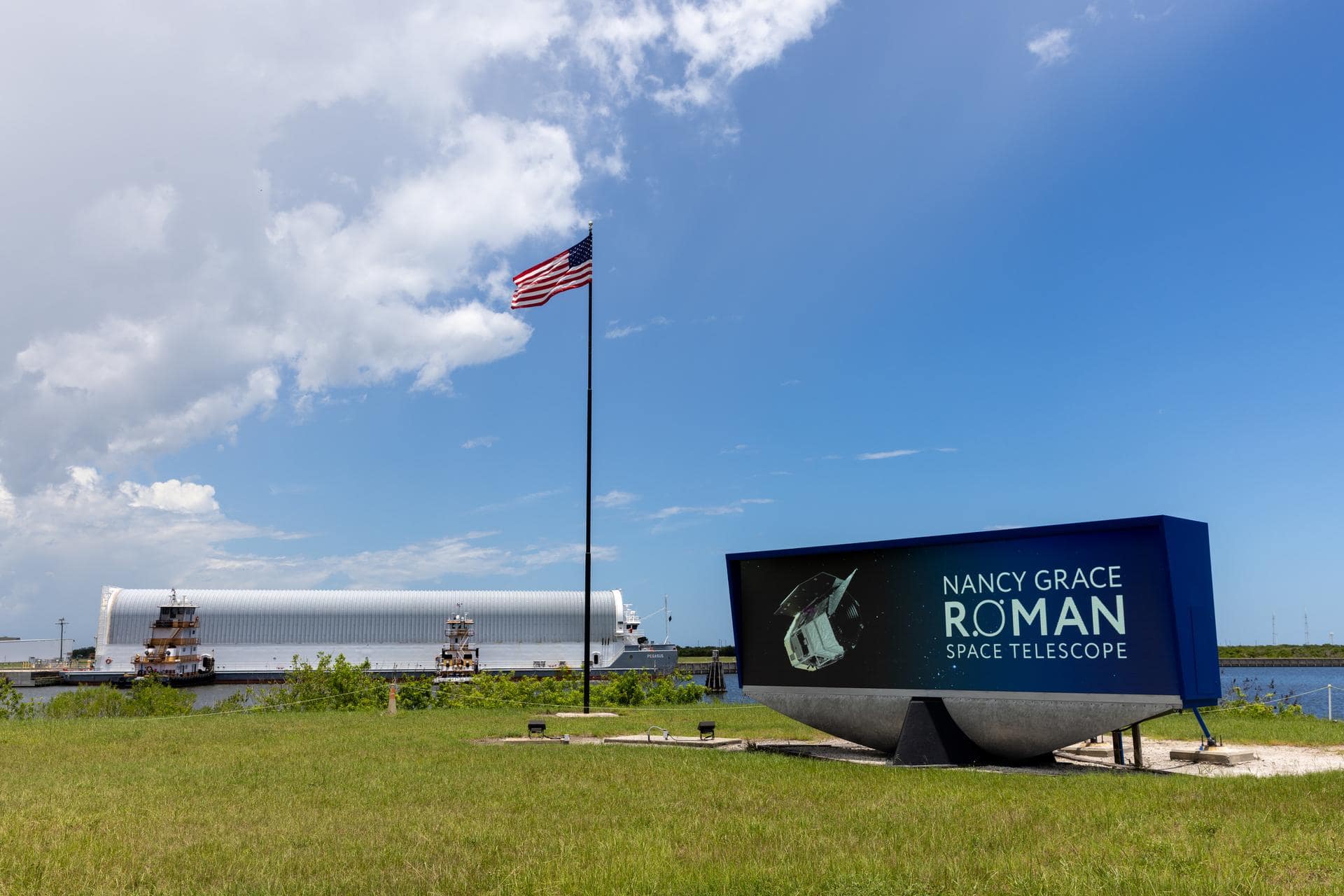
On Father's Day, June 21, 2026, a 310-foot barge nosed into the turn basin at NASA's Kennedy Space Center carrying a shipping container the size of a small house. Inside that container, wrapped in protective thermal blankets and mounted to a custom transport cradle, was the most powerful wide-field telescope ever built. It had spent eight days riding the Atlantic coast from Maryland, and it was eight months early.
The Nancy Grace Roman Space Telescope, NASA's next flagship astrophysics mission alongside JWST, has reached its launch site. If all goes to plan, a SpaceX Falcon Heavy will lift it from Pad 39A on August 30, 2026, sending it to a gravitational parking spot a million miles from Earth. Once there, it will photograph the sky with a field of view a hundred times larger than Hubble's and will survey the cosmos a thousand times faster.
A familiar shape, an unfamiliar scale
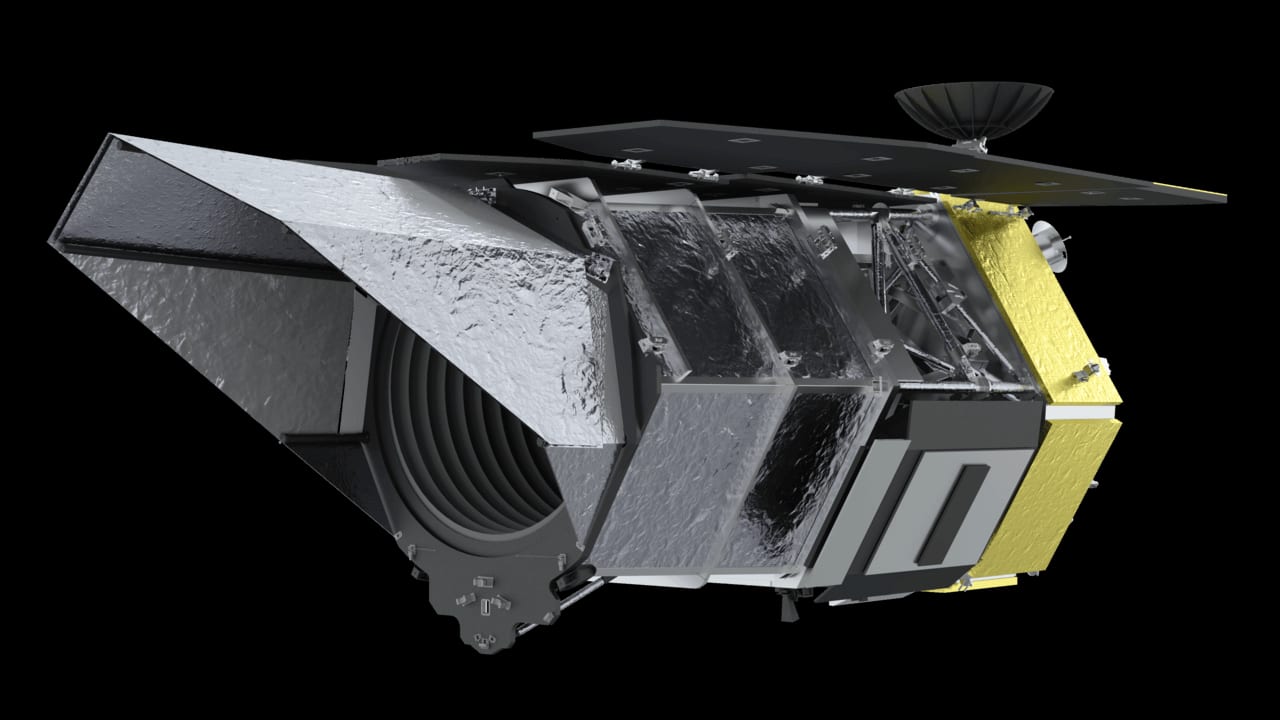
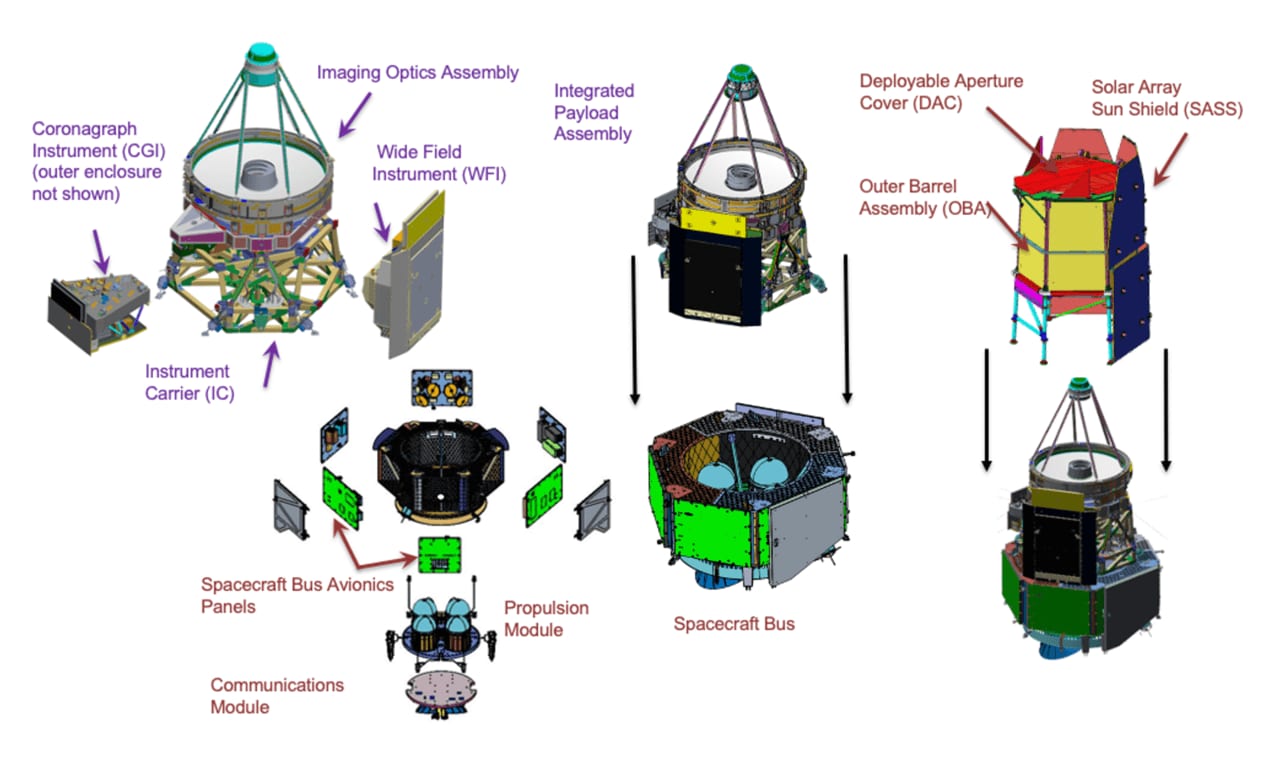
Roman carries a 2.4-meter primary mirror, identical in diameter to Hubble's. That is not a coincidence. The mirror was donated to NASA by the National Reconnaissance Office, which had built two of them for a classified program and had a spare. The telescope body is Hubble-sized too, roughly the dimensions of a school bus.
But the instrument riding behind that mirror is in an entirely different category. The Wide Field Instrument, or WFI, is a 300.8-megapixel infrared camera built around a mosaic of 18 H4RG-10 detectors. Each individual exposure covers 0.28 square degrees of sky, roughly the area of two full Moons side by side. Hubble's Wide Field Camera 3, by comparison, covers about one two-hundredth of that area per exposure.
The numbers that matter: Hubble took about 30 years to image roughly 0.2 percent of the sky. Roman will survey the same area in about two months. Over its planned five-year primary mission, it is expected to measure light from up to a billion galaxies and discover hundreds of thousands of exoplanets.
Eight months ahead of schedule
The Roman mission was originally targeting a launch in early 2027. Then teams at Goddard Space Flight Center completed integration and testing faster than planned, and the schedule moved left. By the time the Pegasus barge pushed off from the port of Baltimore on June 13, NASA was targeting August 30, 2026, eight months earlier than the original date.
That is rare. Flagship space telescopes have a long and public history of running late. Hubble was years behind schedule and over budget. JWST was famously delayed by more than a decade. Roman arriving early at the launch site is the kind of surprise NASA does not usually deliver.
The barge trip itself was an exercise in piggyback logistics. Because the Artemis III core stage weather cover also needed a ride to Florida, both pieces of hardware shared the Pegasus. NASA called it a case of schedules lining up to "maximize resources to support missions across the agency." One barge, one trip, two programs.
What Roman will see
Roman's science goals fall into three broad categories.
Dark energy. Roman will measure the shapes and distances of hundreds of millions of galaxies to build a three-dimensional map of how the universe has expanded over cosmic time. By comparing that map to models, cosmologists hope to understand why the expansion is accelerating and whether dark energy is a constant force or something that changes.
Exoplanets. Roman will use microlensing, the gravitational bending of light by planet-hosting stars, to conduct a statistical census of planets in the Milky Way. It will be especially sensitive to worlds at distances from their stars comparable to Jupiter's and Saturn's orbits, a population that Kepler missed. The telescope should find hundreds of thousands of new exoplanets, including free-floating worlds that wander the galaxy without a star.
Infrared astrophysics. Roman sees in near-infrared light, from about 0.5 to 2.3 microns. That lets it peer through dust that blocks visible-light telescopes and study everything from star-forming regions in our galaxy to the earliest galaxies in the universe. Its surveys will generate about 20 terabytes of data per day, all of which will be publicly available without an embargo period.
Separate from the Wide Field Instrument, Roman carries a technology demonstration called the Coronagraph Instrument. It is designed to block starlight with enough precision to directly image Jupiter-sized exoplanets and the dusty disks where planets form. If the coronagraph works as planned, it will be the most advanced starlight suppression system ever flown in space, and a pathfinder for future telescopes that could image Earth-sized worlds.
The astronomer behind the name
Nancy Grace Roman joined NASA in 1959 as its first chief of astronomy, six months after the agency was founded. At a time when few women held leadership roles in science, she built NASA's astronomy program from the ground up, fought for the budget and political support that made Hubble possible, and spent decades advocating for space-based telescopes when many colleagues saw them as an expensive gamble. She became known, accurately, as the mother of the Hubble Space Telescope.
Roman died in 2018 at age 93. She lived long enough to see Hubble become one of the most productive scientific instruments in history and just long enough to see the telescope that would carry her name approved for development. When the Wide Field Infrared Survey Telescope was formally renamed in her honor in 2020, it was a correction that should have happened sooner.
What happens next
At the Payload Hazardous Servicing Facility, technicians will unbox the spacecraft, raise it to a vertical position inside a clean room, and move it onto a custom work platform called the Pantheon. Over the coming weeks they will test the six solar panels, inspect the thermal blankets, and load about 290 gallons of hydrazine fuel into the spacecraft's tanks.
After fueling and final checkouts, Roman will be mated to the Falcon Heavy payload fairing and rolled out to Pad 39A. The launch window opens at the end of August. Once in space, Roman will spend about three months travelling to the second Sun-Earth Lagrange point (L2), the same gravitational neighbourhood where JWST operates, about a million miles from Earth on the opposite side from the Sun.
When it arrives at L2, it will not compete with JWST. The two instruments are designed to complement each other. JWST is a deep but narrow telescope, built to stare at single objects for hours or days and tease out faint signals from the early universe. Roman is a wide-angle survey machine, built to map huge swaths of sky and find things that JWST can then study in detail. Together with Hubble, still operating after 36 years, they form a three-tiered observatory system: Hubble for visible and ultraviolet, Roman for wide-field infrared surveys, and JWST for deep infrared spectroscopy.
The telescope that reached Florida on Father's Day will not produce the deepest image ever taken or the sharpest picture of a single galaxy. Instead it will produce the biggest picture, the one that shows how everything fits together. For a mission named after the person who built NASA's astronomy program, that feels about right.
Sources
- NASA Science: "NASA's Next Generation Telescope Arrives in Florida Ahead of Launch" (June 21, 2026) - primary NASA blog post detailing the arrival, processing steps, and mission timeline
- NASA: "Roman Telescope Comes to Kennedy" (June 24, 2026) - image article with arrival photo and mission summary
- NASA Science: Nancy Grace Roman Space Telescope mission page - official mission overview and science goals
- Wikipedia: Nancy Grace Roman Space Telescope - technical specifications, instrument details, and mission history
- Sky & Telescope: "The Nancy Grace Roman Space Telescope Is Ready to Fly" - independent astronomy journalism coverage
All NASA images are public domain. The rendered model and schematic diagram are from NASA's Goddard Space Flight Center via Wikipedia Commons. Hero photo and barge arrival photos are credited to NASA/Amber Jean Notvest.
Related on Impossible Universe
- The Greatest Cosmic Movie Ever Made. Rubin Observatory Just Started Filming the Southern Sky for 10 Years. - a next-generation survey telescope that will work alongside Roman to map the universe