
The Battery That Runs on Salt Is Finally Going Mainstream. Sodium-Ion Cells Are Cheaper, Safer, and Don't Freeze. 2026 Is the Year They Scale.
Your phone's battery runs on lithium. Its chemical cousin sodium, half of table salt, does much of the same chemistry, and in 2026 the world's biggest battery makers started shipping it at scale. Sodium-ion cells keep about 90 percent of their capacity at minus 40 degrees Celsius, can be built from materials found in seawater, and are already powering grid storage, scooters, and small electric cars. They still store less energy per kilogram than the best lithium cells, so the near-term beachheads are cold climates, two-wheelers, delivery fleets, and the power grid. Here is what sodium-ion can and cannot do yet.
Your phone runs on lithium. So does your laptop, and increasingly your car. Lithium is a good battery metal, but it is a scarce one: most of it is mined in a handful of countries, and its price has swung so widely that battery makers treat it as a commodity to hedge rather than a resource to rely on. Its chemical cousin sodium, half of table salt and the sixth most abundant element in Earth's crust, can do much of the same chemistry. After four decades in laboratories, sodium-ion batteries are finally moving onto production lines. In 2026, CATL, the world's largest battery manufacturer, plans to deploy them at scale in passenger cars, commercial vehicles, battery-swap stations, and grid storage. BYD is building a dedicated sodium-ion plant. MIT Technology Review put sodium-ion on its 10 Breakthrough Technologies list for 2026. The catch is energy density, and it shapes everything that follows.
What a sodium-ion battery is
Sodium-ion and lithium-ion batteries are close relatives. Both are intercalation batteries: on charge, ions leave one electrode, drift through an electrolyte, and slot into the crystal structure of the other electrode. On discharge, they flow back and push electrons through whatever circuit is attached. Swap lithium ions for sodium ions and the cell works the same way. Sodium ions are larger, so the electrode materials differ, but the principle, the manufacturing equipment, and even the factories are broadly compatible. That matters, because it means the lithium industry's tooling can be adapted rather than reinvented.
The chemistry has been known for decades, since laboratory work in the early 1980s. The delay was economic. Lithium-ion got a two-decade head start in the 1990s, and sodium-ion cells simply were not good enough to justify their own supply chain. What changed is not the science. It is the scale.
Why sodium
The argument for sodium starts with geology. Lithium is concentrated: most of it comes from a handful of countries, and its price, after peaking in 2022, has remained volatile. Sodium is everywhere. It is the sixth most abundant element in Earth's crust, it is dissolved in seawater, it is half of table salt. No country holds a strategic monopoly on it, and there is no sodium-price shock to hedge against. The International Energy Agency (IEA) notes that the chemistries closest to commercialization still lean on nickel and manganese, whose processing is geographically concentrated, so sodium-ion is not a complete escape from supply chains. But the core feedstock, the sodium itself, is about as boring and abundant as a battery ingredient can be.
The cost picture is genuinely two-sided. MIT Technology Review's 2026 assessment is blunt: today's sodium-ion cells are not yet meaningfully cheaper than lithium-ion equivalents. The IEA agrees, adding that lithium prices remain about 70 percent below their 2022 peak, so sodium-ion does not yet undercut LFP, the dominant low-cost lithium chemistry, in most applications. Yet raw sodium is dramatically cheaper per kilogram than lithium, and industry analysts tracking 2025 cell prices reported sodium-ion cells selling below lithium-ion equivalents as production scaled. The resolution of the contradiction is timing: sodium's per-kilogram advantage is expected to translate into cell-level cost advantages as factories come online, and it is already cost-effective for vehicles and stationary storage in cold climates, per the IEA.
The cold-weather superpower
Cold is where sodium-ion stops being a compromise and becomes the better battery. The newest cells keep about 90 percent of their capacity at minus 40 degrees Celsius, per the IEA, and CATL says its Naxtra line operates across the full range from minus 40 to plus 70 degrees. Lithium iron phosphate, the chemistry sodium-ion is usually compared with, loses far more in the cold. That is why the first sodium-ion vehicles and storage systems are appearing in places with real winters: northern China's cities, cold-climate markets, and delivery fleets that run outdoors. CATL has also proposed pairing sodium-ion cells with lithium cells in the same pack, a dual-power design where sodium handles the cold starts and lithium carries the range.
The safety angle
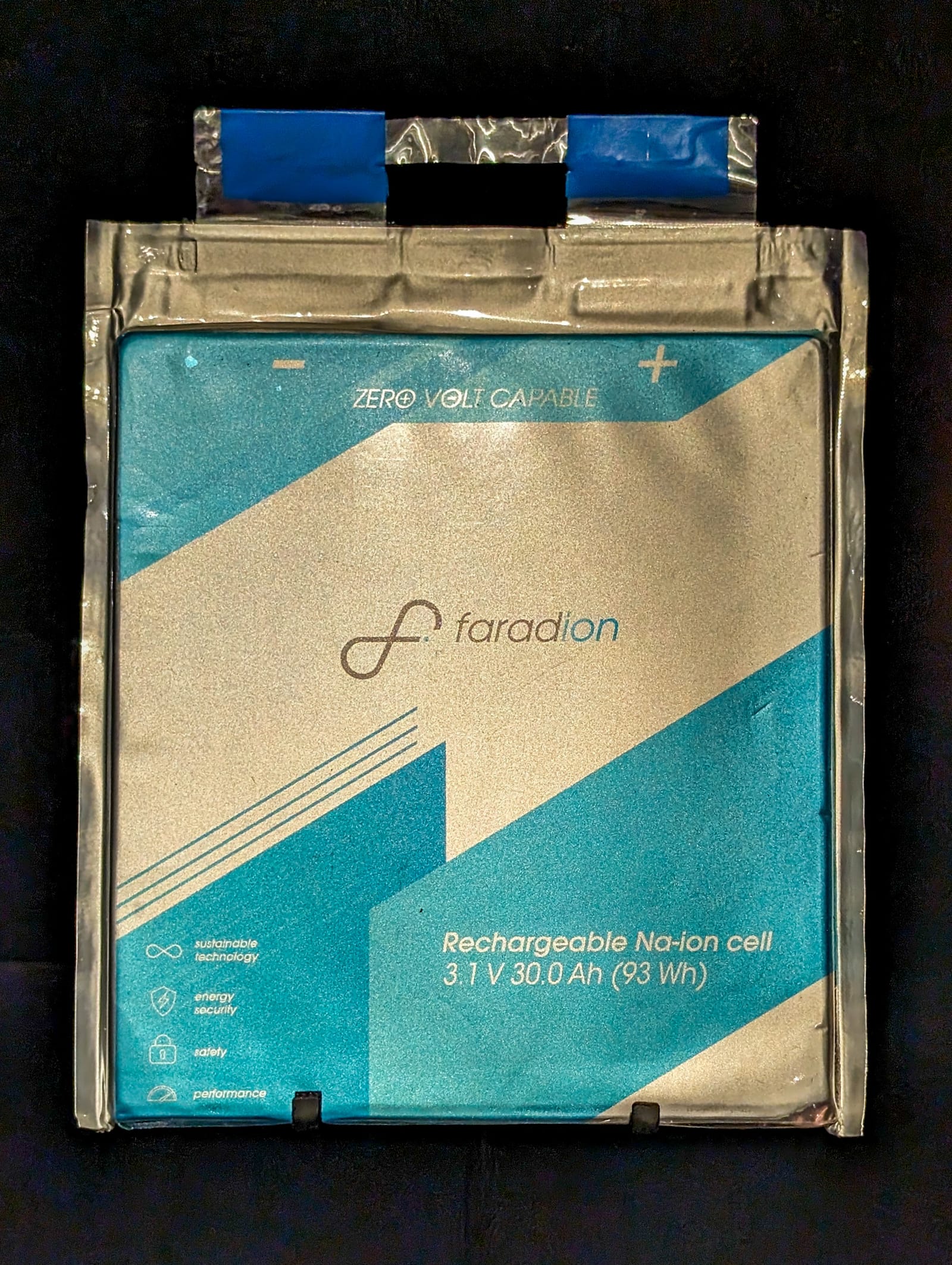
Sodium-ion also carries a safety story. Sodium cells are less prone to the kind of thermal runaway that makes lithium-ion fires newsworthy. CATL describes its Naxtra chemistry as eliminating combustion-supporting factors at the material level, moving from passive protection to what it calls intrinsic safety. The cells can also be shipped fully discharged, a practical advantage that appears right on the label of commercial cells: the Faradion sodium-ion cell on display at London's Science Museum is marked "zero volt capable."
There is a certification milestone behind the marketing. In December 2025, CATL said its sodium-ion cells were the first to pass China's new GB 38031-2025 safety standard for electric vehicle traction batteries, which sets stringent requirements on thermal stability, mechanical impact resistance, and fast-charge cycling, and takes effect in mid-2026.
The catch: energy density
Here is the trade-off. The best sodium-ion cells reach about 175 watt-hours per kilogram, which CATL claims is the highest of any sodium-ion battery and comparable to lithium iron phosphate. The IEA puts the comparison in context: LFP cells reach about 205 watt-hours per kilogram, and NMC lithium cells about 255. Lower energy density means heavier batteries and shorter range. The IEA estimates an average SUV with a sodium-ion pack gets up to about 350 kilometers of range, versus 400 to 600 for lithium-ion under average weather conditions. CATL, for its part, says its next-generation sodium-ion battery supports a pure-electric range of more than 500 kilometers in passenger vehicles.
The result is that the first sodium-ion cars are small and light. JMEV began offering its EV3 hatchback with a sodium-ion pack in 2024, HiNa Battery is powering low-speed electric vehicles, and scooter maker Yadea launched four sodium-ion two-wheeler models in 2025 as Shenzhen started piloting sodium-ion swapping stations for commuters and delivery riders. Energy density that would be a dealbreaker for a long-range sedan is perfectly adequate for a scooter, a delivery van, or a city car.
2026: the year they scale
Commercial sodium-ion predates the current headlines. The first sodium-ion grid storage system went into operation in China in 2019, and the first sodium-ion electric car appeared in late 2023. But 2026 is the year the volume plans landed.
CATL, which the IEA identifies as the world's largest battery manufacturer, unveiled its Naxtra sodium-ion product line in April 2025, with a passenger-car cell at 175 watt-hours per kilogram, a 24-volt starting battery for heavy trucks, and mass production of the passenger cell scheduled for December 2025. At its supplier conference in Ningde in December 2025, the company said it would deploy sodium-ion at scale across battery swapping, passenger vehicles, commercial vehicles, and energy storage in 2026, describing sodium-ion and lithium-ion as a "dual-star" future developing in parallel. BYD, the world's second-largest battery producer, began construction of its first sodium-ion EV battery plant in January 2024, aimed at vehicles, grid storage, and industrial applications. LG Energy Solution, the world's third-largest, announced a sodium-ion pilot line in Nanjing, China, in January 2026, choosing China for its sodium-ion ecosystem. In the United States, the startup Peak Energy is already deploying grid-scale sodium-ion storage.
Grid storage is the beachhead
While cars get the headlines, the most consequential sodium-ion market may be the power grid. Storing solar and wind power requires batteries that are cheap, safe, and durable, and grid operators care less about energy density than about cost per kilowatt-hour and cycle life. Sodium-ion's long cycle life and thermal stability fit that job.
The scale-up is already visible. In June 2024, the first phase of Datang Group's sodium-ion storage station in Qianjiang, Hubei Province, connected to the grid: 50 megawatts and 100 megawatt-hours of storage, at the time the largest operating sodium-ion battery system in the world, built from 42 shipping-container-sized battery units using 185 amp-hour cells from HiNa Battery. The project manager told ESS News that the cells still guarantee 85 percent charge-discharge efficiency at minus 20 degrees Celsius and can handle 1,500 cycles at 60 degrees. A single charge can cover the daily needs of roughly 12,000 households.
The honest limits
Nothing about sodium-ion's rise means lithium is finished. In 2025, total global sodium-ion production was less than 1 percent of lithium-ion output, per the IEA. Lithium prices, while volatile, are still about 70 percent below their 2022 peak, which blunts sodium-ion's cost advantage in most applications today. The IEA's verdict: for sodium-ion to compete on equal footing, it needs either sustained higher lithium prices or significant gains in energy density.
There are also structural risks. Nearly all existing sodium-ion manufacturing capacity is in China, which accounts for more than 95 percent of projected 2030 capacity, a concentration that mirrors the lithium-ion industry it was meant to diversify away from. The cautionary tale is Natron Energy, a US sodium-ion startup that recently shut down, underscoring how hard it is to build a competitive sodium-ion supply chain outside China.
What the technology has is a beachhead. Cold climates, two-wheelers, delivery fleets, and grid storage are all markets where sodium-ion wins today on its own terms, and each factory that comes online pushes costs down. The sibling chemistries are watching: lithium-sulfur batteries promise two to three times the energy density of lithium-ion but remain in research, with the notorious polysulfide shuttle problem still unsolved at scale. Sodium-ion is the alternative that does not need a breakthrough, just volume.
Why it matters
Batteries are the bottleneck of the energy transition and the electric vehicle boom. A chemistry that replaces a scarce, volatile metal with table salt does not need to be perfect to matter. It needs to be good enough for a large slice of the market, and durable enough that manufacturers can plan around it. Sodium-ion is that: good enough today for cold places, small vehicles, and the grid, with a clear path to better cells each year. Whether it becomes a niche or a pillar depends on lithium prices and manufacturing scale, and 2026 is the year the industry starts answering that question in factories rather than papers.
Sources
- International Energy Agency: Sodium-ion battery momentum grows, but challenges remain (2026), CC BY 4.0 - the industry-wide assessment: 2025 production under 1 percent of lithium-ion, ~90 percent capacity at minus 40 degrees, 175 vs 205 vs 255 Wh/kg comparison, lithium-price context, and China's share of projected 2030 capacity
- MIT Technology Review: Sodium-ion batteries, 10 Breakthrough Technologies 2026 (January 12, 2026) - the anchor: JMEV EV3, HiNa, Peak Energy, Yadea two-wheelers, Shenzhen swapping stations, and the honest cost assessment
- CnEVPost: CATL unveils sodium-ion, 12C Shenxing, Freevoy dual-power batteries (April 21, 2025) - the Naxtra launch: 175 Wh/kg passenger cell, 90 percent power at minus 40 degrees, mass-production timeline, 10,000-plus cycle claim
- CarNewsChina: CATL confirms 2026 large-scale sodium-ion battery deployment in multiple sectors (December 28, 2025) - the Ningde supplier conference, the dual-star framing, the GB 38031-2025 certification
- ESS News: World's largest sodium-ion battery goes into operation (July 2, 2024) - the Datang Qianjiang grid project: 50 MW/100 MWh, HiNa 185 Ah cells, 12,000 households
- Nature Communications (July 1, 2025): lithium-sulfur benchmarking review - the sibling chemistry, kept brief: 2-3x energy-density potential, research-stage status
- Wikipedia: Sodium-ion battery - background on the intercalation chemistry and history
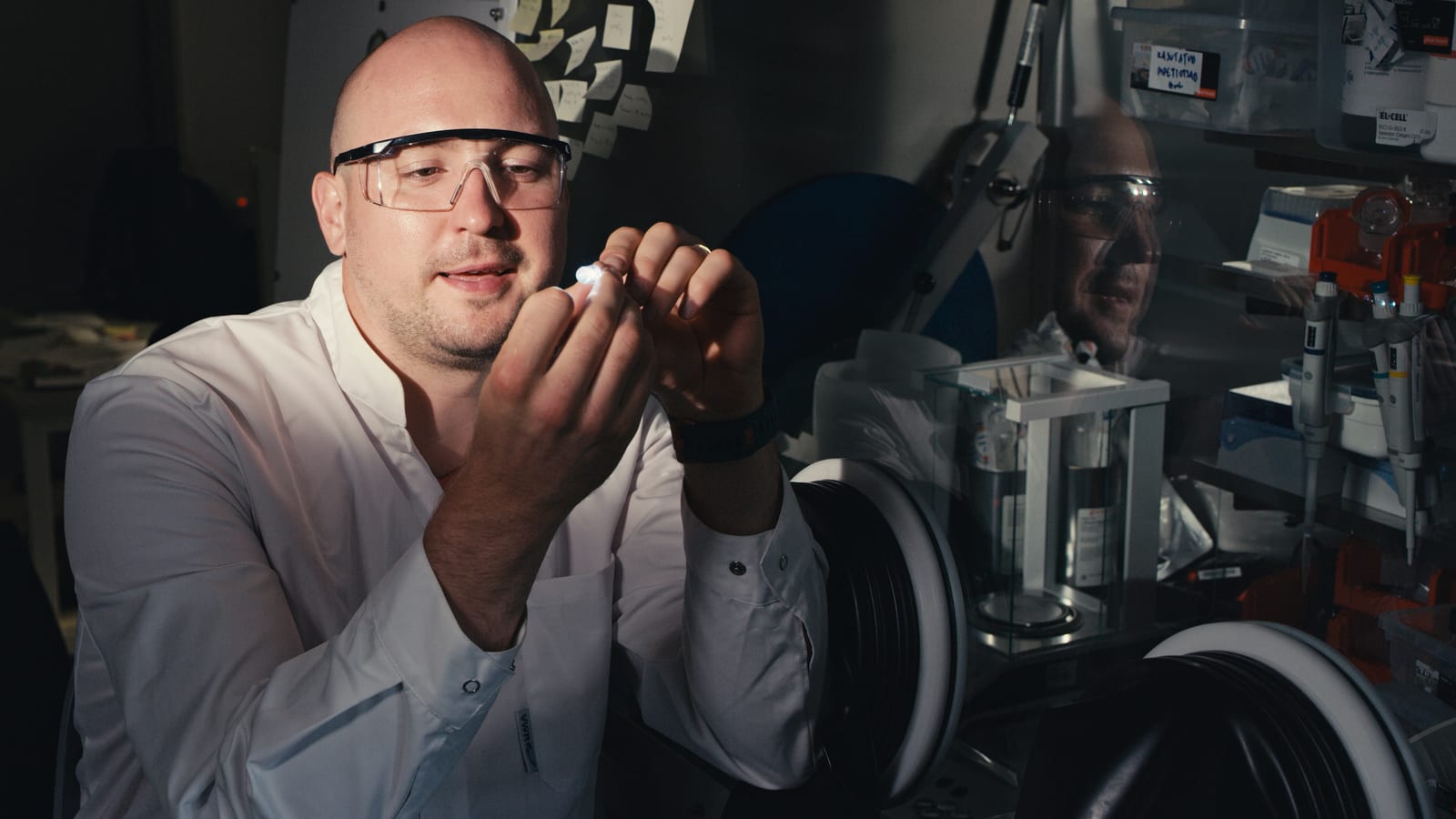
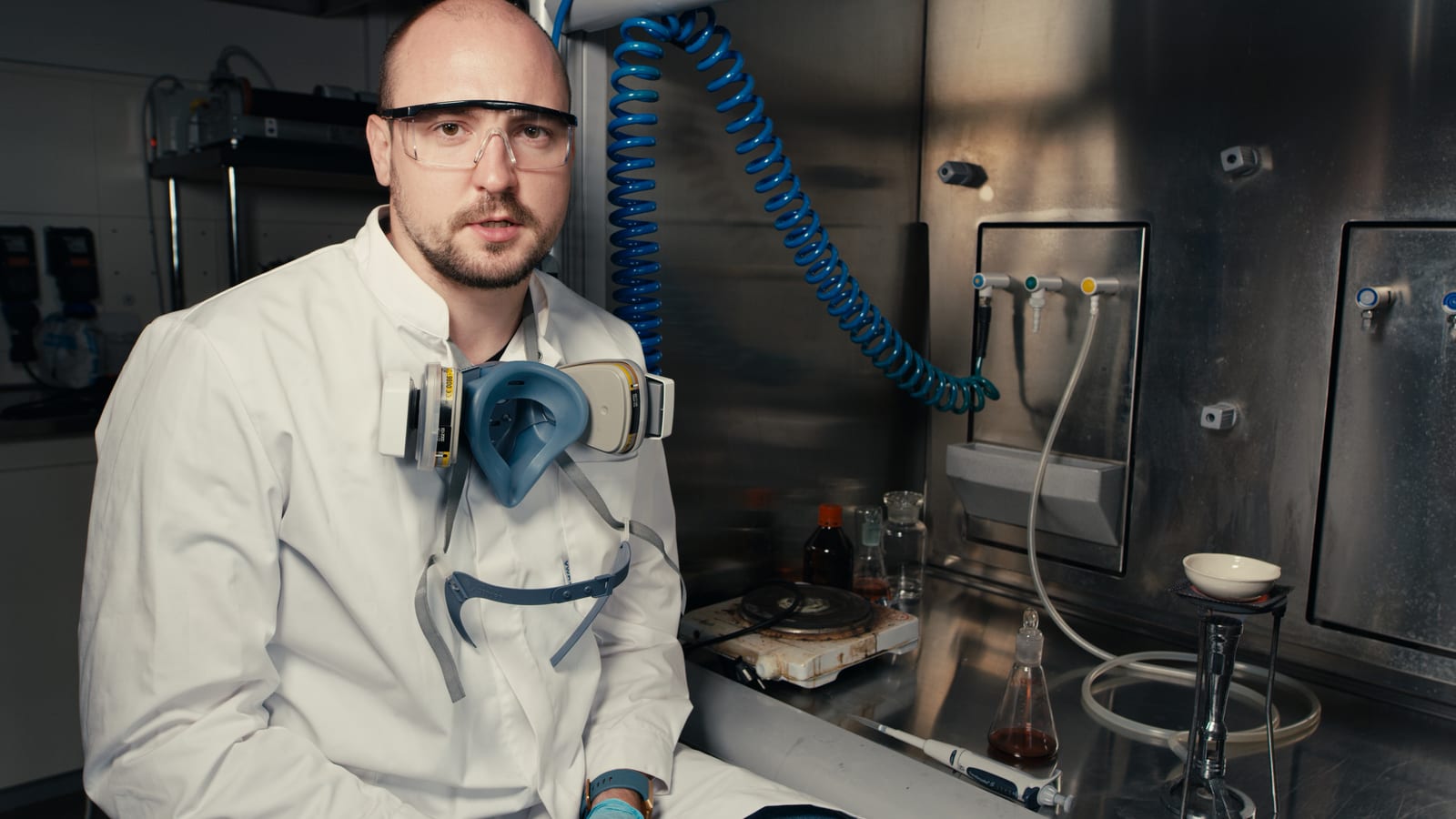
Hero image: sodium-ion researcher Ronald Väli demonstrating a working cell at the University of Tartu, photo by Tavo Romann, CC BY 4.0, via Wikimedia Commons. First inline image: same photographer and license. Faradion cell photograph: The wub, CC BY-SA 4.0, via Wikimedia Commons, photographed at the Science Museum, London. No image rights issues: all three are freely licensed.
Related on Impossible Universe
- Solid-State Batteries Keep Failing Because Lithium Grows Tiny Tree-Like Crystals That Crack Their Ceramic Core. Scientists Finally Saw How. - the other lithium-alternative thread: solid-state fixes the electrolyte, sodium-ion replaces the lithium
- Solar Panels Just Hit 35.5% Efficiency. The 43% Ceiling Is Now in Sight. - the clean-energy materials story, from solar cells to storage chemistry
- This Tiny Chip Processes Information With Light Instead of Electricity - energy-efficient computing, the other side of the energy-technology ledger
- Physics and Quantum Topic Hub - more on how matter and energy behave at the edges of the familiar