The New Earthrise: Artemis II Photographs Home
On April 6, 2026, the Artemis II crew watched Earth slide behind the Moon and captured a photo that echoes the 1968 Earthrise, moments before losing radio contact for 40 minutes.
For 40 minutes on April 6, 2026, four astronauts went silent. Not because anything was wrong. Because everything was going exactly according to plan. The Artemis II crew had just watched Earth slip behind the Moon, and once Orion crossed into the lunar far side, radio signals from mission control stopped reaching them entirely.
Just before the blackout, someone pointed a camera out the window.
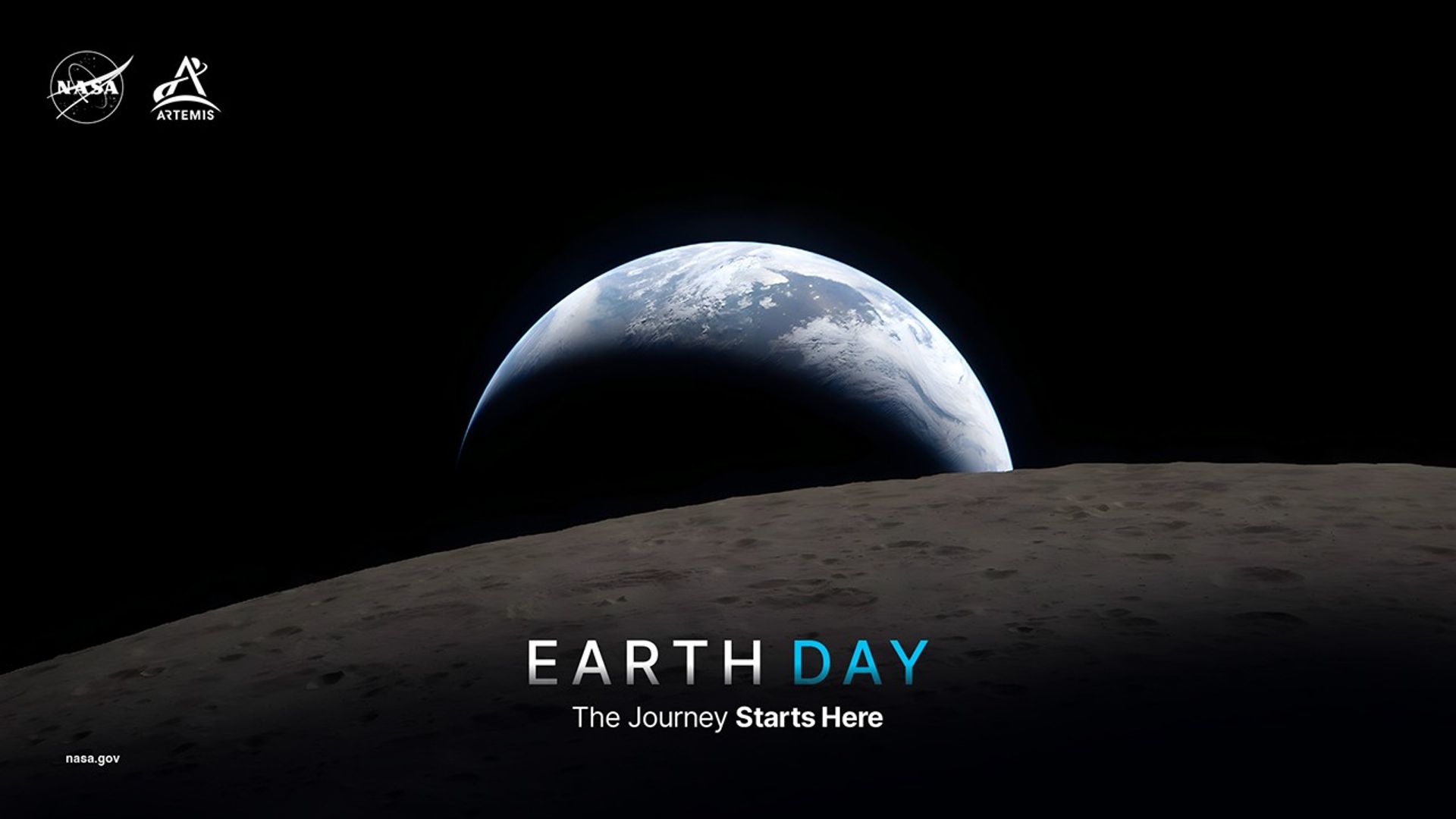
The result became NASA's Earth Day 2026 poster: a bright, half-lit Earth over a gray lunar horizon, captured by astronauts on the first human Moon mission in more than half a century.
What the crew saw
Artemis II launched with commander Reid Wiseman, pilot Victor Glover, mission specialist Christina Koch, and Canadian Space Agency astronaut Jeremy Hansen. Their job was to test the Orion spacecraft on a lunar flyby, the dress rehearsal before Artemis III puts boots on the Moon.
As Orion passed over the lunar far side, the crew did more than take photos. They described terrain out loud: impact craters, ancient lava flows, surface cracks and ridges formed as the Moon cooled and settled over billions of years. They noted differences in color, brightness, and texture. It was not casual narration. It was geological reconnaissance. The kind of work you do when the next crew is supposed to land and walk around.
But the photo that stuck is the one that had nothing to do with geology.
Two Earthrises, 58 years apart
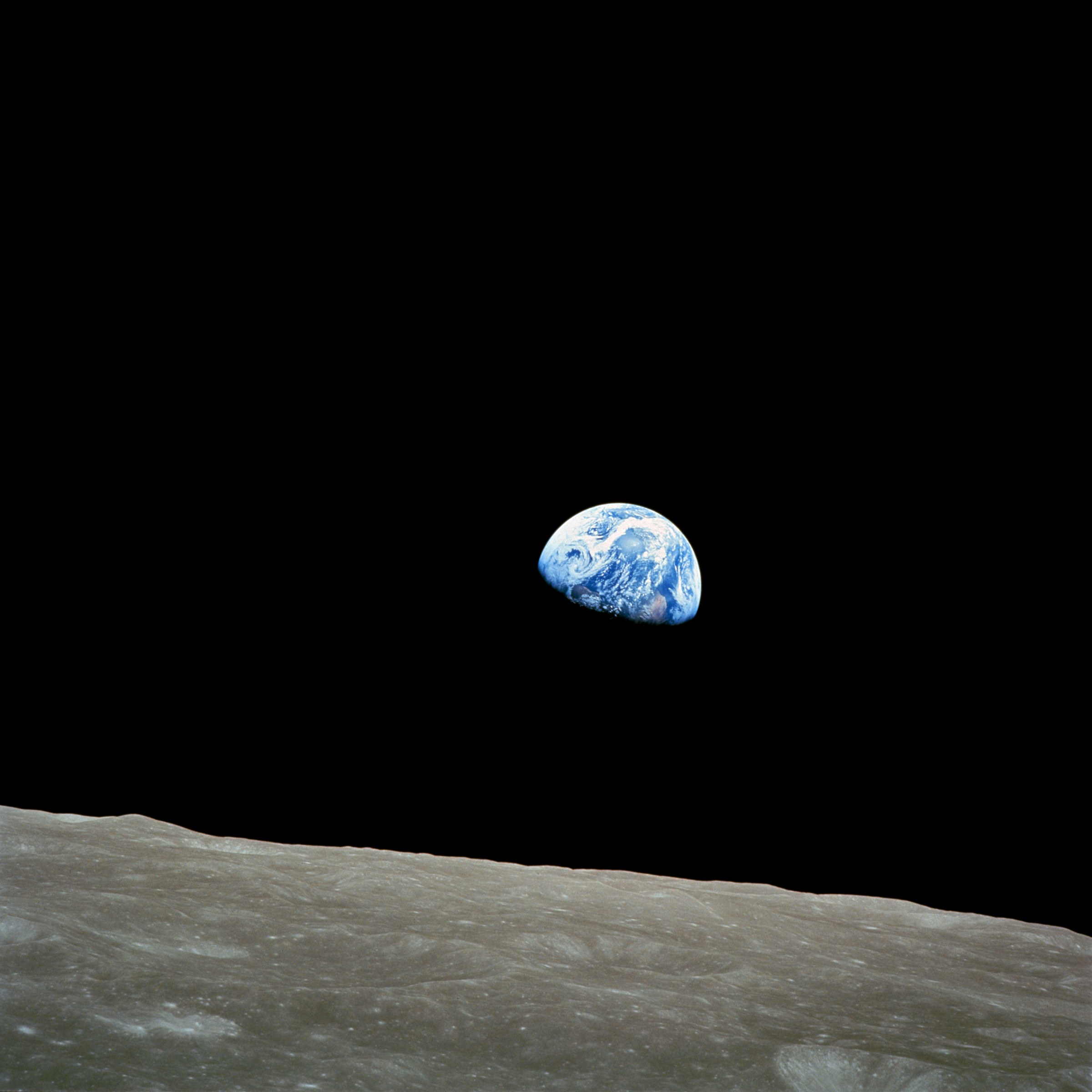
Apollo 8's Earthrise was shot on Christmas Eve, 1968. Bill Anders, Frank Borman, and Jim Lovell were the first humans to leave low Earth orbit and circle another world. During a live broadcast that night, Lovell told the audience back home: "The vast loneliness is awe inspiring, and it makes you realize just what you have back there on Earth."
The image became so influential that it has been credited with helping launch the first Earth Day in 1970. A single photograph pushed a new environmental consciousness into public view. There was nowhere else to go, and the picture proved it.
The Artemis II version arrived on April 6, 2026, through a different window, with different equipment, by a crew that included a woman and a Black astronaut. Two groups who were not even eligible for the astronaut corps when Anders pressed the shutter in 1968. The spacecraft took a different trajectory. The Moon below it was the same.
The picture itself
NASA has been transparent about one editorial choice: the image was "slightly sharpened to fit the format of the poster." That is worth noting because it means we are not looking at a raw camera file. The sharpening adjusts edges for large-format print without changing the scene. The same practice has been standard for press photos long before digital tools existed.
The final poster image shows Earth as a crescent-and-globe hybrid: white cloud bands over blue ocean against black space. The Moon's surface below is gray and textured, cratered and ancient. It is not the same composition as Anders's 1968 shot. The framing is different. The lighting is different. The spacecraft's position was different. But the emotional payload is roughly identical. Here is where everything alive is. Here is the backdrop. Here is the distance.
Why it still matters
A photograph from space is not science, exactly. It does not measure, calibrate, or prove anything. But it does something that data alone cannot: it builds a mental image that sticks. Apollo 8's Earthrise did not teach anyone new information about the Moon. It taught people something about the planet they already lived on.
Artemis II's version arrives in a different world than Apollo 8's did. In 1968, seeing the whole Earth from space was a genuine novelty. Most humans had never seen their planet as a single object. By 2026, we have thousands of Earth images from satellites, space stations, and deep-space probes. The shock is smaller. But the function is the same: a reminder, delivered by people who left, that the planet is one object and we are all on it.
The Artemis II crew is back on Earth now. The photo is public domain, posted by NASA as a free download in multiple resolutions, including 4K desktop backgrounds and a print-resolution poster. The 40-minute quiet zone behind the Moon is already in the mission logs. Someone, somewhere, is looking at the next image.
Sources
- NASA Earth Day 2026: Posters and Virtual Backgrounds - primary source for the Artemis II Earthrise image and mission context
- NASA Artemis II Mission Page - crew details, mission objectives, and timeline
- NASA Apollo 8 Archives - original 1968 Earthrise photograph and Jim Lovell's live broadcast transcript
Related on Impossible Universe
- NASA Names Artemis III Crew, Sets Path for First Moon Landing Since Apollo - the crew announced for the mission that will carry Artemis II's work to the lunar surface
All NASA images are in the public domain and free for educational and informational use. The Artemis II Earthrise image was slightly sharpened by NASA for the Earth Day 2026 poster release.