
The Black Frogs of Chernobyl
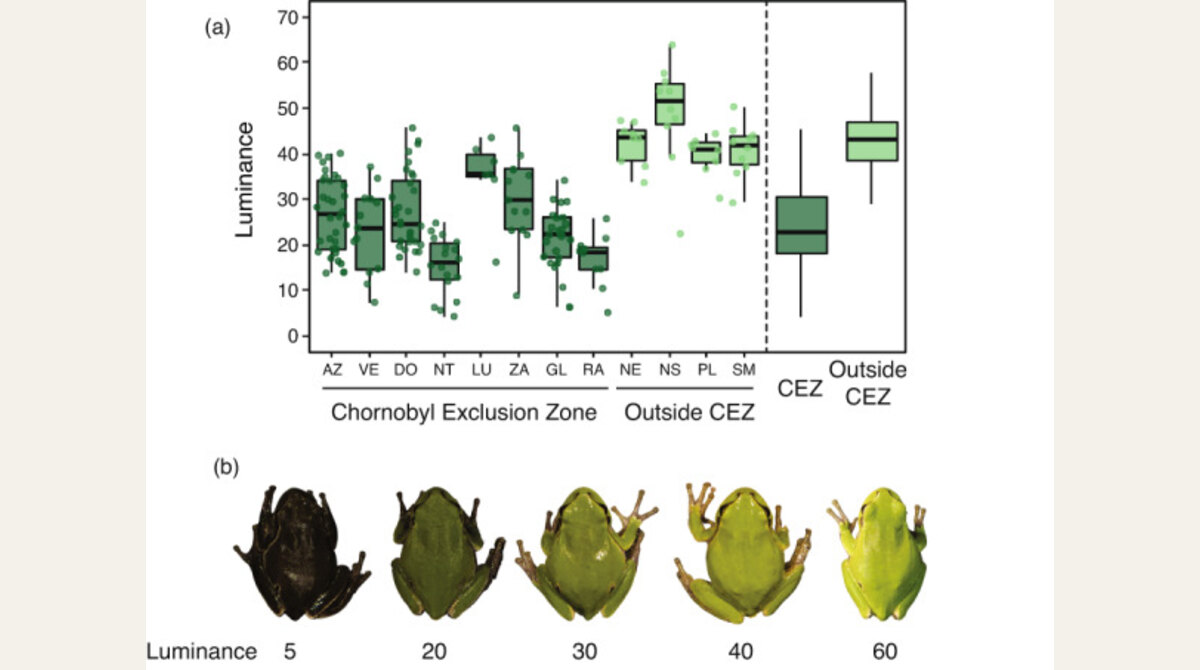
Eastern tree frogs inside the Chornobyl Exclusion Zone are darker than nearby frogs, a visible clue in a study of radiation and selection.
A color difference in a damaged landscape
The Chornobyl Exclusion Zone is often described through absence: abandoned buildings, restricted roads, places people left behind after the 1986 nuclear disaster.
But scientists also study what lives there now. A 2022 study in Evolutionary Applications examined Eastern tree frogs and found that frogs from within the zone had much darker dorsal coloration than frogs from nearby areas outside it.
Why darker skin might matter
The researchers focused on melanin, the group of pigments that can darken skin and may help protect organisms from ionizing radiation. Their interpretation was evolutionary: darker frogs may have had a survival advantage after the accident and passed that trait on.
That does not mean radiation is harmless, and it does not translate neatly to humans. It means a visible trait in a small animal may record a history of selection under extreme stress.
A careful kind of wonder
The story is tempting to sensationalize, but the better version is quieter. The frogs are not monsters. They are evidence that life can respond to pressure in ways that become visible on the body.
That makes them unsettling and beautiful at once: a dark flash on a leaf, carrying a history of catastrophe, chemistry, survival, and time.
Sources
- Burraco and Orizaola, Evolutionary Applications via PMC
- Science Journal for Kids adaptation of the study
Related on Impossible Universe
- The First Global Map of Underground Fungal Networks Reveals a Vast Hidden Ecosystem - how fungi connect forests and move carbon underground in a secret economy beneath our feet
- Pando, the Trembling Giant Aspen Clone, Is Falling Apart. Scientists Are Trying to Save It. - a 47,000-stem aspen clone in Utah that may be the oldest living organism on Earth