
The Trembling Giant That Weighs 6,000 Tons
Pando looks like a forest of quaking aspens, but it is a single clone connected by one root system across 106 acres in Utah.
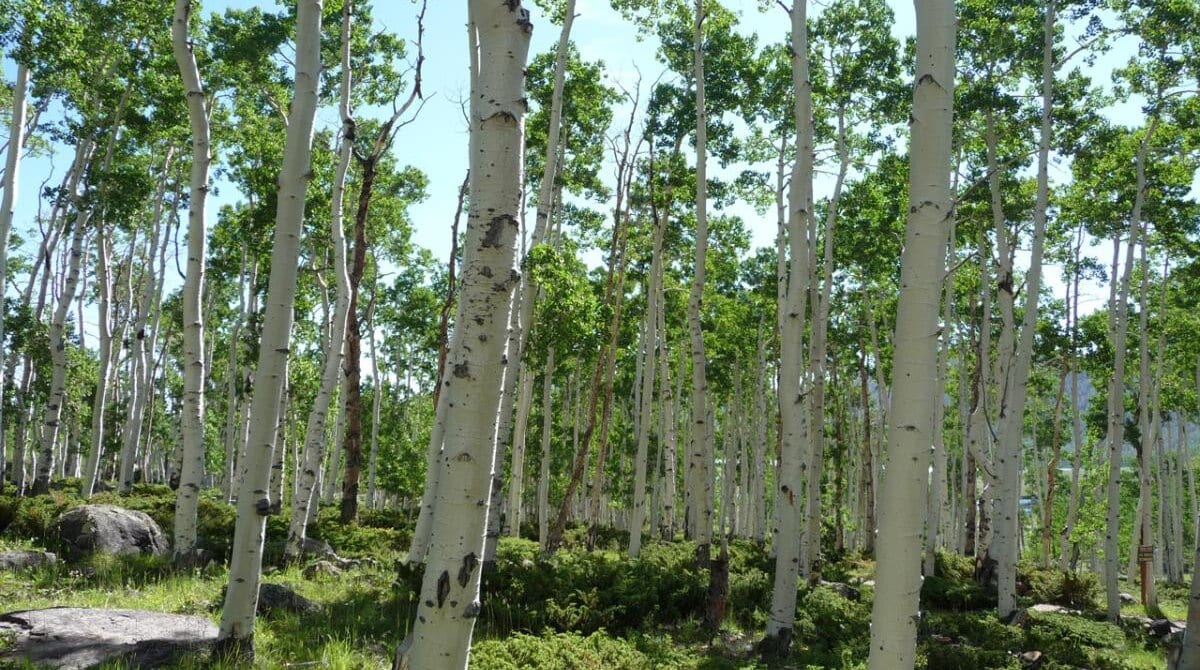
A forest that is also one tree
Pando looks like a grove: thousands of pale aspen trunks, leaves shaking in the wind, individual stems rising and dying like ordinary trees.
But the U.S. Forest Service describes Pando as a single quaking aspen clone in Utah's Fishlake National Forest. Its stems are genetically identical and connected by a shared root system spread across roughly 106 acres.
The weight of a hidden body
The numbers are the part that make Pando feel impossible. The clone is commonly described as weighing nearly 13 million pounds, about 6,000 tons, with more than 40,000 stems above ground.
The visible trees are only the temporary part. Individual stems may live a century or so, while the root system keeps sending up replacements. The organism is not a trunk. It is a pattern of regeneration.
Why being huge does not make it safe
Pando's scale can make it sound invincible, but the clone has faced pressure from browsing animals, human use, and changes in regeneration. Fencing and management work aim to give young stems a better chance to survive.
That is the strange emotional twist. One of the largest living things on Earth is not a monster. It is a trembling system that has to keep making small new trees, again and again.
Sources
Related on Impossible Universe
- Why Some Tree Frogs Near Chornobyl Turned Black - how a nuclear disaster created an unexpected evolutionary experiment in pigmentation
- The First Global Map of Underground Fungal Networks Reveals a Vast Hidden Ecosystem - how fungi connect forests and move carbon underground