
The Boulders That Remember Earthquakes
Precariously balanced rocks can help scientists test how hard the ground has shaken in the past, simply because they are still standing.
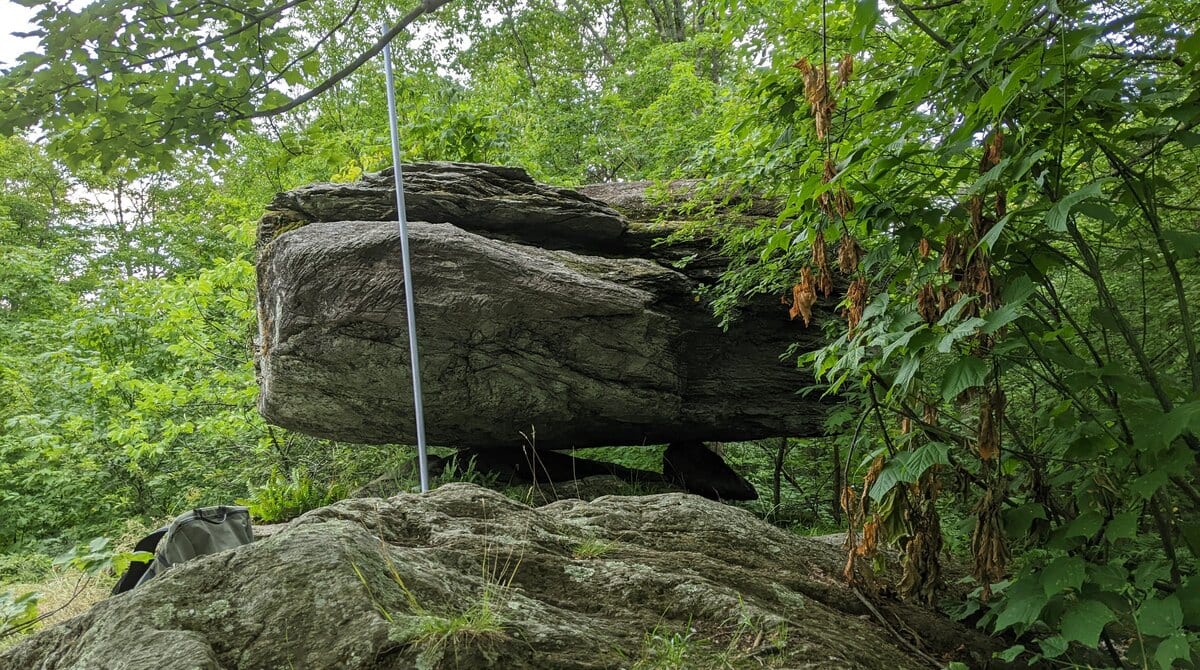
The rock that should have fallen
Some rocks look like they are one shove away from disaster. They sit on narrow pedestals, lean over open air, and seem to challenge gravity every day.
To a geologist, that awkward pose can be useful. If a rock has been balanced for thousands of years, then nearby earthquake shaking probably has not exceeded the level that would have toppled it.
A natural instrument with no moving parts
USGS researchers have studied precariously balanced rocks in the northeastern United States as a way to constrain long-term seismic hazard. The method is not magic. Scientists measure the rock, model how much acceleration would knock it over, and compare that threshold with earthquake hazard estimates.
A standing boulder cannot tell you the date of every earthquake it survived. It can tell you that the ground has not shaken hard enough, in that spot and over that span of time, to make it fall.
Why absence can be evidence
Earthquake science often depends on traces: broken faults, displaced layers, written records, or instruments. Balanced rocks add another kind of trace. They are evidence made from non-destruction.
That makes them wonderfully counterintuitive. A boulder that did nothing for centuries may still have something to say about the strongest shaking a landscape has endured.
Sources
- USGS: Precariously Balanced Rock Field Work
- Seismological Society of America: Precariously Balanced Rocks in New York and Vermont
- USGS Geology FAQ
Related on Impossible Universe
- Pando, the Trembling Giant Aspen Clone, Is Falling Apart. Scientists Are Trying to Save It. - a different kind of slow-motion geological catastrophe unfolding in the natural world