
In Medieval Swedish Graves, Children Were Buried With Adults Who Weren't Their Family. DNA Just Proved It.
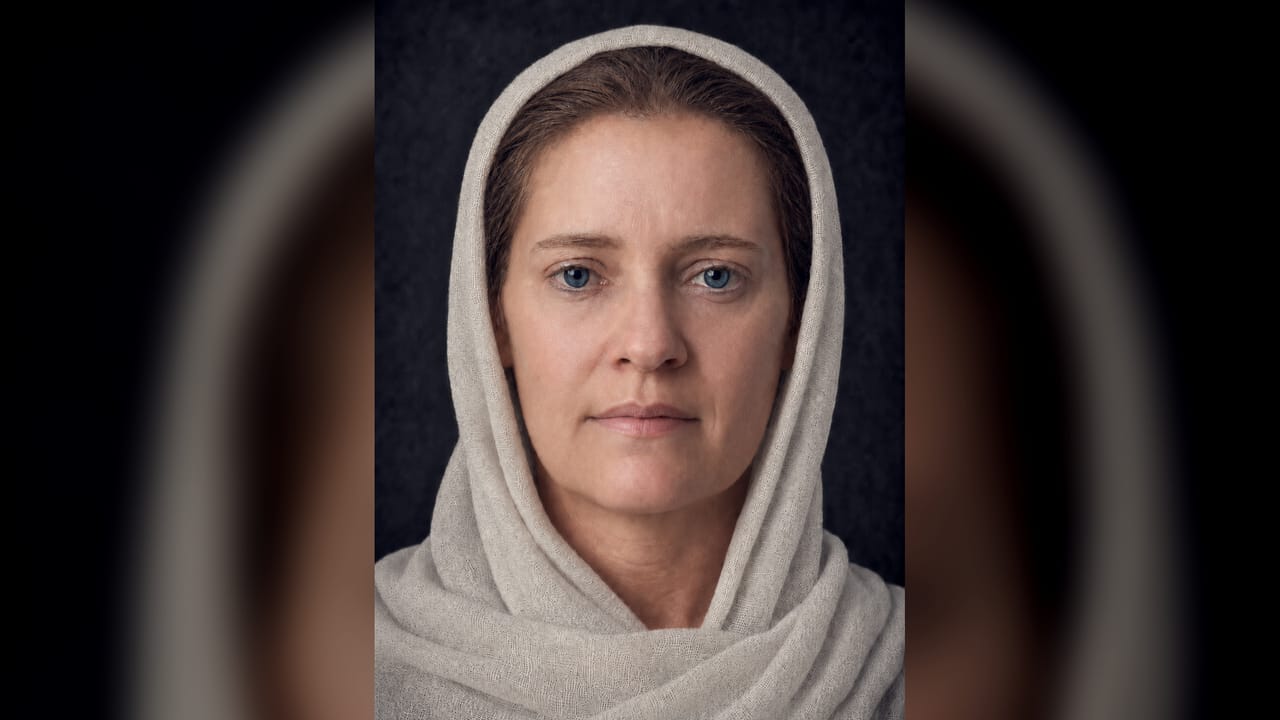
Ancient DNA from 142 people buried at three Swedish cemeteries between the 10th and 14th centuries shows that children laid beside adults in the same grave were rarely close relatives. At Västerhus, Sigtuna, and Fjälkinge, shared graves followed sex and community rules rather than family ties, and one woman known as Lady 56, buried with a pilgrim shell from Santiago de Compostela, had her parents, brother, and daughters resting in other parts of the churchyard.
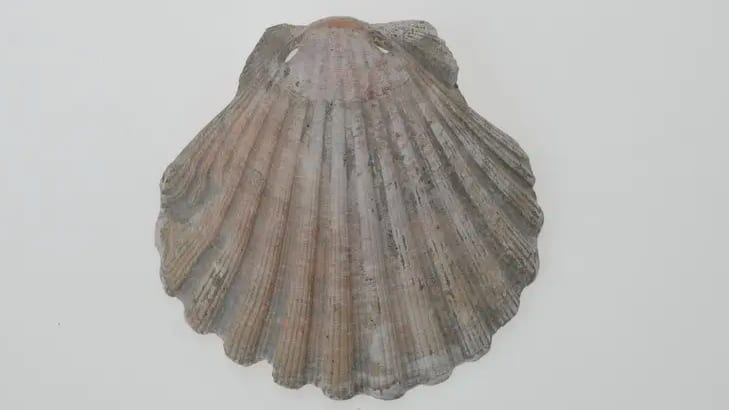
On the island of Frösö in Jämtland, in a churchyard that once belonged to a wealthy farm, a young woman was buried with a scallop shell resting near her body. The shell was not a local object. It is the recognized emblem of a completed pilgrimage to Santiago de Compostela in northwestern Spain, more than 3,000 kilometers from her home. Only two such shells have ever been found at that cemetery.
Researchers know her as Lady 56. She died before the age of 30. Her parents, her brother, and her two daughters were also buried in the same churchyard, but none of them lay beside her. Her close family was spread across different parts of the cemetery. The people who shared her grave were not her relatives.
That pattern is the centerpiece of a study that upends a long-standing assumption about medieval graves. When archaeologists found a child or a young person buried next to an adult, they usually assumed the two were family: a parent and child who died around the same time. Ancient DNA now shows that in the cemeteries examined, that assumption was wrong far more often than it was right.
Buried together, rarely related
Researchers led by Maja Krzewińska at Stockholm University sequenced the genomes of 142 people buried at three Swedish cemeteries from the 10th to the 14th centuries: Fjälkinge in Skåne, the urban cemetery at Sigtuna near Stockholm, and the rural churchyard at Västerhus in Jämtland. The group includes 74 adults and 68 children and adolescents, recovered from 27 single graves and 50 graves holding two or more bodies. The results were published on July 10, 2026, in the journal Science Advances.
"We often assume that adults and children sharing a grave were parents and children or other close family members," Krzewińska said in a statement. "In most cases, that was not what we found."
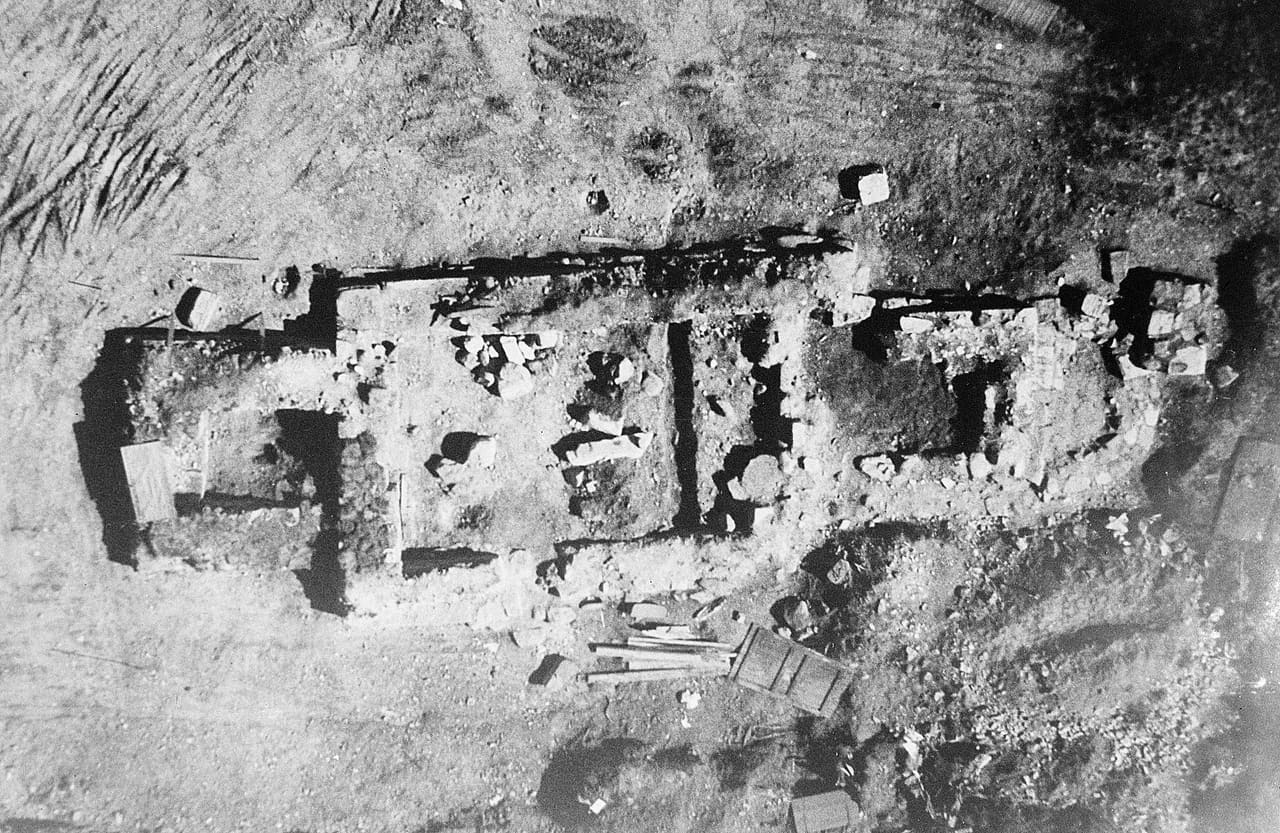
Close biological relatives rarely shared a grave, even in cemeteries where the DNA showed dense networks of kinship across the population as a whole. Only about 6 percent of all genetic connections detected within the cemeteries linked people buried in the same grave. At Västerhus, just 12 percent of multiple graves with usable DNA held first-degree relatives: two sisters, a father and son, and a probable pair of siblings. At Sigtuna, close or second-degree relatives appeared in about 12.5 percent of the adequately sampled multiple graves. Most children sharing a grave with an adult were not related to that adult at all.
The children followed the adults' rules
The study also settled a question that skeletons alone could not answer: the sex of children who died too young for their bones to show it. Christian graves of this period were stripped of the personal items that once helped archaeologists identify the dead, and children's skeletons resist reliable sexing. The genomes filled that gap.
Boys and girls were buried according to the same rules as adults. At Västerhus, where men and women were generally buried on opposite sides of the churchyard, boys followed the men and girls followed the women. The pattern echoes a 12th-century Scandinavian legal code that called for women to be buried north of the church and men to the south. The DNA shows that children, even infants, followed those lines almost as strictly as adults did.
"The children were not treated as a separate category," said Anders Götherström, professor of molecular archaeology at Stockholm University. "In death, they appear to have been treated according to the same social and religious principles as adult men and women."
A woman with a pilgrim's shell
Lady 56's genome made her one of the best-documented people in the study. Her relatives lay in different parts of the churchyard, and her kin group appears to have held a particular importance in the community, with connections that stretched over generations. The scallop shell beside her is the emblem of a pilgrimage to Santiago de Compostela, one of medieval Europe's most famous journeys. The find suggests she completed the trip, traveling thousands of kilometers across the continent to the far edge of Christian Europe and returning home, before dying before age 30.
Forensic artist Oscar Nilsson rebuilt her face from the shape of her skull and her genetic profile. The reconstruction, released with the study under a Creative Commons license, gives the anonymous dead of a medieval churchyard a face again, and it is why this particular genome has traveled so far beyond the research literature.
What a shared grave meant
If shared graves were not family plots, what were they? The researchers propose that burials were shaped by households, extended kin groups, or local communities operating within the normative framework of the new Christian church, which may have constrained or overridden purely family-based arrangements.
That reading needs care. The paper's conclusions are preliminary, and other explanations remain possible: adoption, fosterage, service, or parish ties that leave no genetic trace. What the study removes is the default assumption that a shared grave means shared blood.
"Archaeologists have debated the relationships between people buried together in this type of grave for a long time," said Anna Kjellström, a bioarchaeologist at Stockholm University and co-author of the study. "Ancient DNA has finally given us the tool we have been waiting for to test these interpretations directly."
The work is part of a larger shift in how archaeologists read early Christian burials. From the 10th and 11th centuries onward, the church stripped graves of the personal objects that once spoke for the dead: bodies were laid supine, oriented east to west, wrapped in little beyond a shroud. That left children especially hard to identify, since their skeletons resist morphological sexing and their graves carried no jewelry. DNA now supplies the information the grave goods used to carry. The graves that look like family plots to modern eyes were arranged by a society whose rules researchers are only beginning to read.
Sources
- Krzewińska et al., "Equal in death: Ancient genomic analysis of children's early Christian burials," Science Advances 12, eaeb8588 (July 10, 2026), DOI 10.1126/sciadv.aeb8588 - the primary peer-reviewed study: 142 genomes from Fjälkinge, Sigtuna, and Västerhus, with kinship and sex results for 27 single and 50 multiple burials
- Stockholm University press release (July 10, 2026) - the university's announcement with researcher quotes and the Lady 56 reconstruction and Västerhus church ruin images
- Live Science (July 11, 2026) - coverage of the findings with details on Lady 56's kin group and the Västerhus family's special status
- Discover Magazine (July 2026) - coverage including the 12th-century legal code on burial sides and the sex-segregation pattern in the graves
- Archaeology News Online Magazine (July 2026) - coverage with the per-cemetery kinship percentages and the Lady 56 story
- Phys.org (July 2026) - syndicated version of the Stockholm University release with researcher quotes
Related on Impossible Universe
- Scientists Pulled Ancient Human DNA From Cave Walls for the First Time - another frontier of ancient DNA, reading the past from surfaces that hold no bones
- These 540-Million-Year-Old Fossils Were Thought to Be Animals. Then Scientists Looked Closer. - how new analytical tools rewrite what we thought we knew about ancient life
- A Lost Maya City Was Found Hidden in the Mexican Jungle. It Survived 1,000 Years Undisturbed. - archaeology's modern toolkits, from LiDAR to ancient DNA, are rewriting buried histories
- Millions of Smithsonian Objects Are Waiting for Better Stories - open collections that let researchers and readers rethink the past
- History and Archaeology Topic Hub - more stories on reading the buried past with DNA, fossils, and field archaeology
Hero image: Forensic facial reconstruction of Lady 56, reconstruction and photograph by Oscar Nilsson / Stockholm University, 2026 (CC BY 4.0). Inline images: Västerhus church ruin, Riksantikvarieämbetets arkiv (Swedish National Heritage Board archive); pilgrim scallop shell, Christer Åhlin / Historiska museet (Swedish History Museum), 2012 (CC BY 4.0).