New Horizons Heads for the Solar System's Edge. Forecasts Predict When It Will Cross the Boundary.
New Horizons is now 66 AU from the Sun and heading for the termination shock, the boundary where the solar wind first meets interstellar space. Scientists at the Southwest Research Institute have developed a forecast for the crossing: as early as 2029, as late as 2040.
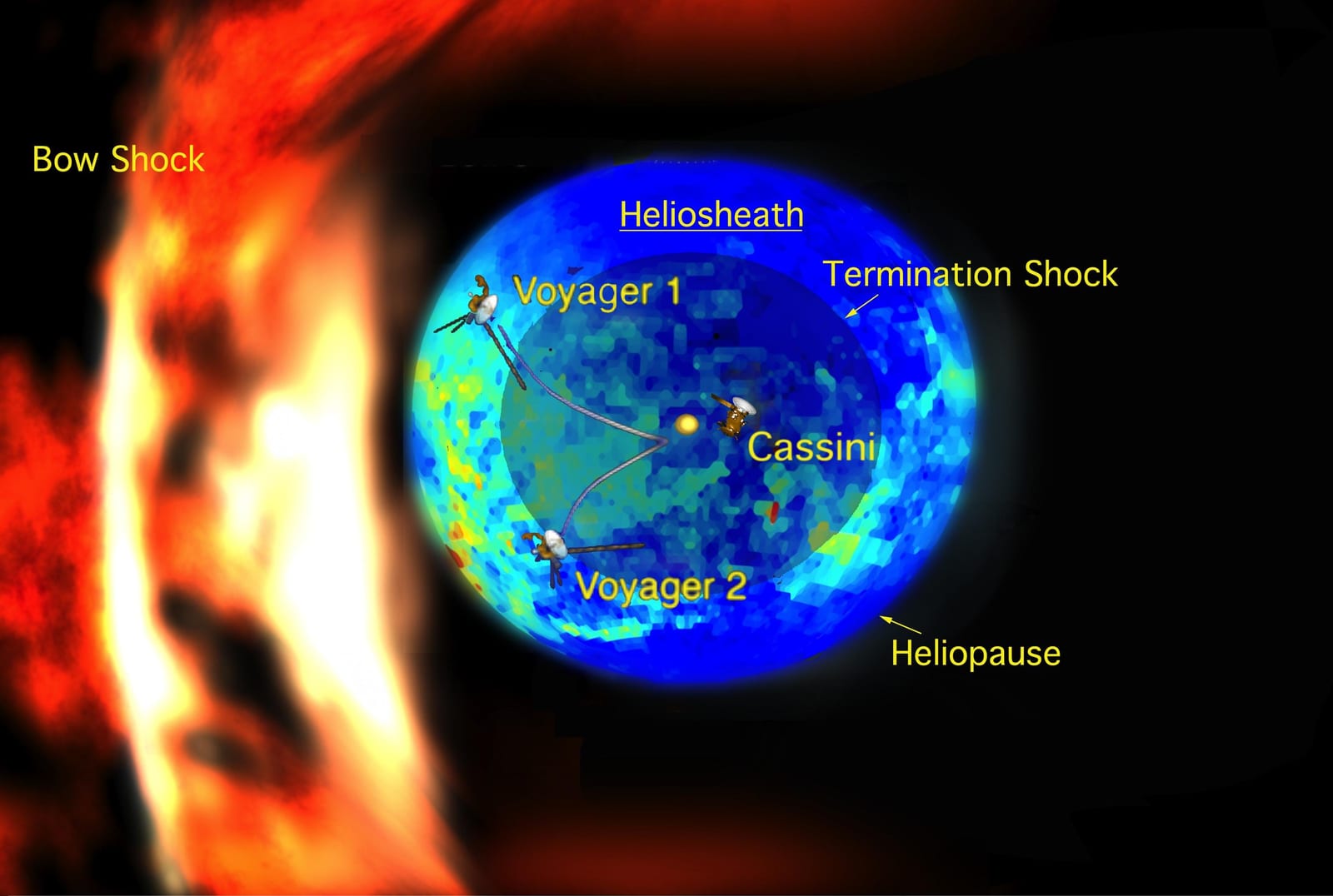
When Voyager 1 crossed the termination shock in December 2004, the signal caught scientists by surprise. The boundary, where the solar wind slams from supersonic speeds into the wall of interstellar space, turned out to be closer than many models predicted.
Twenty-two years later, a second NASA spacecraft is racing toward that same invisible frontier, and this time the navigators have something Voyager did not: a forecast.
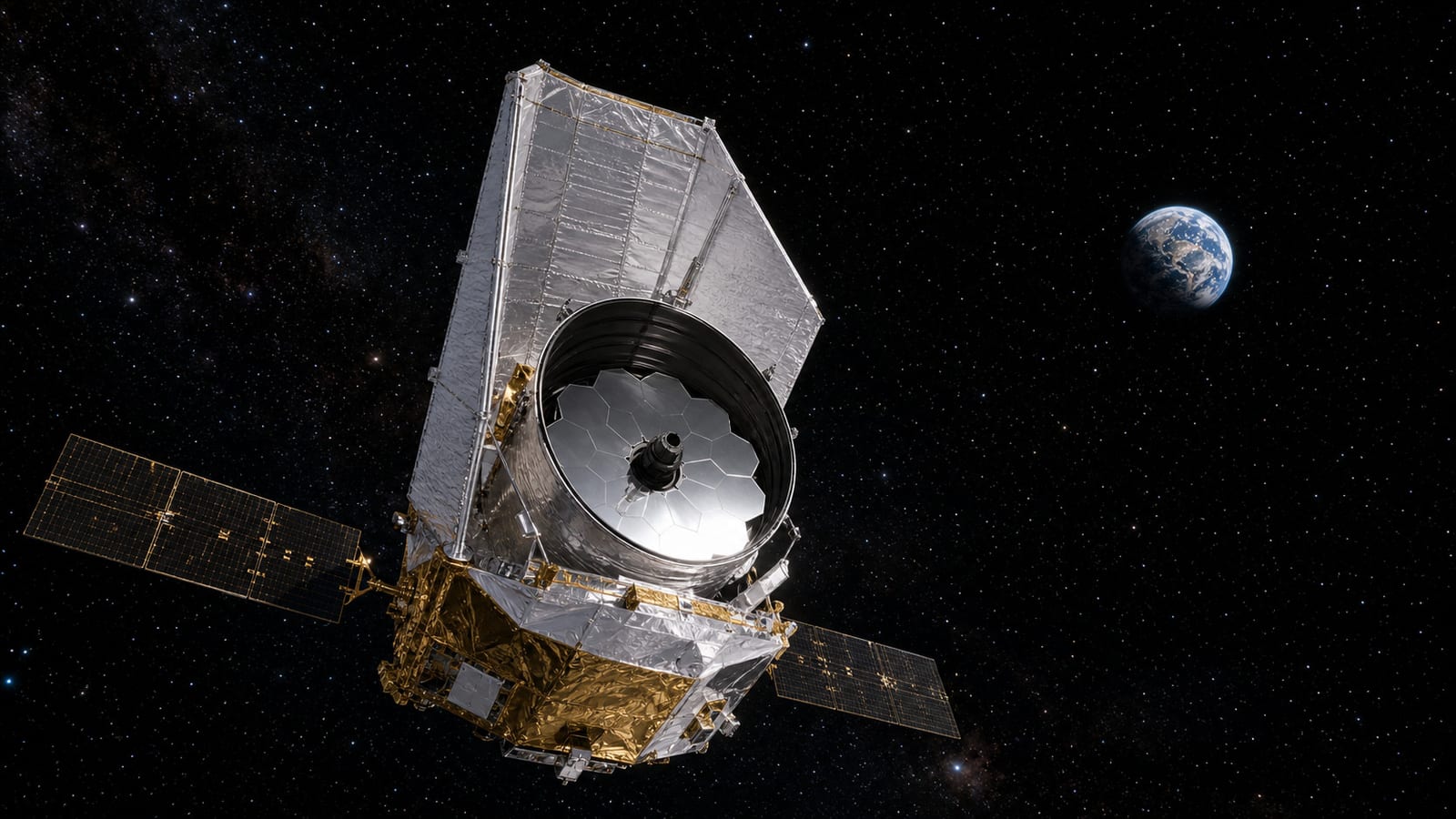
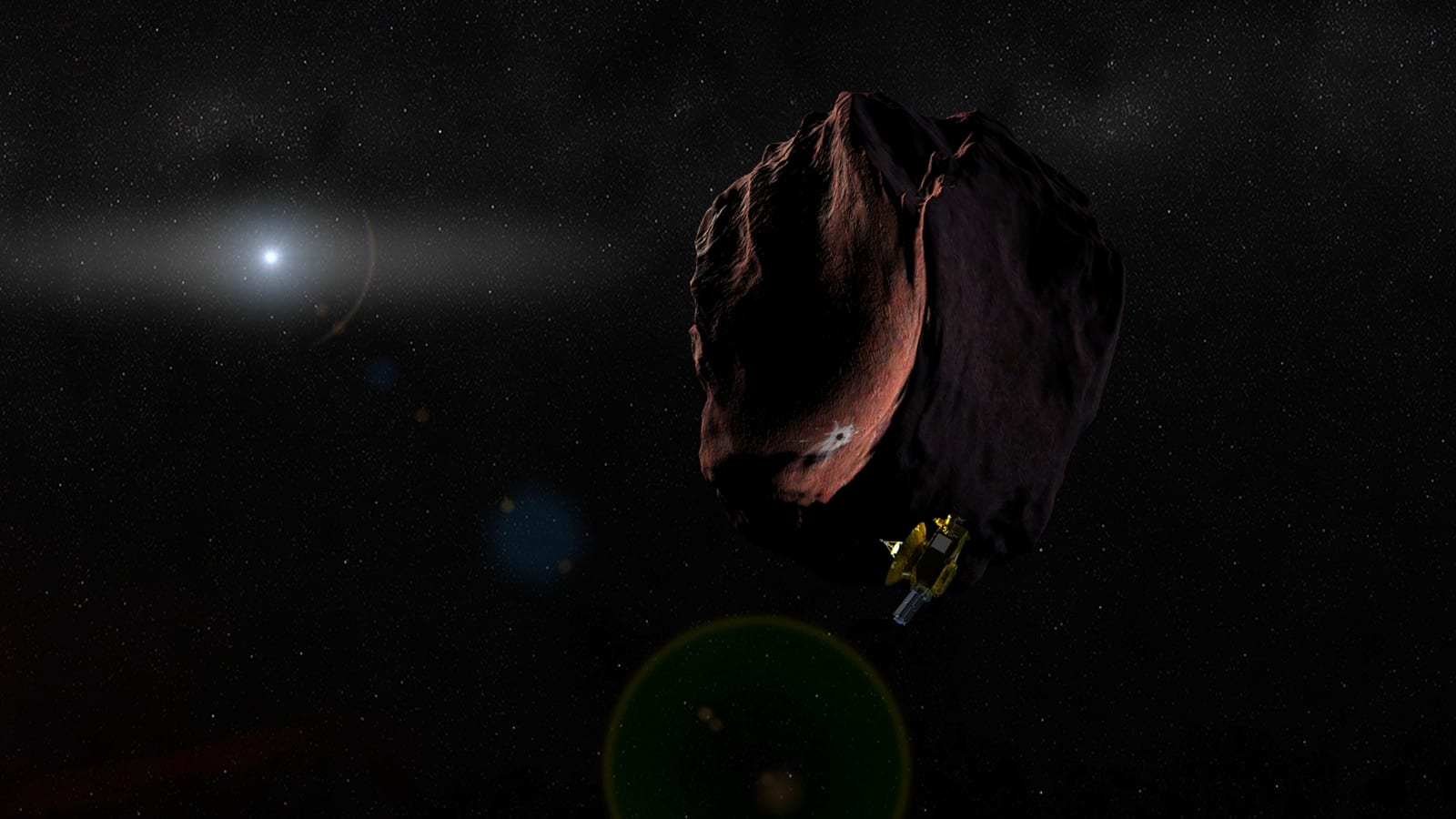
New Horizons, the piano-sized probe that gave humanity its first close look at Pluto in 2015 and flew past Kuiper Belt object Arrokoth in 2019, is now 66 astronomical units from the Sun, roughly 6.1 billion miles away. It is the only spacecraft operating in the outer solar system, and scientists at the Southwest Research Institute have developed a method to predict when it will cross the first plasma boundary at the edge of the solar system.
The answer, published in two peer-reviewed papers in late June 2026: as early as 2029, as late as 2040. The uncertainty is not the spacecraft. It is the Sun.
The boundary that breathes
The heliosphere is a vast magnetic bubble carved out by the solar wind, a constant stream of charged particles that flows outward from the Sun at roughly a million miles per hour. This bubble surrounds the entire solar system, shielding the planets from the majority of high-energy galactic cosmic rays that fill interstellar space.
It is not a static shell. The heliosphere expands and contracts in rhythm with the 11-year solar cycle. During solar maximum, when the Sun is active, the turbocharged solar wind inflates the bubble. During solar minimum, the ebbing wind allows the boundary to drift inward. The termination shock, the innermost of the heliosphere's several boundaries, is the point where the solar wind first begins to feel the resistance of interstellar material, slowing from supersonic to subsonic speeds and compressing into a hotter, denser region called the heliosheath.
Both Voyager 1 and Voyager 2 crossed the termination shock at roughly 84 to 94 AU from the Sun, depending on solar conditions. New Horizons is on a different trajectory, heading into the forward "nose" region of the heliosphere, where the boundary is thought to be closer because the Sun's motion through the galaxy compresses the bubble in that direction.
Forecasting the invisible
Dr. Jonathan Gasser of SwRI, lead author of both new studies, developed a method that combines solar wind forecasting with analytic and numerical models of the heliosphere. The first paper, published in Advances in Space Research, directly predicts when New Horizons will encounter the termination shock. The second, in The Astrophysical Journal, examines how long-term variations in the solar wind affect the global shape and size of the heliosphere.
"We want to understand when the spacecraft will reach the termination shock to prepare to take measurements and download data about this region," Gasser said in a SwRI press release on June 22, 2026.
The technique uses historical solar wind data to forecast pressure variations years in advance. Because the solar wind during solar maximum expands the heliosphere and pushes the termination shock outward, and solar minimum contracts it, the forecast must account for where the Sun is in its 11-year cycle when New Horizons arrives at the predicted crossing distance.
The result is a wide window: 2029 to 2040. And the crossing may not be a single event. As the heliosphere continues to expand and contract in response to solar activity, New Horizons could cross the termination shock, exit the heliosheath, then cross back again as the boundary shifts.
The research is particularly timely because of a long-running puzzle about the shape of the heliosphere itself. Some models predict a comet-like shape, with a rounded nose in the direction of the Sun's motion through the galaxy and a long tail trailing behind. Others argue for a croissant-like shape, with two lobes and a compressed central region. Knowing where New Horizons crosses the termination shock will help distinguish between these competing models and improve understanding of how the solar system interacts with the interstellar medium.
The study of how the heliosphere interacts with the galaxy also matters for future missions. A better understanding of the boundary could help engineers design spacecraft and instruments capable of surviving and operating in interstellar space, and it could help refine models of how cosmic rays enter the solar system. Cosmic rays, high-energy particles accelerated by supernovae and other violent events, are a known hazard for astronauts on long-duration missions beyond Earth's protective magnetic field. Understanding the heliosphere's shielding effect is essential for planning crewed missions to Mars and beyond.
A third spacecraft to leave the solar system
New Horizons is only the fifth spacecraft ever launched on a trajectory that will take it out of the solar system, after Pioneer 10, Pioneer 11, Voyager 1, and Voyager 2. But it carries a crucial advantage over its predecessors: the Solar Wind Around Pluto (SWAP) instrument, built and operated by SwRI, is designed specifically to measure the solar wind and its interaction with interstellar material. Voyager's plasma instruments had largely failed by the time the spacecraft crossed the termination shock, leaving gaps in the data.
When New Horizons reaches the termination shock, SWAP will be able to measure the temperature, density, and velocity of the solar wind as it crosses the boundary, producing the most detailed data ever collected from inside this region. That data could settle decades of debate about how the heliosphere works.
"The spacecraft is healthy, its instruments are functioning, and the team knows what to look for," the SwRI statement noted. "It is a question of when, not if."
For a probe that launched in January 2006, flew past Jupiter for a gravity assist in 2007, revealed the stunning complexity of Pluto and its moons in 2015, and sailed past the most distant object ever visited in 2019, the termination shock represents the next milestone in a journey that has already redefined humanity's understanding of the outer solar system.
When that milestone arrives, whether in 2029 or 2040 or somewhere in between, New Horizons will become the third human-made object to leave the solar system behind. The data it sends back may change how we understand the invisible bubble that has protected us for the entire history of life on Earth.
Related on Impossible Universe
- Euclid Spent 26 Hours Looking at the Milky Way's Core. It Came Back With 60 Million Stars. - another spacecraft producing one of the largest ever surveys in its domain
- A Neighbouring Galaxy Is Being Pulled Apart, and Astronomers Just Mapped Every Star's Escape - a galaxy-scale story about boundaries and what happens when they shift