The Greatest Cosmic Movie Ever Made. Rubin Observatory Just Started Filming the Southern Sky for 10 Years.
The Vera C. Rubin Observatory in Chile officially began the Legacy Survey of Space and Time on June 30, 2026. Its 3,200-megapixel camera, the largest ever built, will capture the entire southern sky every few nights for a decade, producing 20 terabytes of data per night and cataloguing 20 billion galaxies. In its first month of early optimization surveys, it already discovered 11,000 never-before-seen asteroids.
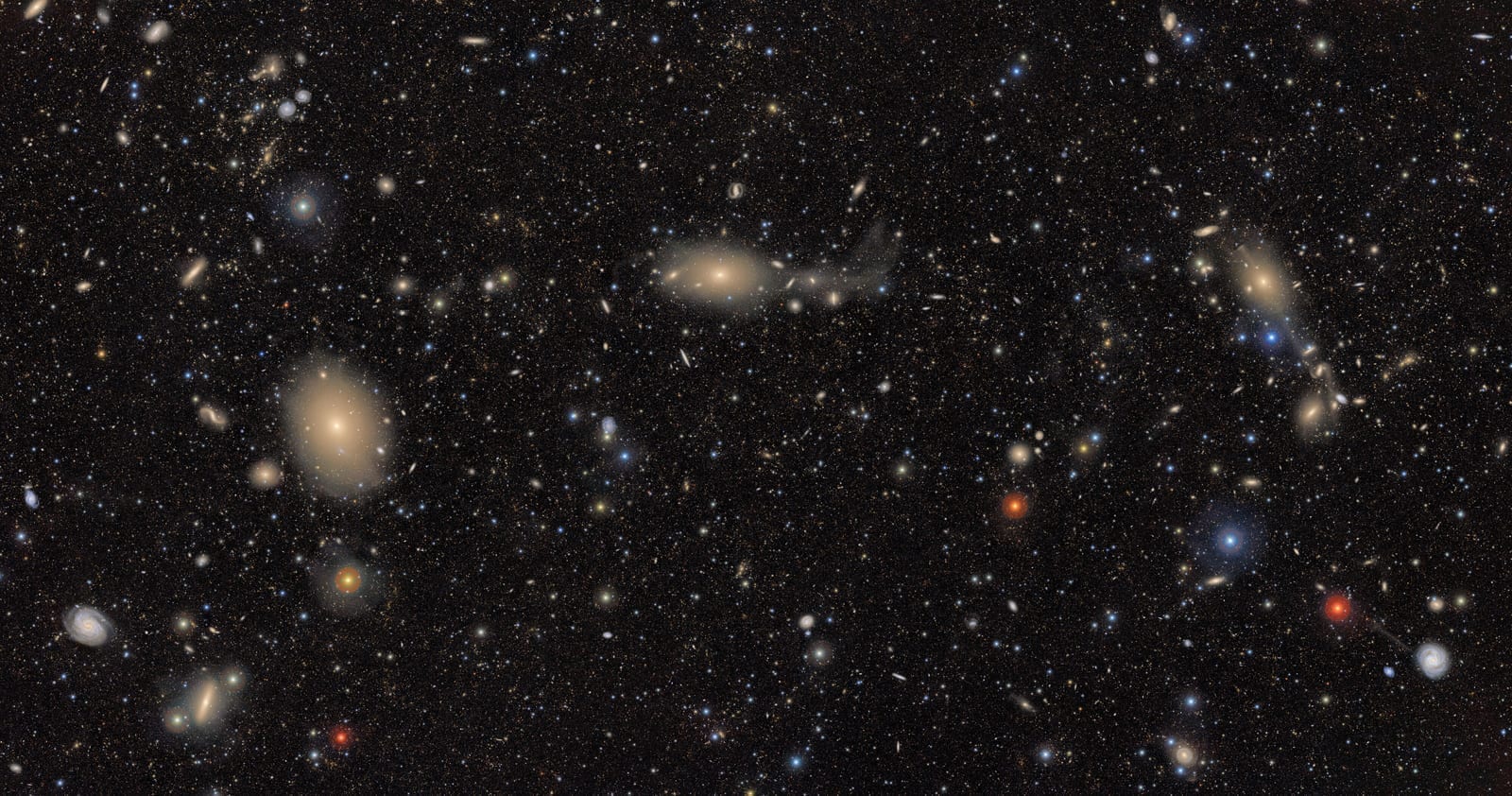
The first image clatters into the control room at roughly 40-second intervals. Each one is 3,200 megapixels. Each one covers an area of sky the size of 45 full Moons. And each one is the latest frame in what its operators call the greatest cosmic movie ever made.
On June 30, 2026, the Vera C. Rubin Observatory on Cerro Pachon in Chile officially began its 10-year mission: the Legacy Survey of Space and Time, or LSST. For the first time in history, astronomers have a telescope that can photograph the entire southern sky every few nights, continuously, for a decade, and detect anything that moves, brightens, dims, or vanishes.
The survey will catalogue roughly 20 billion galaxies, track millions of asteroids, watch supernovae explode across cosmic time, and, its designers hope, reveal what dark matter and dark energy actually are. It is the most ambitious optical survey ever attempted.
A 3,200-megapixel camera on an 8.4-meter telescope
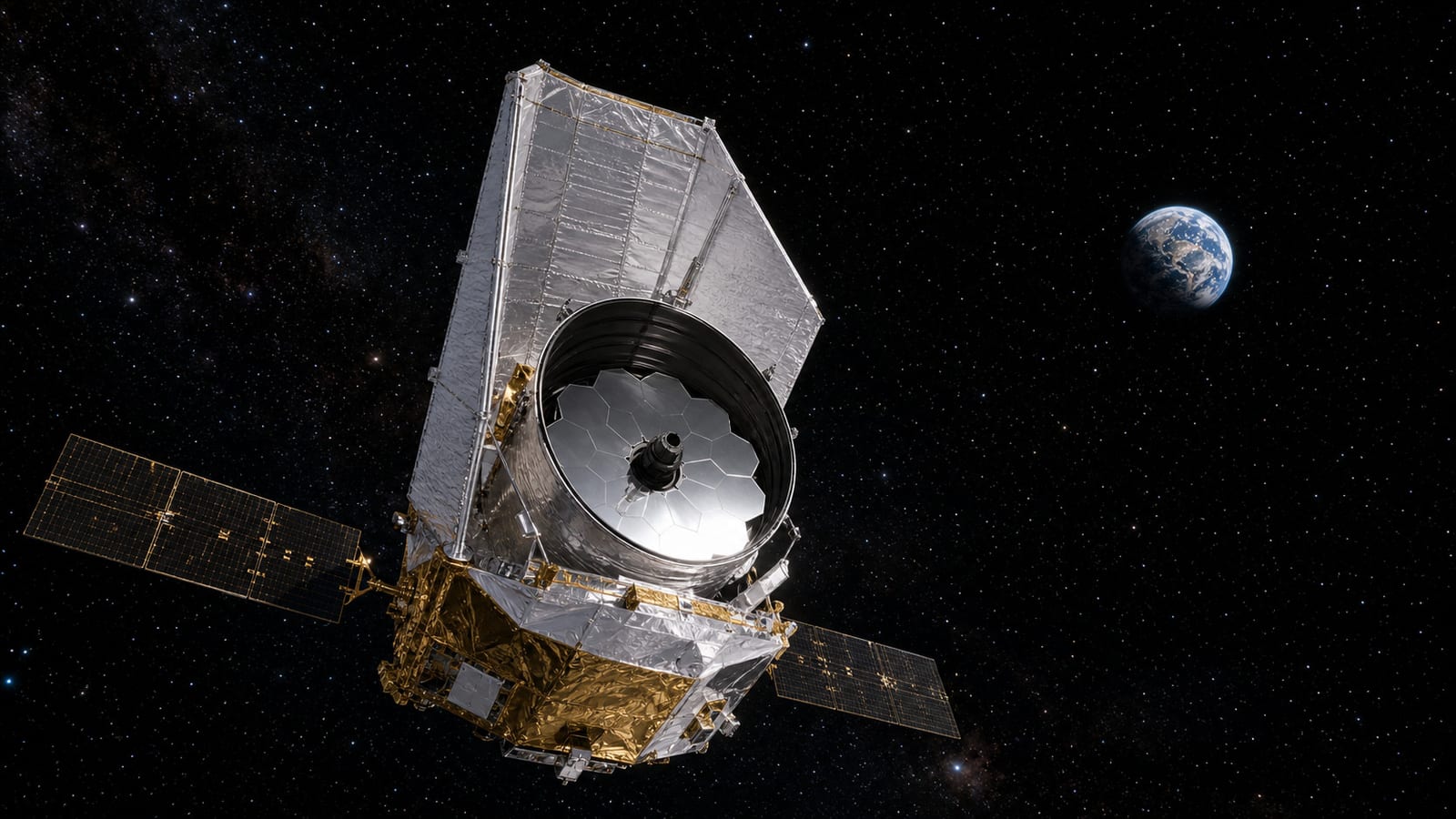
Rubin Observatory is named after Vera Rubin, the American astronomer who provided the first convincing evidence for dark matter by measuring the rotation speeds of galaxies. The observatory's centerpiece is the Simonyi Survey Telescope, an 8.4-meter (27.6-foot) wide-field design that combines the light-collecting power of a large research telescope with a field of view unlike anything that has come before.
Its camera, the LSSTCam, is the largest digital camera ever built. It weighs roughly 2,800 kilograms (6,200 pounds), is about the size of a small car, and packs 189 individual CCD sensors into a focal plane nearly 64 centimeters across. Each image covers 9.6 square degrees of sky. For comparison, the full Moon covers about 0.2 square degrees. Rubin captures the equivalent of 45 Moons in a single exposure, every 40 seconds, all night, every clear night, for 10 years.
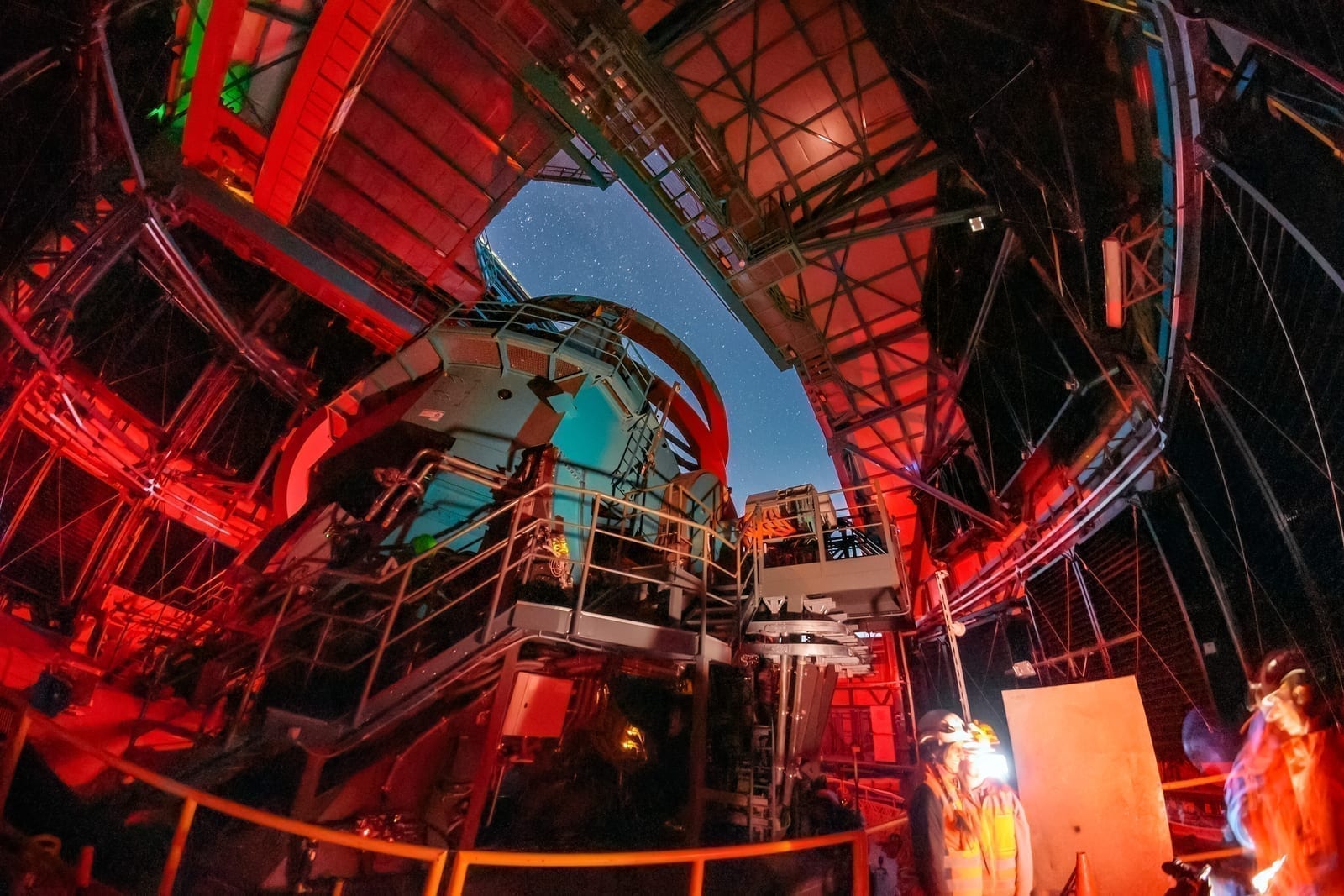
The telescope is housed inside a dome on the summit of Cerro Pachon, a 2,682-meter mountain in the Chilean Andes, where dry air and dark skies provide some of the best observing conditions on Earth. An automated scheduler chooses targets and sequences every night without human intervention, optimizing for survey efficiency, weather conditions, and science priorities.
The result is a firehose of data: roughly 20 terabytes per night, totaling about 500 petabytes over the decade. Each night brings up to 7 million alerts of transient events, objects that have changed position or brightness since the last observation.
11,000 new asteroids in the first month and a half
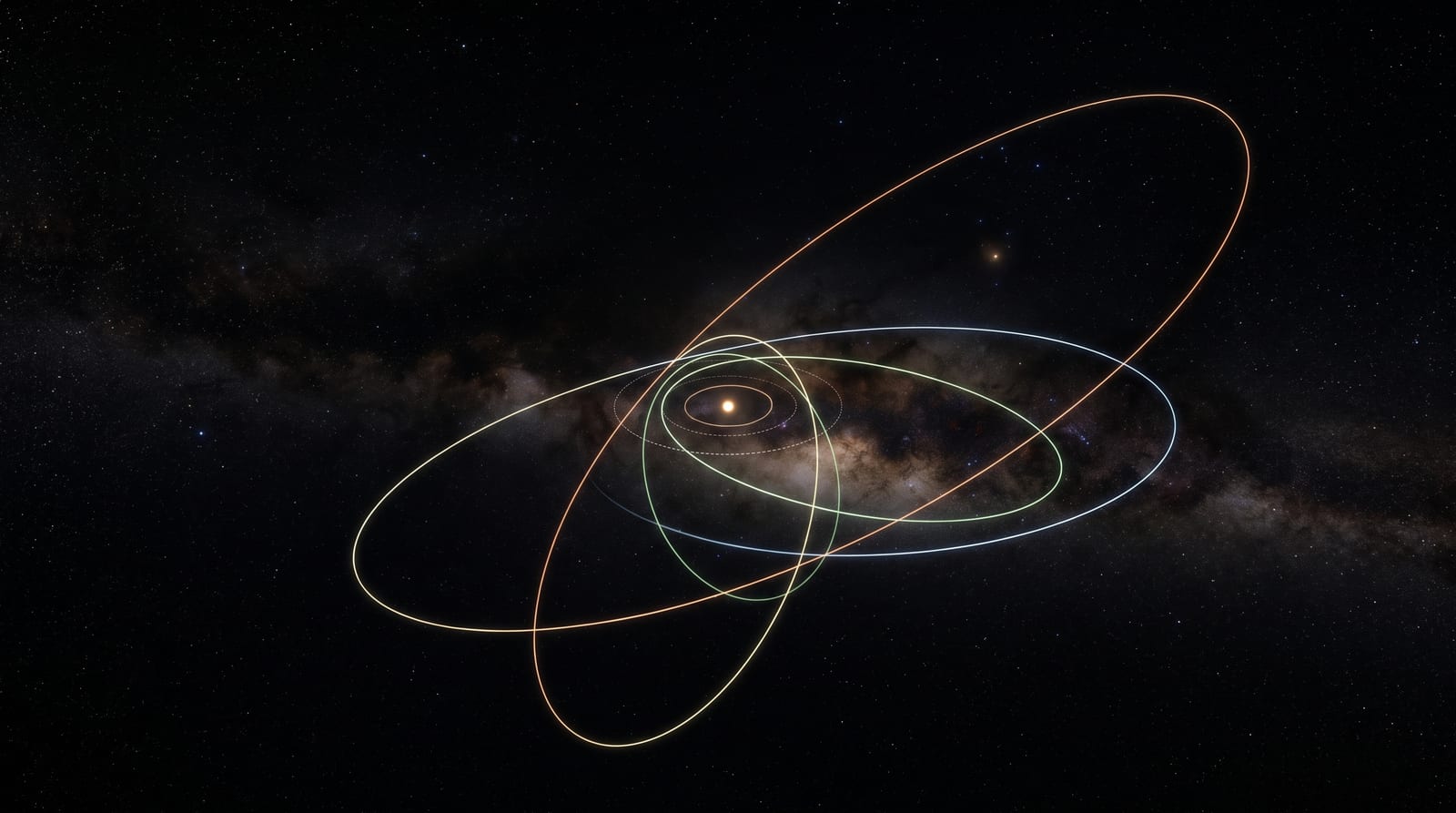
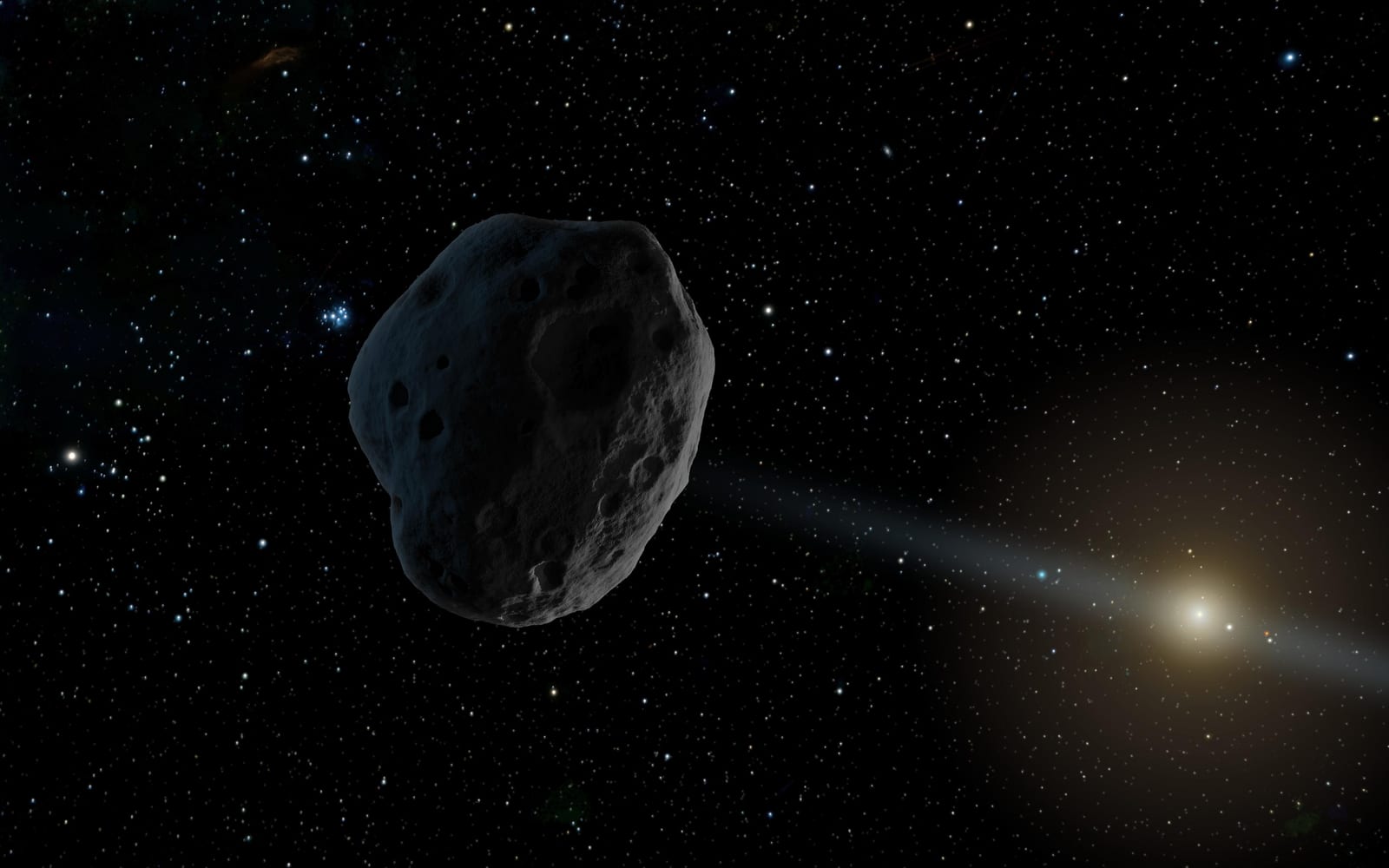
Even before the official start of the LSST, during early optimization surveys, Rubin was already producing discoveries. In roughly six weeks of test operations, the telescope identified 11,000 never-before-seen asteroids, including 33 near-Earth objects and 380 trans-Neptunian objects in the outer solar system.
One of the new finds, a main-belt asteroid, is the fastest-spinning object larger than 500 meters ever recorded. Rubin's repeated imaging caught its rotation period, something that would be difficult to measure with a single-epoch survey.
"Millions of alerts in just the last couple of months show that Rubin is up and running as a discovery machine," Phil Marshall, Deputy Director of Rubin Operations at SLAC, said in the June 30 announcement. "Now we are putting it all together."
The asteroid discovery rate is only a preview. When fully operational, Rubin is expected to find millions of new asteroids and comets within the first two years of the survey. It will also be the most effective observatory ever built for spotting interstellar objects passing through the Solar System, objects like Oumuamua and 3I/ATLAS that currently are found only by chance.
Dark matter, dark energy, and the shape of the universe
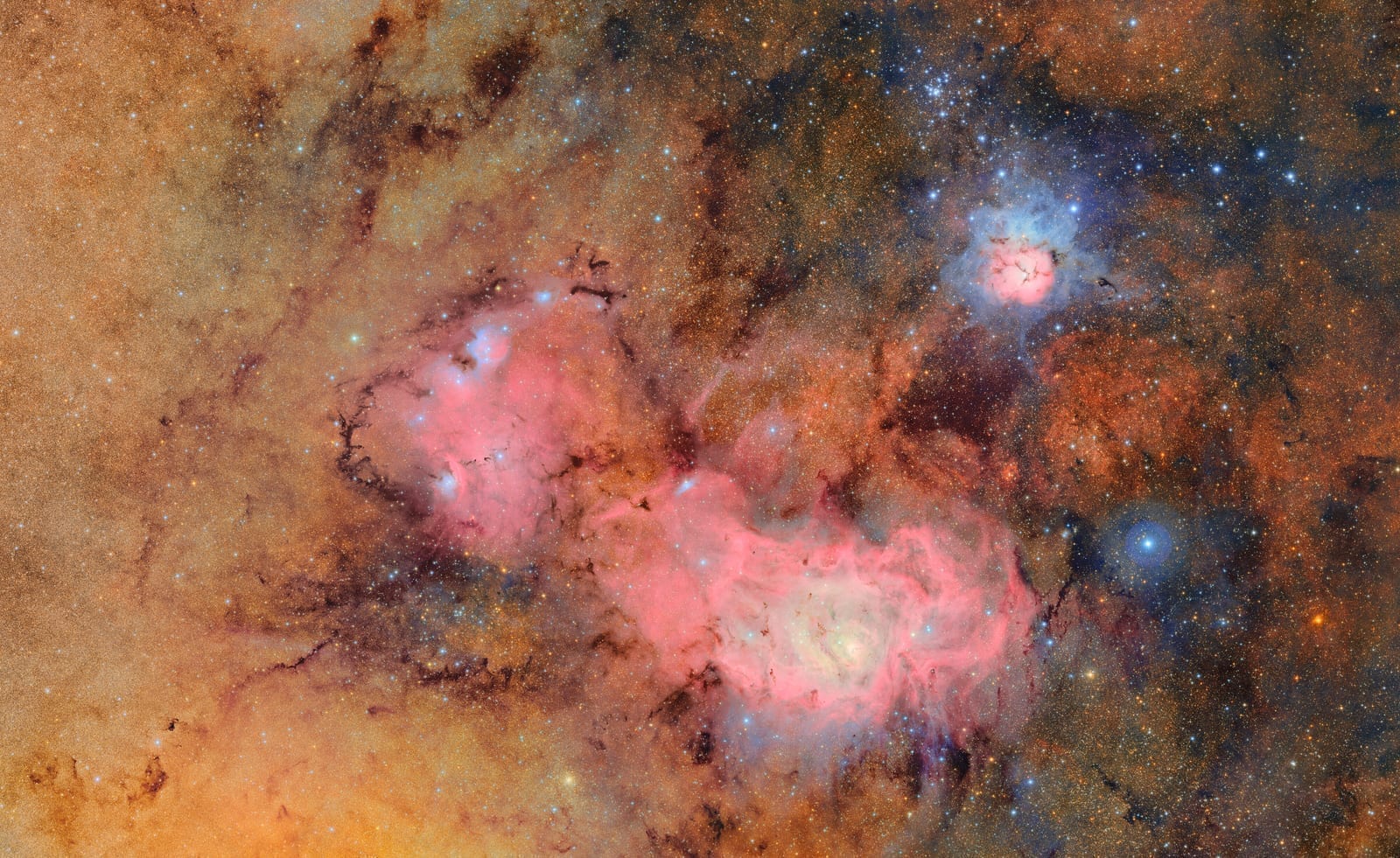
Rubin's core science goal is to understand dark matter and dark energy, the two phenomena that together account for 95 percent of the universe's mass-energy content but remain almost entirely mysterious.
Dark matter, which Vera Rubin herself helped discover, does not emit, absorb, or reflect light. Its presence is inferred only through its gravitational effects on visible matter. Rubin Observatory will map the distribution of dark matter across cosmic time by measuring how its gravity warps the light of distant galaxies, a technique called weak gravitational lensing.
Dark energy is the name scientists give to the unexplained force that appears to be accelerating the expansion of the universe. By measuring the distances and redshifts of billions of galaxies, Rubin will trace how the expansion rate has changed over the past 10 billion years, providing the most precise constraints ever placed on dark energy's properties.
The survey will also produce a census of supernovae that will serve as standard candles for measuring cosmic distances, and it will produce detailed measurements of the large-scale structure of the universe, the web of galaxies whose pattern encodes the conditions of the early cosmos.
A movie, not an album
Most existing sky surveys produce static maps. Rubin produces a time-lapse. Because it returns to each patch of sky roughly 800 times over 10 years, it can detect not only objects that are there, but objects that change.
That time dimension is the key to much of Rubin's discovery potential. A supernova that erupts and fades over weeks. An asteroid that crosses the field of view in hours. A star that dims as a planet passes in front of it. A black hole that flares as it swallows a star. All of these transient events are invisible in a static survey. Rubin sees them all.
The alert stream, which sends up to 7 million notifications per night to automated systems around the world, allows telescopes on every continent to follow up on discoveries within minutes. This capability is critical for multi-messenger astronomy, the coordinated observation of cosmic events using light, gravitational waves, neutrinos, and cosmic rays. When LIGO detects a neutron star merger, Rubin will be able to find its afterglow.
For everyone
Unlike many major observatories whose data is reserved for a small group of astronomers for months or years, Rubin data will be released publicly through regular data releases. Anyone with an internet connection will be able to access the catalog of billions of objects and trillions of measurements.
"Rubin Observatory is for everyone," Bob Blum, Director of Rubin Operations at NSF NOIRLab, said at the June 30 announcement. "The LSST will change how we do astronomy and astrophysics, allowing researchers anywhere to participate in cutting-edge science."
That open-data philosophy extends to the public. An online engagement platform developed by Rubin's education and outreach team provides interactive tools for exploring a subset of the data, including the SkyViewer app and Skysynth sonification, which translates the colors and brightness of galaxies into sound.
What comes next
The LSST is scheduled to run through June 2036. Over that decade, Rubin will accumulate the deepest, widest, most time-resolved optical survey of the universe ever produced. Every few nights, the entire visible southern sky will be scanned again. Every year, the catalog of known objects will grow by billions. By the end of the survey, the data will serve as a baseline reference for astronomy for generations.
But Rubin is not just a machine for gathering data. The survey is designed to be a discovery engine for phenomena that have not been predicted. Dark energy itself was discovered by measuring supernovae that were unexpectedly dim. Rubin's vast, repeated coverage of the sky means that the next unexpected thing, whatever it turns out to be, will be caught on camera from the moment it appears.
Rubin Observatory started rolling the film on June 30. The universe is now being recorded, every night, for the next 10 years.
Related on Impossible Universe
- Euclid Spent 26 Hours Looking at the Milky Way's Core. It Came Back With 60 Million Stars. - another wide-field survey telescope mapping the cosmos at an unprecedented scale
- A Third Galaxy Without Dark Matter Just Showed Up. It's Right Where Scientists Predicted. - dark matter research that Rubin's data will reshape
- New Horizons Heads for the Solar System's Edge - Rubin will find more Kuiper Belt objects for future spacecraft to visit
- JWST Found These Little Red Dots in the Early Universe. They Were Black Hole Stars. - the kind of discovery Rubin will complement with its own survey