The First Time Crystal You Can See With Your Own Eyes
Physicists at the University of Colorado Boulder created the first time crystal visible to the naked eye, using liquid crystals sandwiched between glass plates. The neon-hued stripes ripple periodically in time, not just space, and could enable anti-counterfeiting measures and new optical devices.
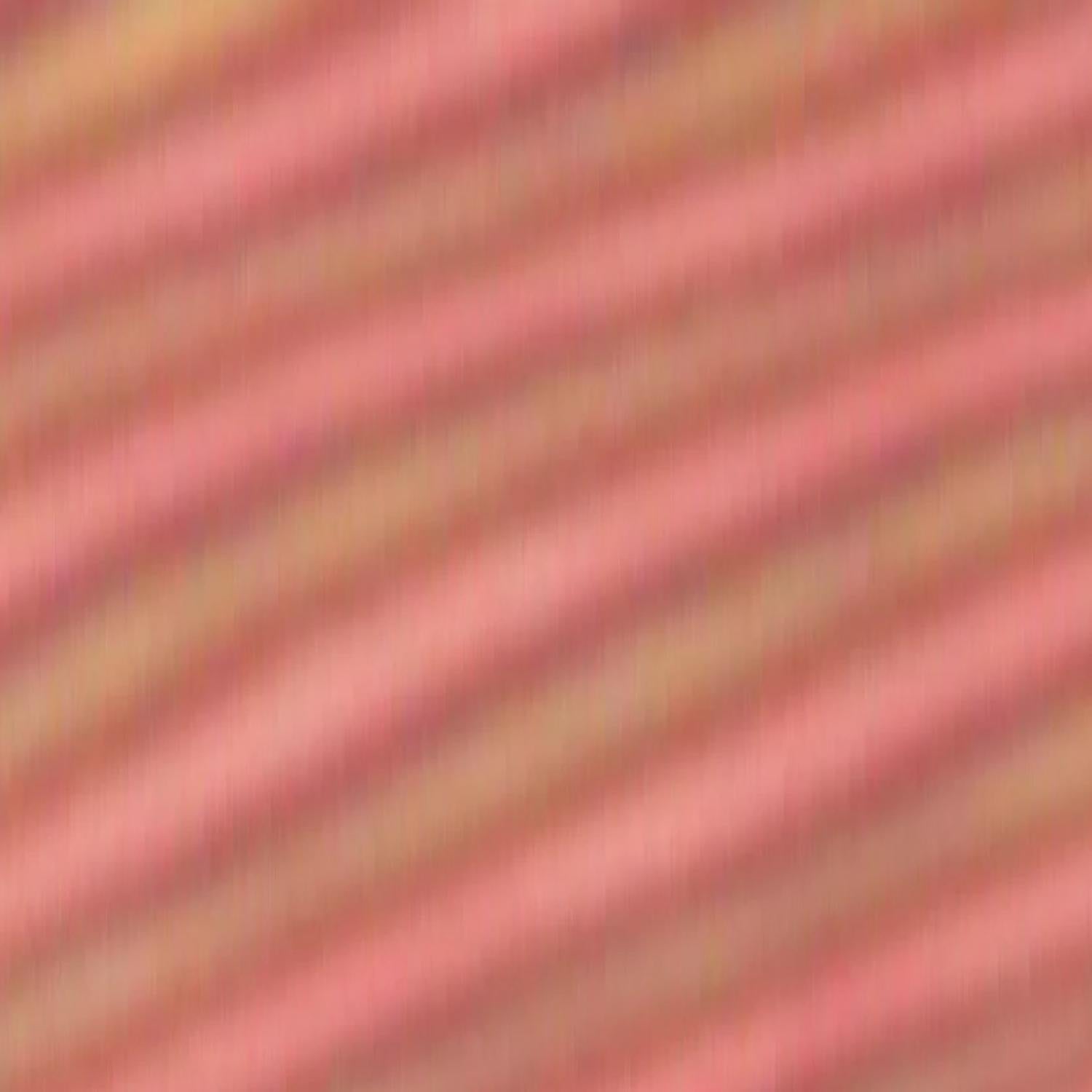
Time crystals have existed in physics papers since 2012. They have been built inside quantum computers and in diamond crystals. But nobody had ever seen one with their own eyes. Then a team at the University of Colorado Boulder took liquid crystals of the kind used in phone displays, sandwiched them between two glass plates, and shone a light on them. The result looked like a living microorganism under a microscope: neon stripes shifting, pulsing, repeating their motion for hours.
"They can be observed directly under a microscope and even, under special conditions, by the naked eye," said Hanqing Zhao, a graduate student in physics at CU Boulder and lead author of the study.
Zhao and his advisor Ivan Smalyukh published their findings in Nature Materials on September 4, 2025. The paper describes the first time crystal that human beings can actually see, made not from exotic quantum states but from the same liquid crystals that display the time on a microwave oven.
What is a time crystal, really
Nobel laureate Frank Wilczek proposed the idea in 2012 with a simple question. A diamond is a crystal because its carbon atoms arrange themselves in a repeating pattern in space. Could there be a crystal whose pieces repeat in time instead of space? Even in its lowest energy state, Wilczek wondered, could a material keep moving on a fixed schedule, the way the atoms in a diamond keep their position?
The original idea turned out to be impossible. The laws of thermodynamics forbid perpetual motion, and Wilczek's first formulation seemed to violate them. But physicists found loopholes. In 2016, a team at the University of Maryland and Google's Sycamore quantum computer separately showed that you could create a phase of matter that oscillates in time under special conditions. These were real time crystals, but they existed inside million-dollar machines, invisible to the people who built them. You could not see one without a rack of electronics and a cloud API call.
Zhao and Smalyukh wanted to change that.
The Jane Austen dance floor
Liquid crystals are a strange middle ground. Their molecules behave like a liquid but also arrange themselves with some of the order of a solid. This is why they work so well in displays: applying a small voltage makes the molecules tilt, changing how light passes through.
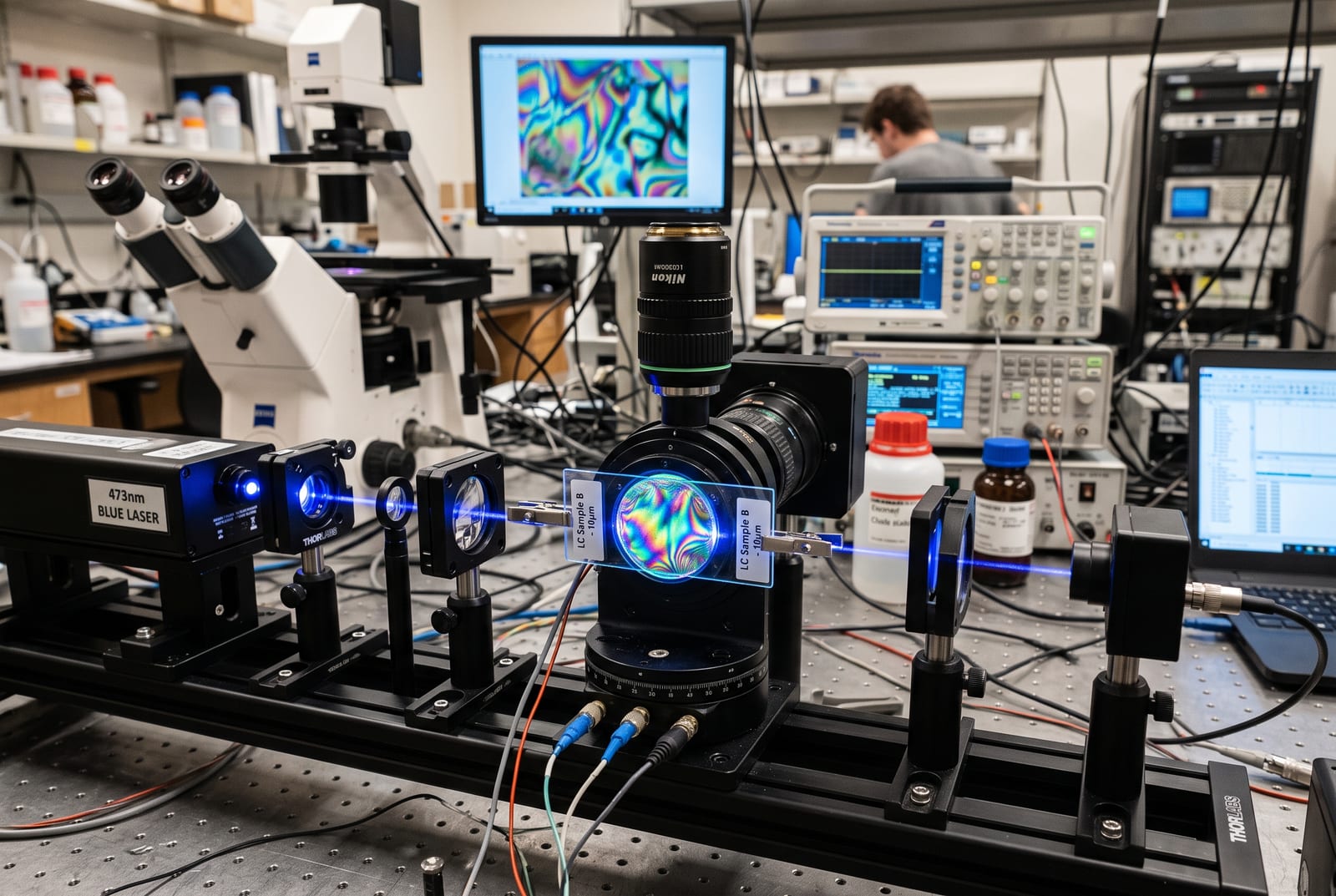
The CU Boulder team replaced the voltage with light. They coated two glass plates with a photoresponsive dye, then sandwiched a thin layer of liquid crystal between them. When they hit the sample with a specific wavelength of light, the dye molecules changed orientation. That reorientation squeezed the liquid crystal, forcing its rod-shaped molecules to bunch up and form defects, or what physicists call "kinks."
"You have these twists, and you can't easily remove them," Smalyukh said. "They behave like particles and start interacting with each other."
Thousands of kinks formed at once. They began pairing up, separating, spinning around, and recombining in a repeating cycle. The researchers compared the motion to a room full of dancers in a Jane Austen novel, constantly breaking apart and coming back together. Under a microscope, the dance looked like tiger stripes made of neon light, pulsing and shifting for hours on end.
The patterns were unusually robust. Raising or lowering the temperature did not stop them. Changing the light levels did not break the rhythm. The time crystal kept its beat.
"That's the beauty of this time crystal," Smalyukh said. "You just create some conditions that aren't that special. You shine a light, and the whole thing happens."
A "time watermark" for banknotes
Time crystals have long been discussed as potential platforms for quantum sensing and computing. But this version comes with a much more immediate possibility. Because the patterns are visible and repeatable, they could be embedded in physical objects as a kind of "time watermark." Shine a light on a banknote containing a liquid crystal layer, and the movements that appear could authenticate it on the spot.
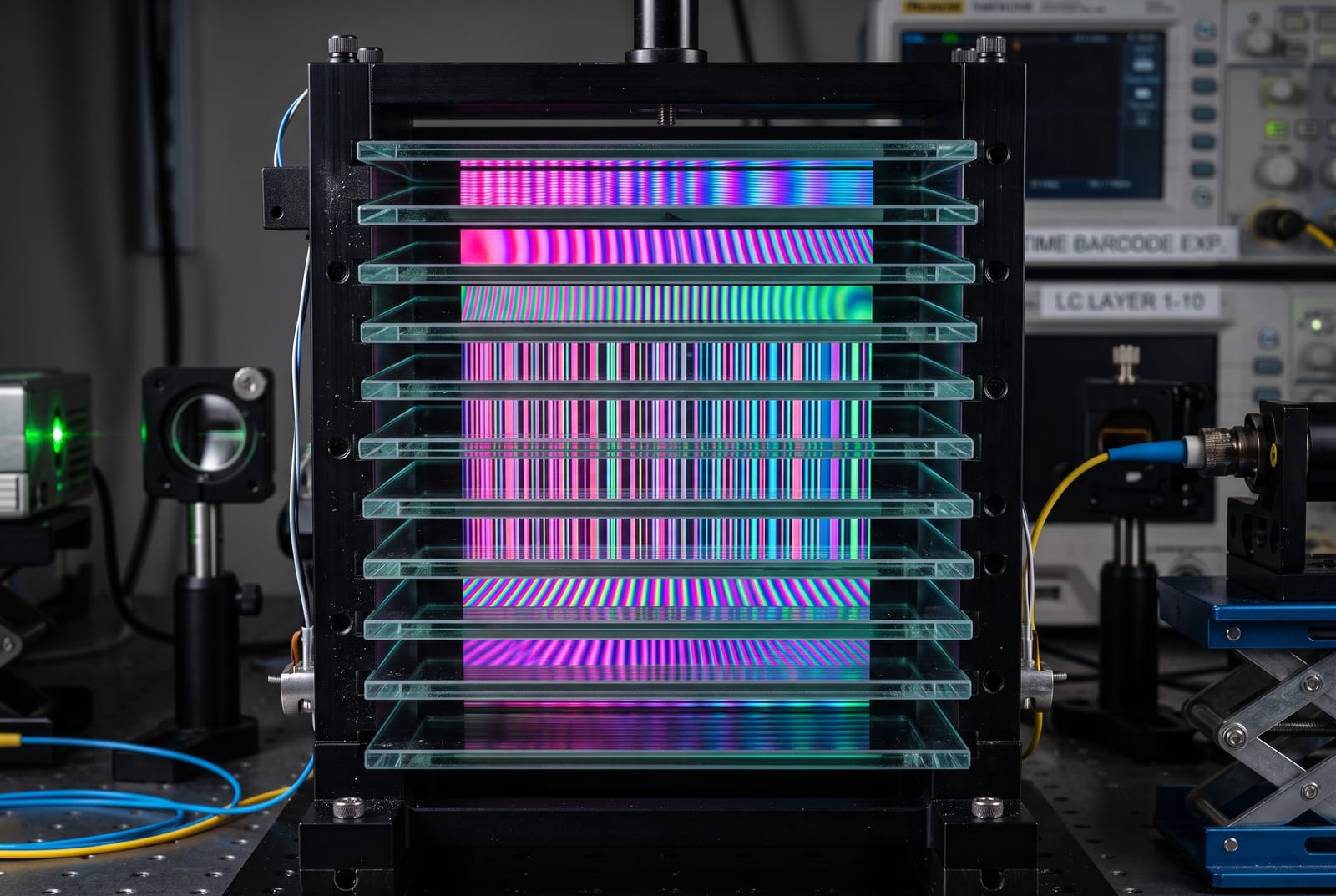
Stacking multiple time crystals on top of each other produces even more complex patterns, which the team calls a "time barcode." These overlapping patterns could encode digital information in a way that is hard to forge and easy to read with a simple light source.
"We don't want to put a limit on the applications right now," Smalyukh said. "I think there are opportunities to push this technology in all sorts of directions."
Why it matters
Time crystals are one of those physics concepts that sound like science fiction but describe a real phenomenon. The visible time crystal makes that phenomenon tangible. Instead of reading about oscillations in a journal, anyone with a microscope can watch them happen.
The simplicity of the setup matters too. Previous time crystals required cryogenic temperatures, quantum processors, or diamond anvils. This one needs a liquid crystal cell, a dye coating, and a light source. The low barrier means more labs can study time crystals, and more students can see them with their own eyes.
"Everything is born out of nothing," Smalyukh said. "All you do is shine a light, and this whole world of time crystals emerges."
Sources
- CU Boulder Today: Physicists have created a new 'time crystal' - primary press release with researcher quotes and experiment details
- Zhao & Smalyukh, Nature Materials (2025): Space-time crystals from particle-like topological solitons - peer-reviewed study
- ScienceAlert: World First: Physicists Created a Time Crystal That We Can Actually See - additional reporting and accessible explanation
- The Debrief: "Everything is Born out of Nothing": Scientists Release Video of First-Ever Visible 'Time Crystal' - additional coverage and context
- Wilczek, Physical Review Letters (2012): Quantum Time Crystals - original theoretical proposal
The hero image of the time crystal stripes is from Zhao & Smalyukh, Nature Materials 2025, used under a Creative Commons BY-NC-ND 4.0 license. Additional laboratory images are editorial depictions based on the described experimental setup.
Related on Impossible Universe
- This Tiny Chip Processes Information With Light Instead of Electricity - a nanoscale circuit that uses light to compute at room temperature, made possible by manipulating quantum valleys in atom-thin materials
- A Dying Star Could Create a Tiny New Universe Instead of a Black Hole - theoretical physicists found that when a massive star collapses, the result may not be a black hole but a tiny expanding universe inside
- Scientists Built LEGO-Like Nanoparticles Into a Material That Shows Quantum Behavior at Room Temperature - a room-temperature quantum material from silver nanoparticle superlattices, another novel phase of matter that was predicted for decades but never before captured