Physics and Quantum: The Frontier of How Things Work
The laws of physics govern everything from the smallest particle to the largest galaxy, but that does not mean they are fully understood. Impossible Universe's physics collection covers the experiments and discoveries that push the boundaries of what we know about matter, energy, time, and the fundamental forces that shape reality. Use the links below to jump to a specific angle, or scroll through the full collection.
Exotic phases of matter
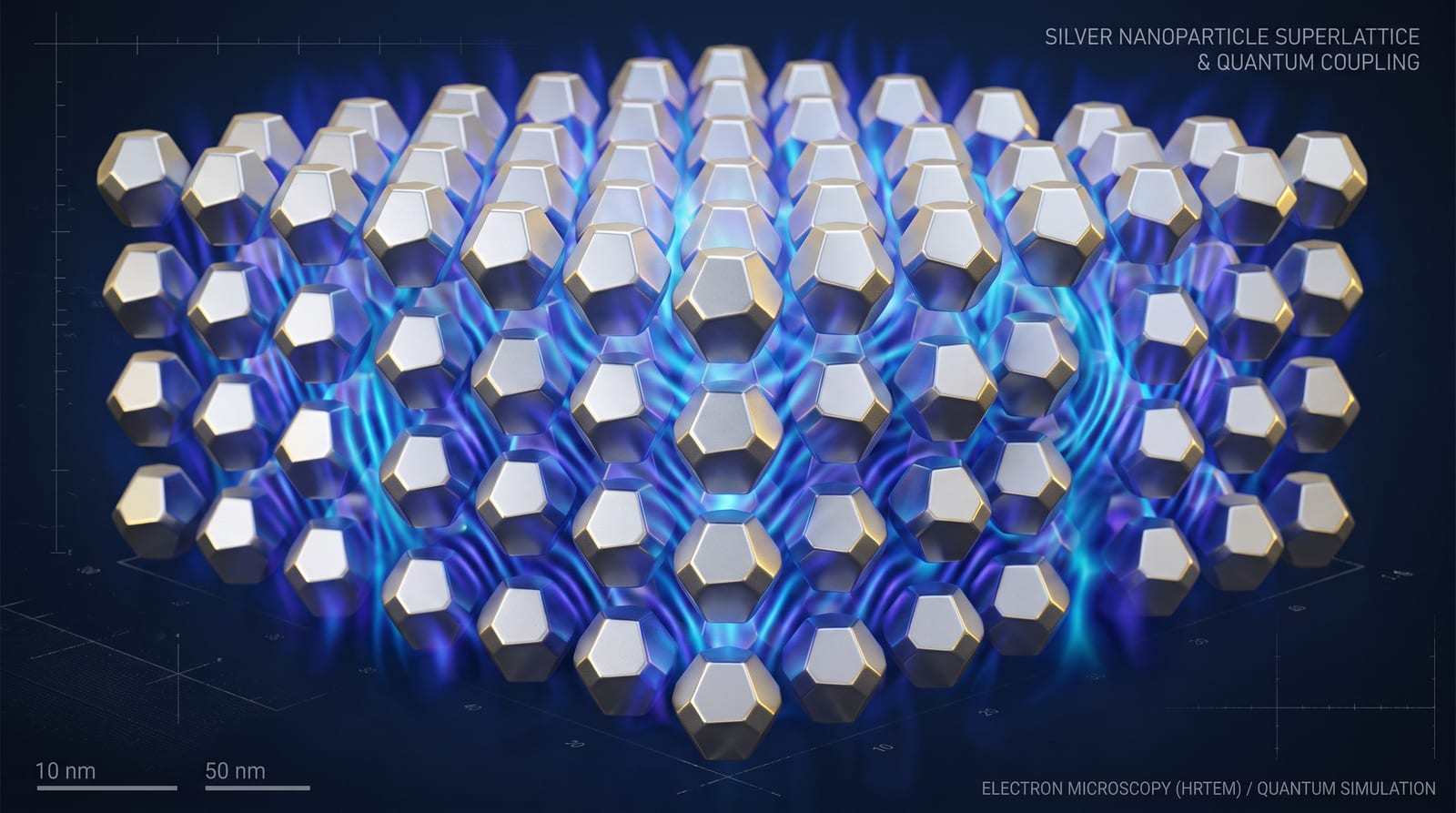
Most people learn about three states of matter: solid, liquid, and gas. Physics knows dozens more, and new ones keep appearing. In 2026, researchers at Brown University and the University of Michigan used silver nanoparticles shaped like truncated octahedra to freeze a theoretical phase of matter into a physical material, creating a superlattice that exhibits strong quantum light-matter coupling at room temperature. Around the same time, physicists at the University of Colorado Boulder made the first time crystal visible to the naked eye, a liquid crystal whose internal stripes ripple periodically in time, not just in space. These are not incremental improvements. They are entirely new states of matter that were predicted only on paper until someone figured out how to build them.
Scientists Built LEGO-Like Nanoparticles Into a Material That Shows Quantum Behavior at Room Temperature
Researchers at Brown University and the University of Michigan used custom-shaped silver nanoparticles to freeze a fleeting structural phase of matter that had been predicted by theory but never captured in a physical material. Under light, the superlattice exhibits deep-strong light-matter coupling at room temperature, a quantum behavior normally seen only near absolute zero.

The First Time Crystal You Can See With Your Own Eyes
Physicists at the University of Colorado Boulder created the first time crystal visible to the naked eye, using liquid crystals sandwiched between glass plates. The neon-hued stripes ripple periodically in time, not just space, and could enable anti-counterfeiting measures and new optical devices.
Future computing
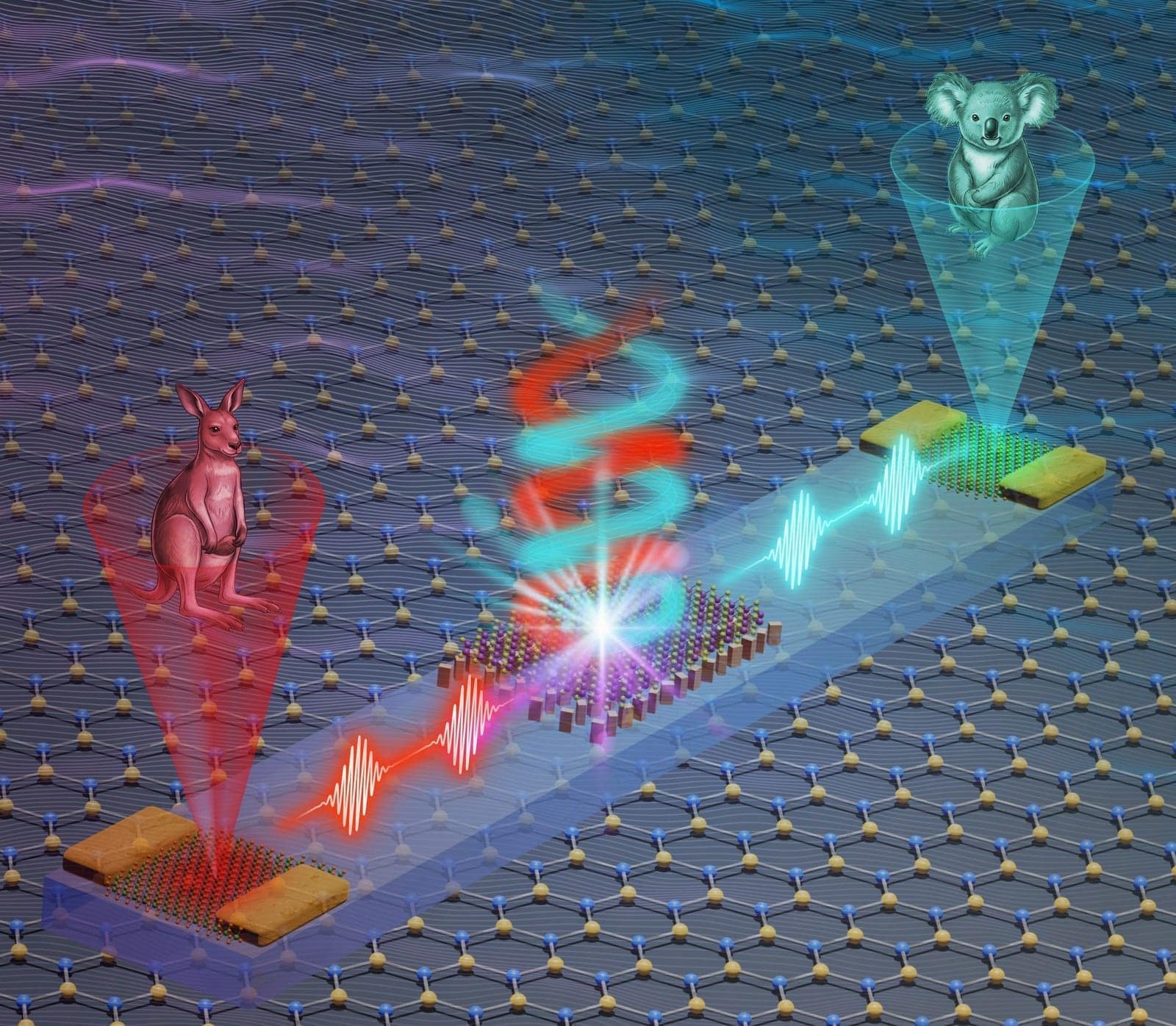
The physical limits of silicon transistors are approaching. One alternative is to use light instead of electricity. Engineers at Monash University built a nanoscale circuit that processes information using light particles at room temperature, handling two data streams simultaneously. The chip, based on photonic valleytronics, represents a practical step toward computing architectures that do not rely on moving electrons through wires. The same quantum effects that make the superlattice and the time crystal strange also make them useful: if you can control how electrons move and interact, you can build devices that do more with less energy.
Frontiers of physics
Sometimes physics goes in directions that sound more like philosophy than science. One team of theoretical physicists solved Einstein's equations and found that when a massive star collapses, the result may not be a black hole at all. Instead, a tiny expanding universe could be born inside the collapsing star, powered by dark energy, with the event horizon replaced by a shell of ordinary matter. The idea, called a gravastar, is speculative but mathematically consistent. It shows that even our best-tested theories can still produce surprises when pushed to their limits.