Black Holes: The Universe's Most Extreme Objects
Black holes are where gravity wins. They are the endpoints of stellar collapse, the engines of active galaxies, and one of the most active frontiers in modern astrophysics. Impossible Universe's black hole collection spans dormant supermassive giants, gravitational wave catalogs, the mystery of what happens at the galactic center, and even the question of whether a collapsing star could create something entirely different. Use the links below to jump to a specific angle, or scroll through the full collection.
Supermassive black holes
Nearly every large galaxy harbors a supermassive black hole at its center, with masses millions to billions of times that of the Sun. But these objects are notoriously hard to study directly. JWST has transformed the field, finding dormant black holes at cosmological distances by watching stars orbit an invisible center, and piercing the dusty cocoons around active black holes in the early universe. Closer to home, the Milky Way's own central black hole, Sagittarius A*, is a natural laboratory for understanding how these cosmic giants interact with their surroundings.
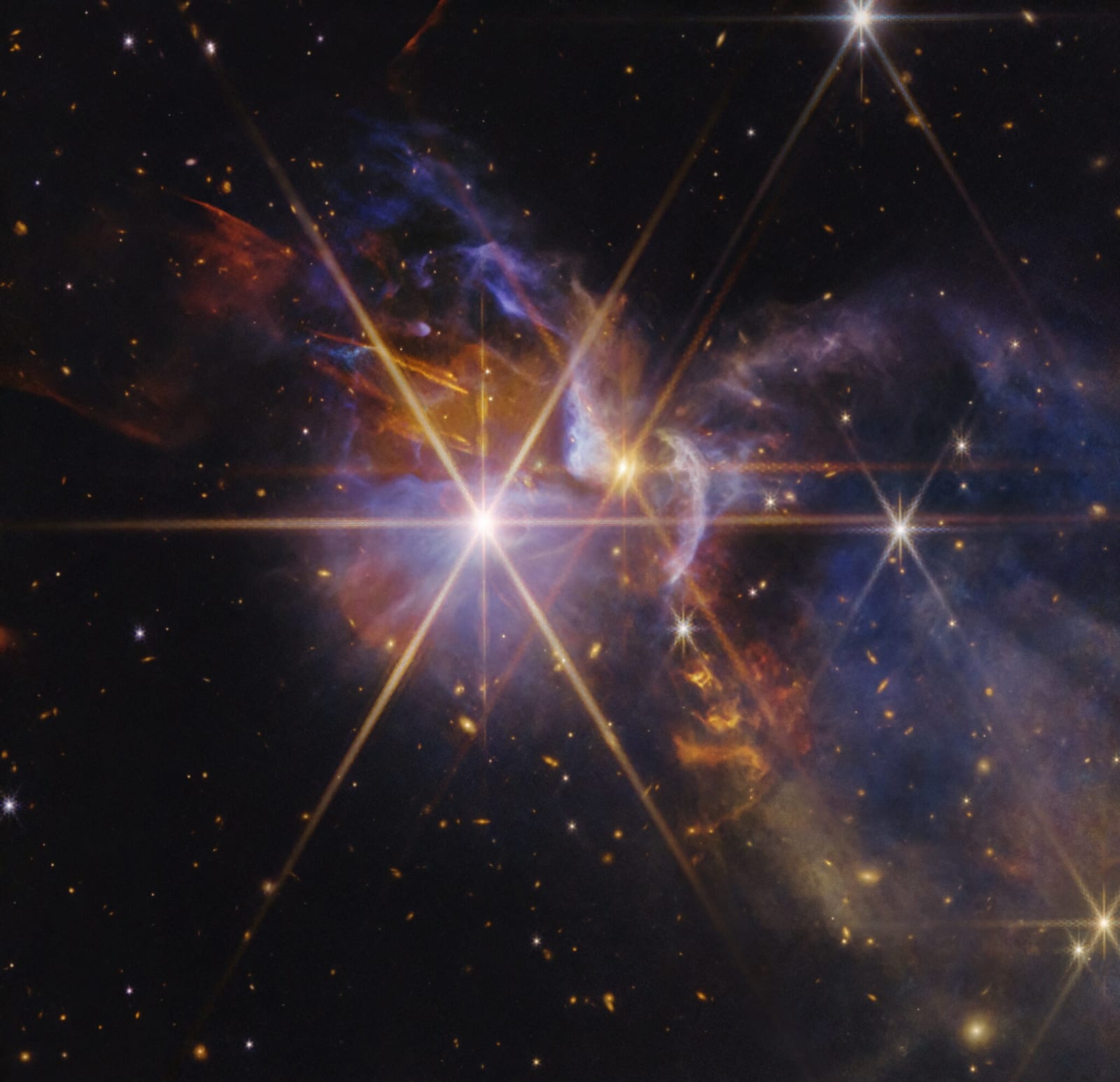
A Near-Invisible Black Hole 6 Billion Times the Sun Mass Was Hiding 10 Billion Light-Years Away. JWST Found It by Watching Stars Orbit Nothing.
Using the James Webb Space Telescope and a natural gravitational lens that magnified the view 30 times, astronomers measured the mass of a dormant supermassive black hole in galaxy MRG-M0138 for the first time at cosmological distances. The black hole clocks in at roughly 6 billion solar masses and is observed as it was when the universe was only 3 billion years old. The previous distance record for this technique was 700 million light-years. This one is 10 billion.
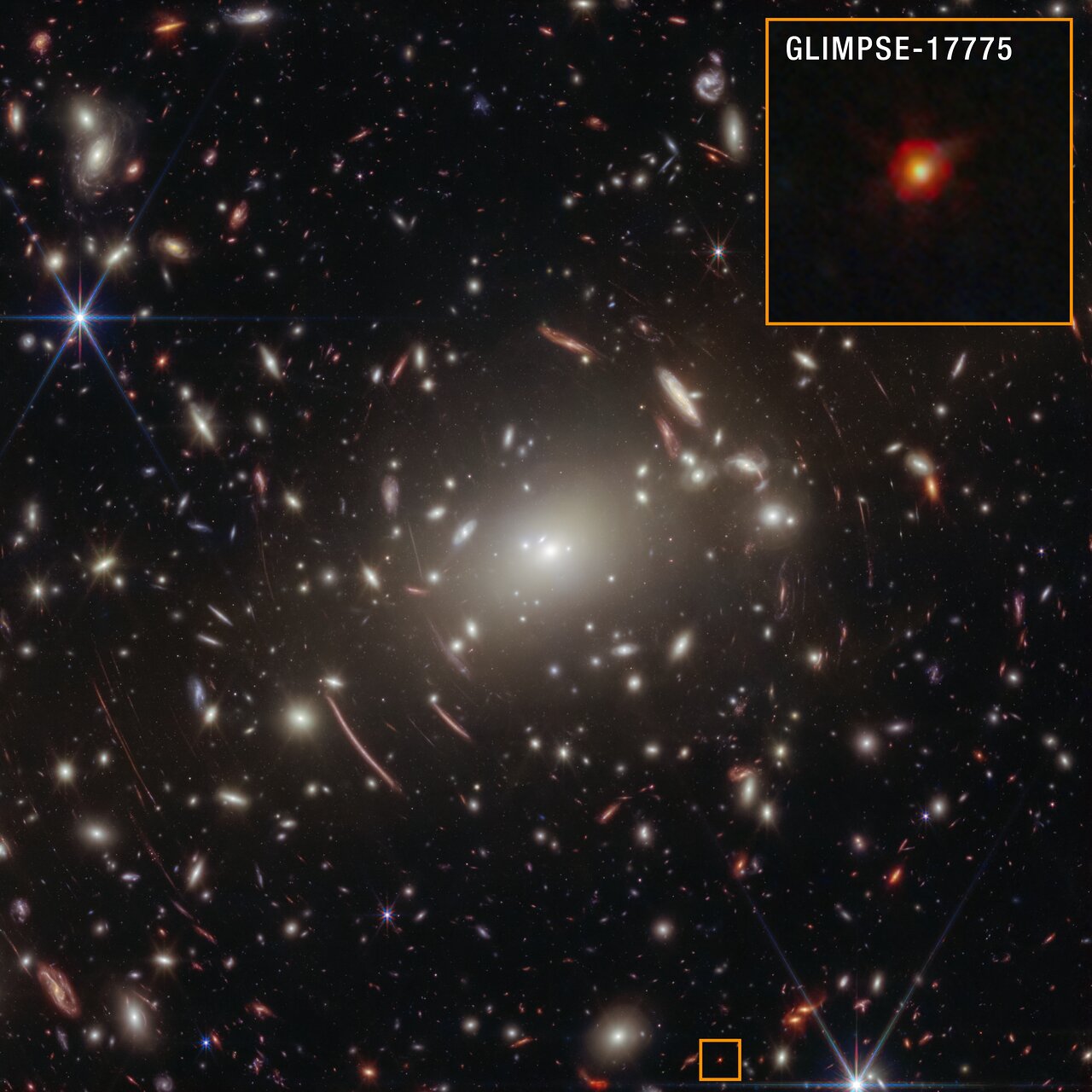
JWST Found These Little Red Dots in the Early Universe. They Were Black Hole Stars.
In 2022, JWST spotted mysterious red objects in the early universe that defied explanation. The deepest spectrum ever taken of one points to a new kind of object: a supermassive black hole wrapped in a dense cocoon of gas.
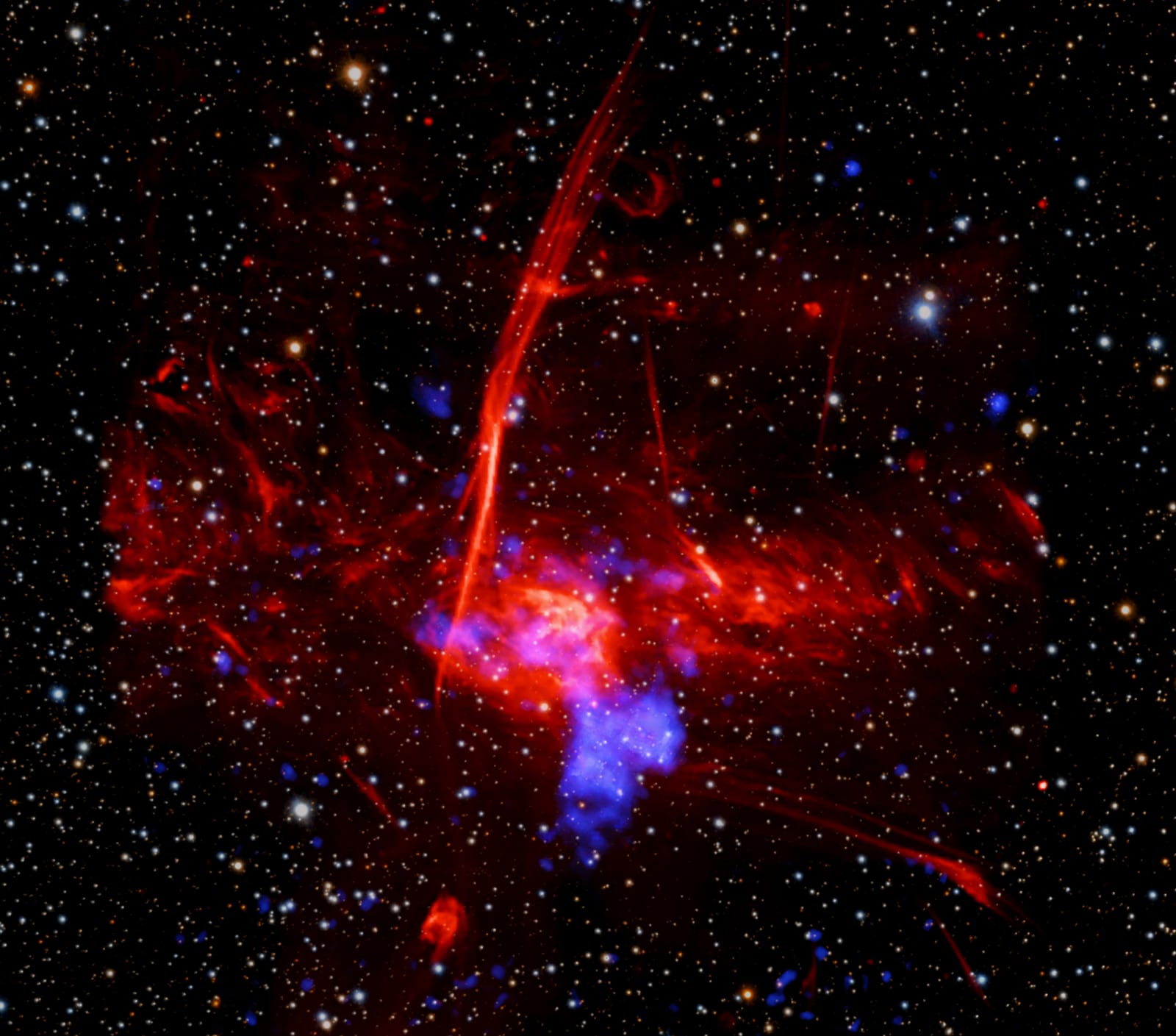
A Supernova Exploded Near the Milky Way Central Black Hole. Astronomers Just Found Its Remains.
A team using NASA Chandra X-ray Observatory and ESA XMM-Newton data has found a possible supernova remnant in Sagittarius C, a star-forming region just a few dozen light-years from the supermassive black hole at the center of the Milky Way. The blast wave is racing through dense molecular clouds at two million miles per hour.
Black hole mergers
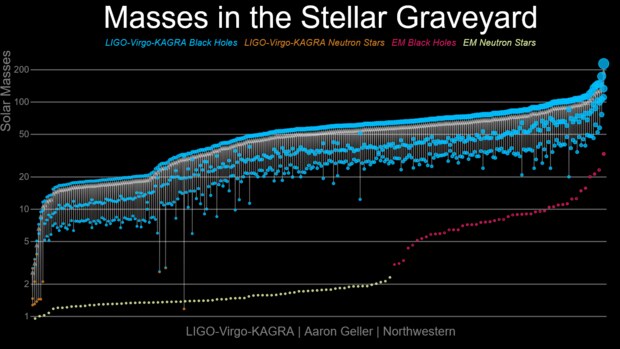
When two black holes collide, they send ripples through the fabric of spacetime itself. LIGO, Virgo, and KAGRA have now detected nearly 400 such events, charting the population of black holes across the universe. The latest catalog includes the best-localized gravitational wave source ever found, the clearest signal ever recorded, and hints of black holes that are themselves the products of earlier mergers. Each event is a snapshot of a universe where gravity is at its most extreme.
Mysteries and alternatives
For all that we have learned about black holes, deep questions remain. Theoretical physicists have found a solution to Einstein's equations in which a collapsing star does not form a black hole at all, but instead creates a tiny expanding universe inside, a gravastar. Meanwhile, a dust-shrouded galaxy 11 billion light-years away confounded expectations by producing neutrinos without a black hole at its core, powered instead by star formation alone. These stories remind us that the universe is stranger than our models predict, and that the next discovery may upend what we think we know.
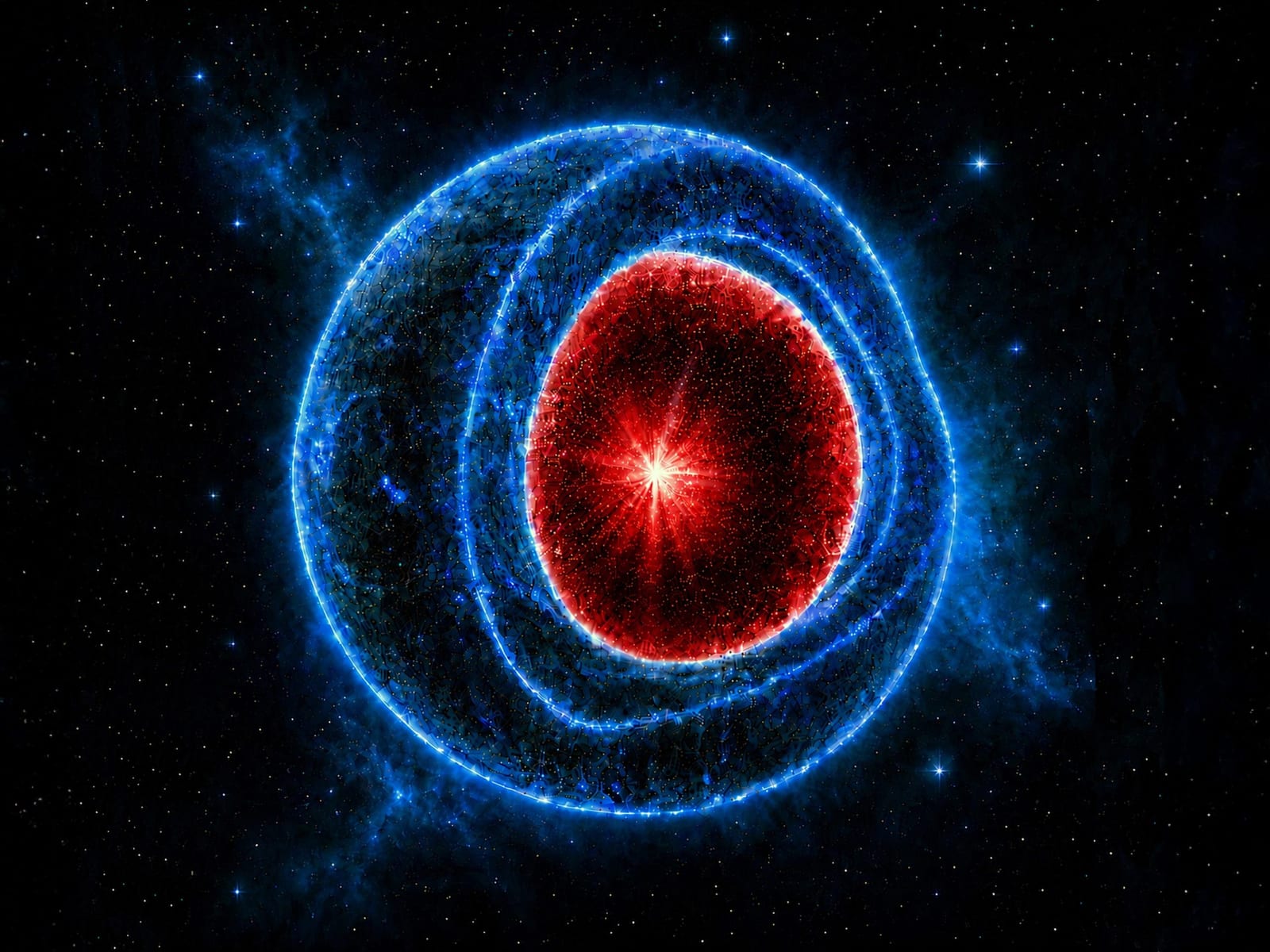
A Dying Star Could Create a Tiny New Universe Instead of a Black Hole
Theoretical physicists solved Einstein's equations and found that when a massive star collapses, the result may not be a black hole. Instead, a tiny expanding universe could be born inside, powered by dark energy.
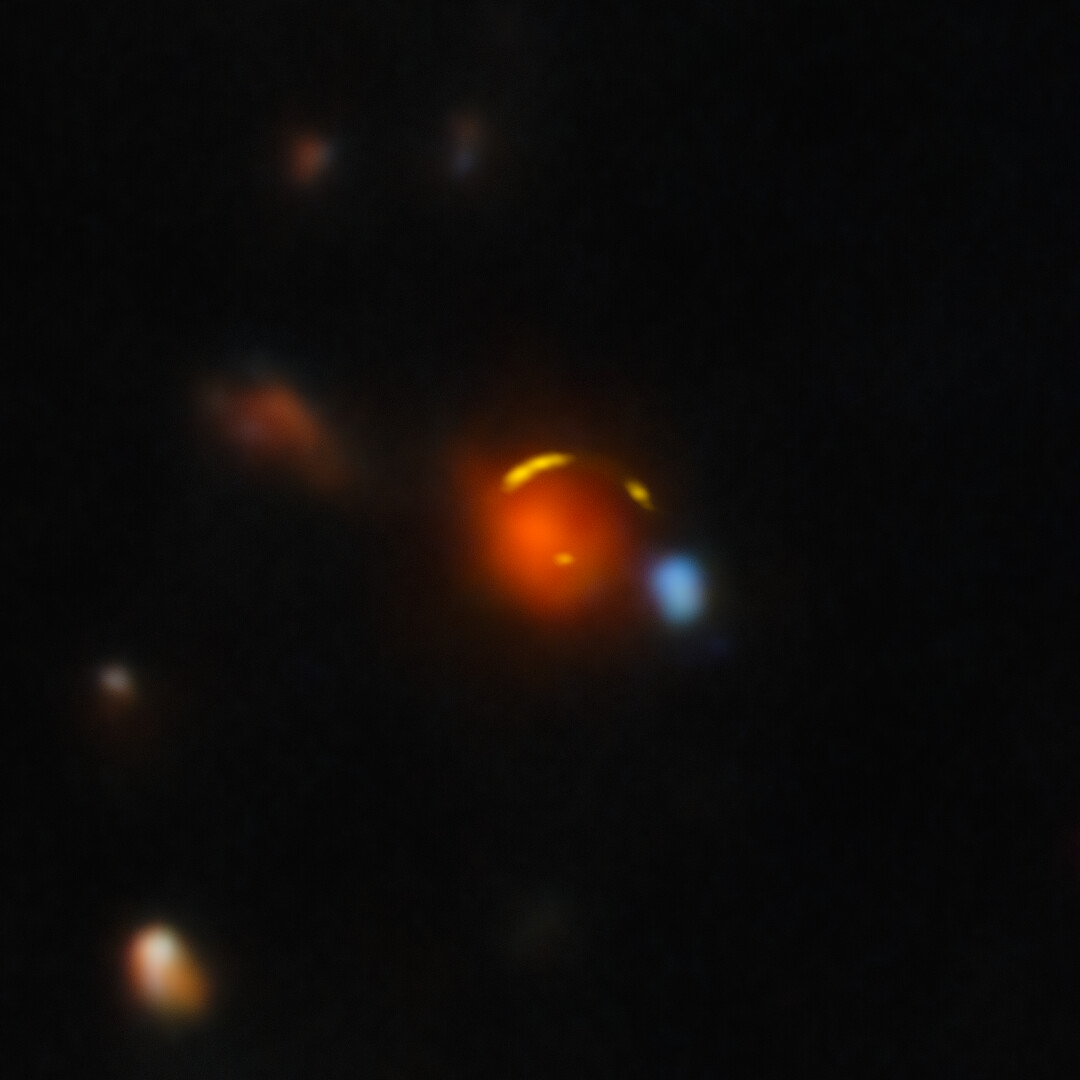
Scientists Expected a Black Hole. They Found a Neutrino Factory Powered by Stars.
A single neutrino detected at the South Pole in 2021 led astronomers to a dust-shrouded galaxy 11 billion light-years away. The galaxy, nicknamed Shadow Blaster, had no black hole at its core. Instead, it was forming stars so intensely that the dense gas was converting cosmic rays into ghost particles.