390 Black Hole Mergers and Counting. The Gravitational Wave Catalog Just Got 161 New Entries.
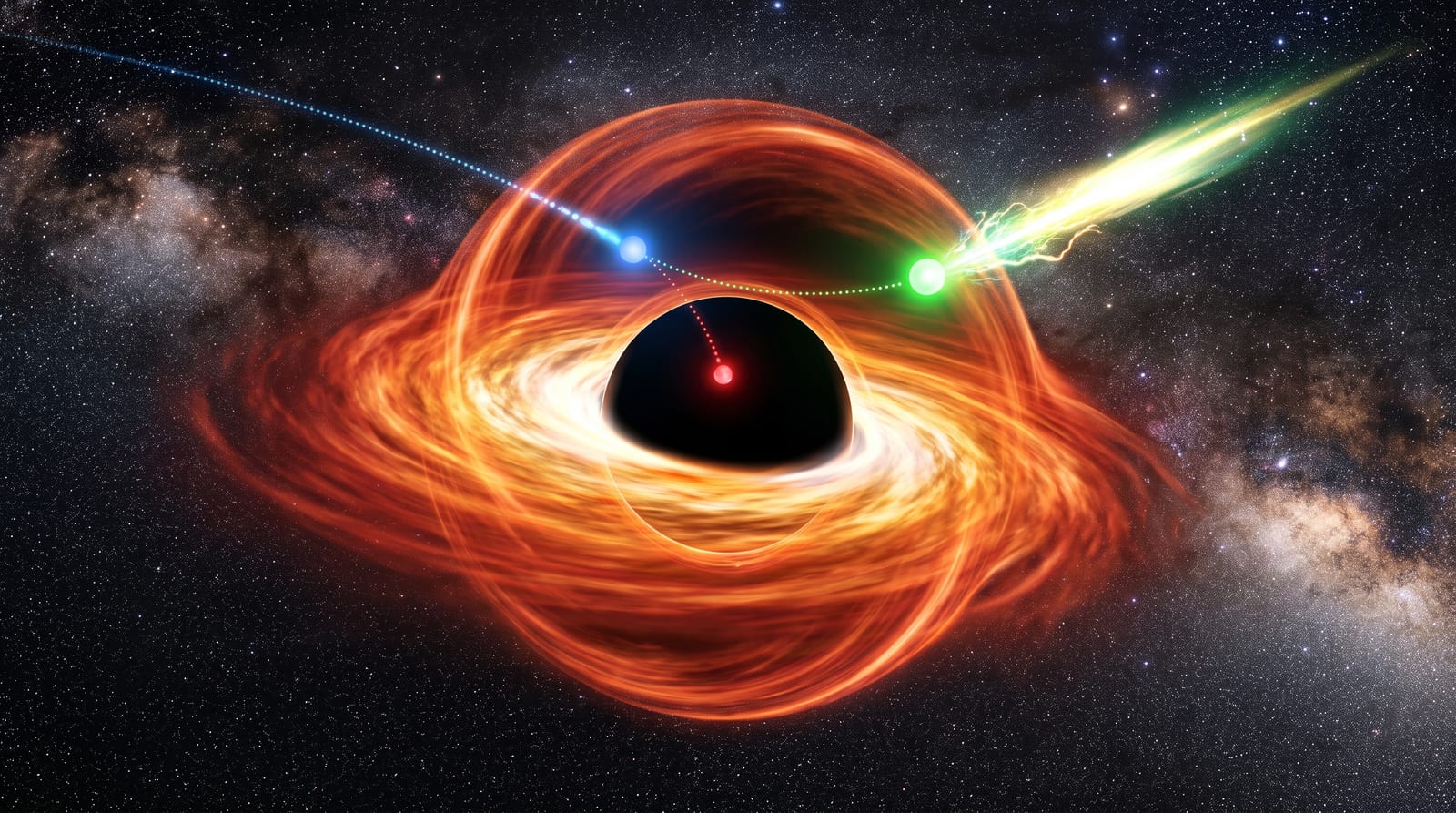
The LIGO-Virgo-KAGRA collaboration released the fifth Gravitational-Wave Transient Catalog (GWTC-5.0) on May 26, 2026, adding 161 new black hole mergers detected in a nine-month stretch. The total confirmed gravitational wave events now stands at 390, up from exactly 1 when the first detection was announced in 2016. The catalog includes the best-localized source ever, the clearest signal ever recorded, and hints of second-generation black holes.
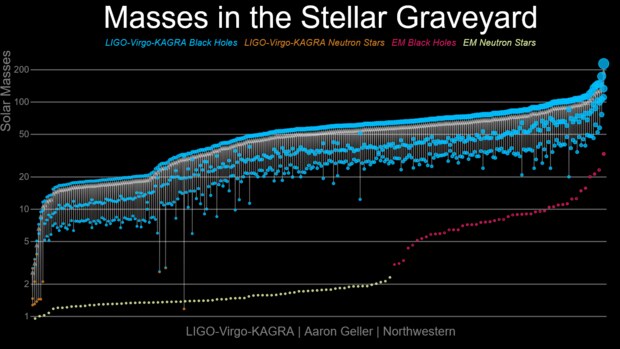
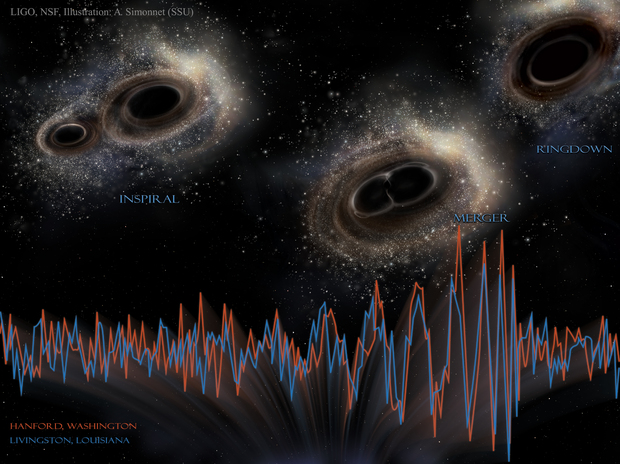
In September 2015, physicists announced that they had done something that Albert Einstein considered impossible: they had directly detected a gravitational wave, a ripple in the fabric of spacetime itself. The signal, named GW150914, came from two black holes 1.3 billion light-years away that spiraled into each other and merged. It lasted less than a quarter of a second.
That event was a scientific revolution. But revolutions need numbers to become sciences. A single data point tells you a black hole merger happened. Hundreds tell you how black holes form, how galaxies evolve, how fast the universe is expanding, and whether Einstein's theory holds up under the most extreme conditions in the universe.
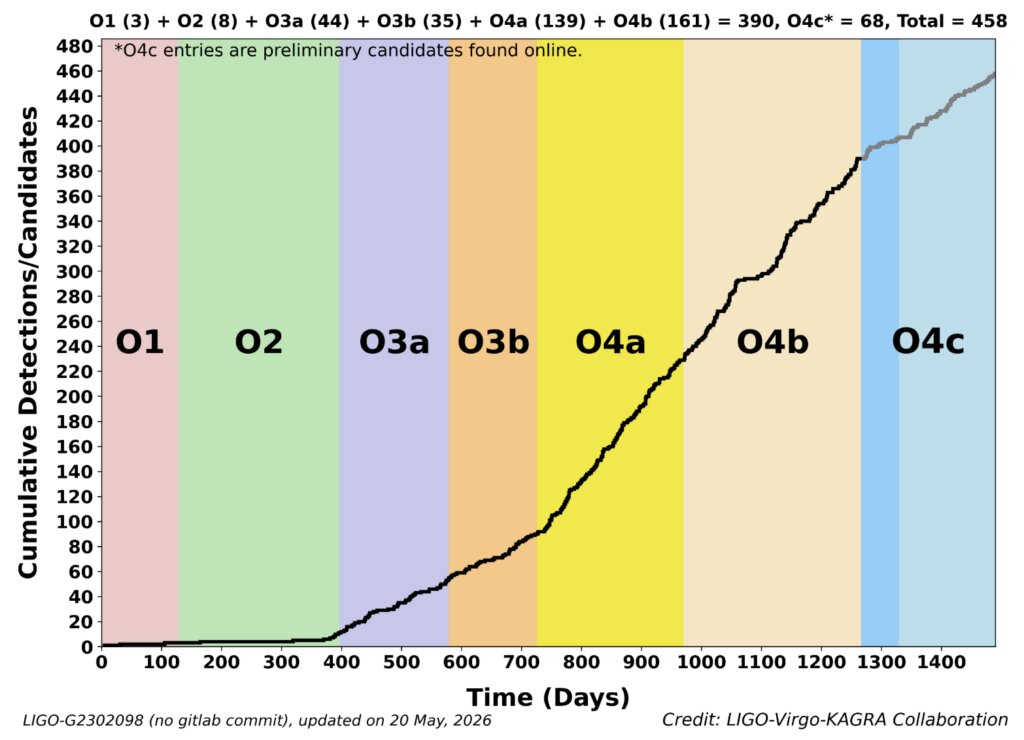
On May 26, 2026, the LIGO-Virgo-KAGRA (LVK) Collaboration released the fifth Gravitational-Wave Transient Catalog, GWTC-5.0. It added 161 new gravitational wave events detected during a single nine-month stretch between April 2024 and January 2025, during the second part of the fourth observing run (O4b). The total number of confirmed gravitational wave detections since 2015 now stands at 390.
That total number tells its own story: the fourth observing run alone accounts for roughly 75 percent of all gravitational wave events ever detected.
"Nearly 400 gravitational-wave events accumulated in our catalog have ushered us into a new era of statistical astronomy," said Leo Tsukada of the University of Nevada, Las Vegas, in the May 26 announcement. "This growing collection of detected signals enables population studies and tests of general relativity with unprecedented precision."
How you detect something that weighs nothing
Gravitational waves are distortions in spacetime that travel at the speed of light. They are produced whenever massive objects accelerate, but only the most extreme events in the universe, merging black holes and neutron stars, produce waves strong enough to be detected on Earth.
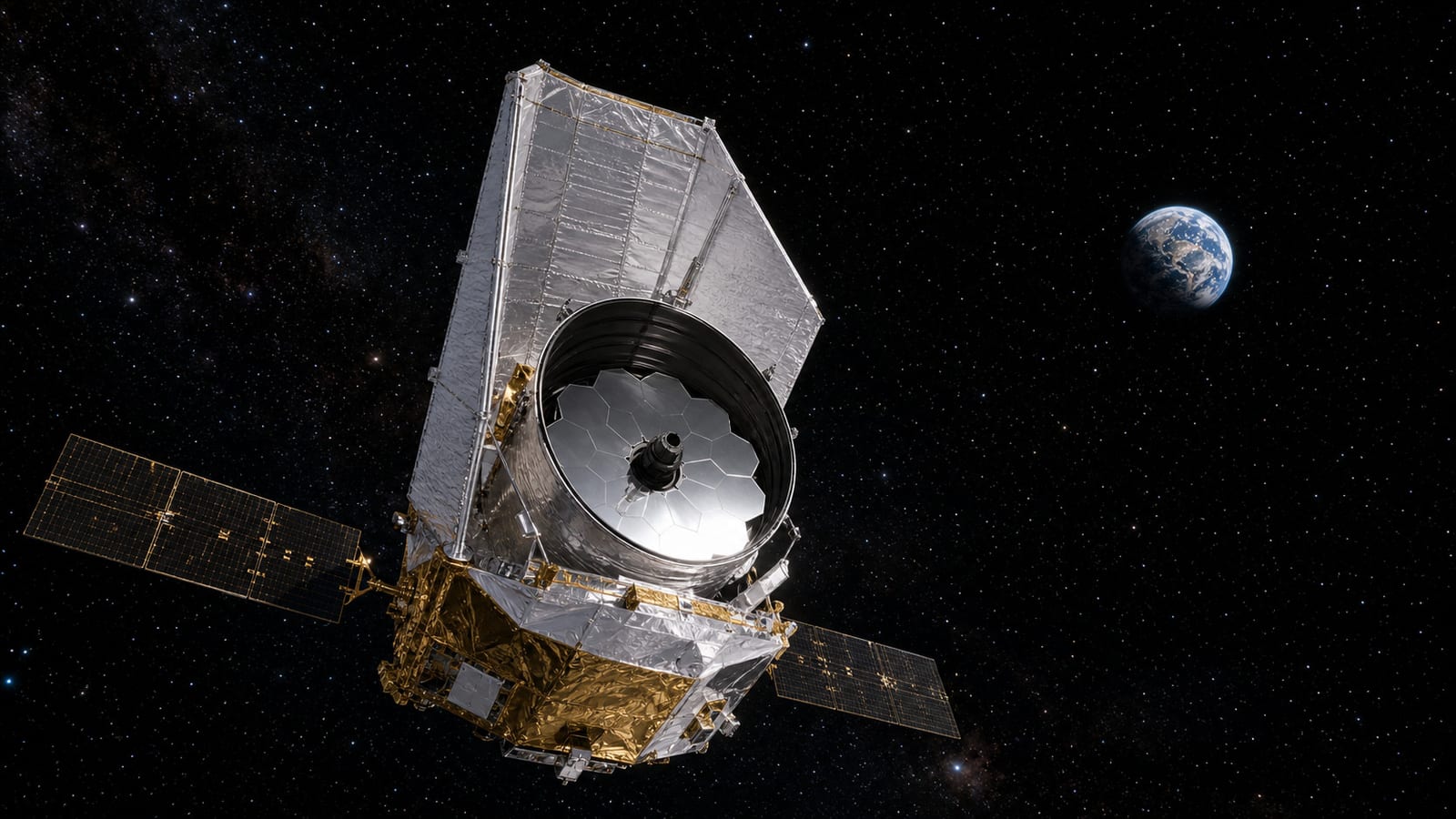
LIGO operates twin detectors in Hanford, Washington, and Livingston, Louisiana. Each is an L-shaped interferometer with arms 4 kilometers long. A laser beam is split and sent down both arms, bounced off mirrors at the ends, and recombined. When a gravitational wave passes through Earth, it stretches one arm slightly while compressing the other. The change is measured in the recombined laser light.
The effect is tiny. A typical gravitational wave from a distant black hole merger shifts the 4-kilometer arms by less than a ten-thousandth of the width of a proton. The detectors must isolate themselves from seismic noise, thermal vibrations, and quantum fluctuations to see anything at all. LIGO now detects dozens of events per observing run because engineers spent decades incrementally improving vibration isolation, mirror coatings, and laser stability.
Virgo, the European detector in Cascina, Italy, has arms 3 kilometers long and joined the network full-time during O4b. Its contribution is not just about having a third detector. Triangulation using three widely separated sites allows astronomers to pin down where in the sky the waves came from, turning a fuzzy band of probability into a narrow patch of sky that traditional telescopes can search.
KAGRA, the Japanese detector in the Kamioka mine, operates underground and uses cryogenically cooled mirrors to reduce thermal noise. It was commissioned during the O4 period and its data contributed to the GWTC-5.0 analysis.
The records
The new catalog is not just a bigger list. It contains several events that stand out even among 390.
The most precisely localized gravitational wave source ever
A signal detected on June 15, 2024, designated GW240615, was pinpointed to just 6 square degrees of sky, the smallest error box ever achieved for a gravitational wave source. The event was the merger of two black holes, one about 26 solar masses and the other about 30 solar masses, that collided more than 3 billion light-years from Earth.
This precision was possible because all three detectors, LIGO Livingston, LIGO Hanford, and Virgo, were active at the time. The time delay between their detections, measured in milliseconds, narrowed the source location dramatically. For astronomers searching for the electromagnetic counterpart of gravitational wave events, the difference between a localization area of hundreds of square degrees and an area of 6 square degrees is the difference between a needle in a haystack and a needle in a well-lit room.
The clearest signal ever recorded
On January 14, 2025, gravitational waves from a pair of nearly identical black holes 32 and 34 times the mass of the Sun reached Earth after traveling for more than a billion years. The signal had a signal-to-noise ratio of 76.9, the highest ever recorded. To put that in perspective, the first detection, GW150914, had a signal-to-noise ratio of 24. A ratio of 76.9 means the signal towers so clearly above the detector noise that its parameters can be measured with extraordinary precision.
This event, GW250114, was already flagged during the 10th anniversary celebrations of the first gravitational wave detection in January 2025, and its associated scientific results have been published separately.
Evidence for second-generation black holes
Two events in the catalog, GW241011 and GW241110, show properties that may be explained by black holes that are themselves the products of earlier black hole mergers. These second-generation black holes, predicted by theory but never confirmed, would form when two black holes merge in a dense star cluster and the resulting, larger black hole merges again with another black hole.
The evidence comes from spin measurements. If a black hole formed from a previous merger, its spin axis may be misaligned with its orbit around its next partner, producing a distinctive gravitational wave signature. The GWTC-5.0 team describes the evidence as suggestive but not conclusive. "We are seeing hints of events that may be from hierarchical mergers," the collaboration noted, cautioning that the interpretation requires more data to confirm.
A better ruler for the universe
One of the most significant results from the expanded catalog is not about individual events at all. It is about what all 390 events together can measure: the Hubble constant, the rate at which the universe is expanding today.
The Hubble constant is one of the most contested numbers in modern cosmology. Measurements based on the cosmic microwave background, the afterglow of the Big Bang, give one value (about 67 km/s/Mpc). Measurements based on the local distance ladder using supernovae and Cepheid variable stars give a different value (about 73 km/s/Mpc). The mismatch, known as the Hubble tension, has persisted for over a decade and may indicate new physics beyond the standard model of cosmology.
Gravitational waves offer a third, independent way to measure the expansion rate. When a neutron star merger is detected, both the gravitational wave signal and any electromagnetic flash it produces can be used to calculate the distance and the redshift separately, combining them to get H0. As the catalog grows, the statistical power of this method increases.
"Using a new set of gravitational-wave sources, we obtain an independent measurement of the Hubble constant with about 25 percent improved precision over previous results," said Hsin-Yu Chen from the University of Texas at Austin. "This significant advance highlights the growing power of gravitational-wave astronomy and brings us closer to resolving one of the biggest puzzles in modern cosmology."
The gravitational wave measurement does not yet settle the Hubble tension, but the improvement is substantial. With each new catalog release, the error bars shrink.
The catalog as a living document
GWTC-5.0 is cumulative. It supersedes all previous catalog versions and includes not just the 161 new O4b events but also refined measurements of previously announced events from earlier runs. The catalog now covers everything from O1, the first observing run starting in September 2015, through the end of O4b in January 2025.
The fourth observing run, O4, ran from May 2023 to January 2025, split into O4a and O4b with a commissioning break in between. GWTC-5.0 also includes an updated subset called GWTC-4.1, which contains improved search results and property estimates for events from O4a.
Data releases from the LVK Collaboration now feed more than 200 scientific papers per year. Annual Open Data Workshops train researchers around the world to work with gravitational wave data directly. The distance between a specialized physics laboratory and an astronomer with a laptop has never been smaller.
What happens next
The fourth observing run is finished. Its data produced roughly 390 total detections, and the O4 period contributed about three-quarters of them. The fifth observing run, O5, is expected to begin in 2028 or 2029 with further upgrades that should double or triple LIGO's sensitivity at certain frequencies. The planned Einstein Telescope, a next-generation underground facility in Europe, and Cosmic Explorer, a U.S. concept with 40-kilometer arms, would push the detection rate to hundreds of thousands of events per year.
For now, the field is where astronomy was when the first sky surveys began mapping the stars: still in the counting phase, still building the reference catalog that future discoveries will depend on. The difference is that instead of 390 stars, gravitational wave astronomy now has 390 black holes and neutron stars, mapped not by the light they emit but by the ripples they leave in spacetime.
Each one is a data point. Together, they tell a story that goes back to the first stars.
Related on Impossible Universe
- A Dying Star Could Create a Tiny New Universe Instead of a Black Hole - gravitational collapse and what happens when theory meets Einstein's equations
- A Star in Andromeda Vanished Without a Trace. A Black Hole May Have Swallowed It Whole. - what happens when stars meet black holes, observed across the spectrum
- A Near-Invisible Black Hole 6 Billion Times the Sun Mass Was Hiding 10 Billion Light-Years Away - weighing black holes with stellar dynamics, a complementary technique to gravitational wave astronomy
- The Greatest Cosmic Movie Ever Made. Rubin Observatory Just Started Filming the Southern Sky for 10 Years. - the electromagnetic counterpart to gravitational wave discoveries
- After 20 Years of Searching, Astronomers Found a Black Hole Hiding in Omega Centauri - a stellar-mass black hole found through astrometry in a globular cluster
- Topic hub: All black hole stories on Impossible Universe