Deep Sea: Exploring the Ocean's Last Frontier
More than 80 percent of the ocean remains unmapped and unexplored. Every expedition that lowers a camera or a submersible into the deep returns with something unexpected: a shark that looks like it swam out of the Jurassic, a golden orb that turns out to be an unknown species, a walking shark that crawls on four fins. Impossible Universe's deep-sea collection follows the ROV dives, the laser scans, and the genetic sequencers that are revealing what lives in the planet's largest habitat. Use the links below to jump to a specific angle, or scroll through the full collection.
First-ever footage
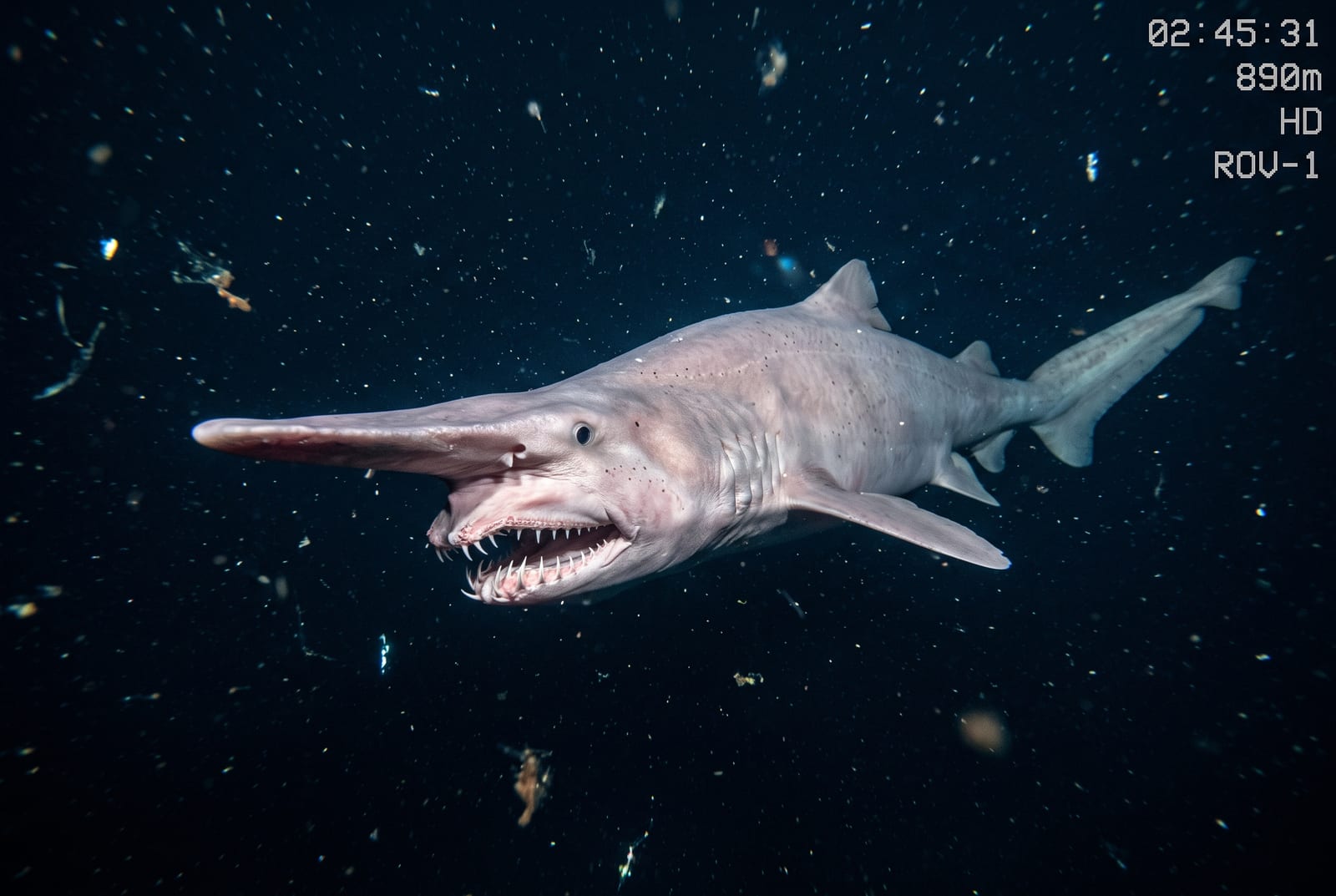
Some deep-sea animals have been known to science for more than a century, but only through dead specimens hauled up by fishing gear or washed ashore. Modern ROV technology is changing that. In 2026, a team using the Nautilus Live ROV filmed two healthy goblin sharks swimming at depth for the first time, setting a depth record for their entire group and expanding the known range of a 125-million-year-old species across the Pacific. It was the kind of discovery that would have been impossible even a decade ago.
New species discoveries
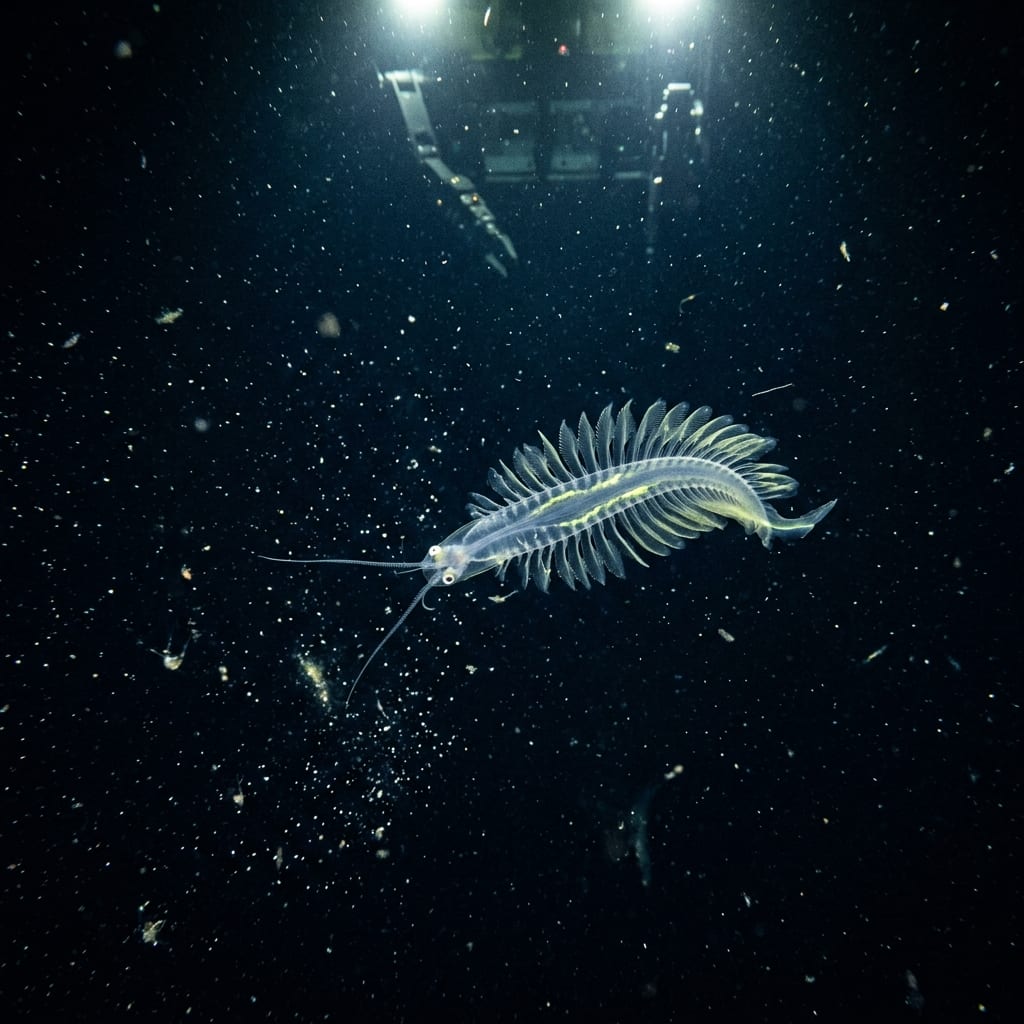
The deep ocean keeps yielding animals that have never been described. A 14-day expedition off Brazil using a deep-sea laser imaging system and onboard genetic sequencing identified 31 new species in the midwater alone, from glowing jellyfish to gossamer worms. Off Papua New Guinea, a tenth species of walking shark was confirmed, named Hemiscyllium dudgeonae, after decades of speculation. And in the Galapagos, a golf-ball-sized blue octopus spotted in 2015 finally received a formal description as Microeledone galapagensis. Each new species adds a piece to the puzzle of how life adapts to the most extreme conditions on Earth.
In Two Weeks Off Brazil, Scientists Identified 31 New Deep-Sea Species
An international team aboard Schmidt Ocean Institute research vessel Falkor (too) spent 14 days exploring the midwater off Brazil and identified 31 previously unknown species, from glowing jellyfish to gossamer worms, using laser imaging and onboard genetic sequencing.
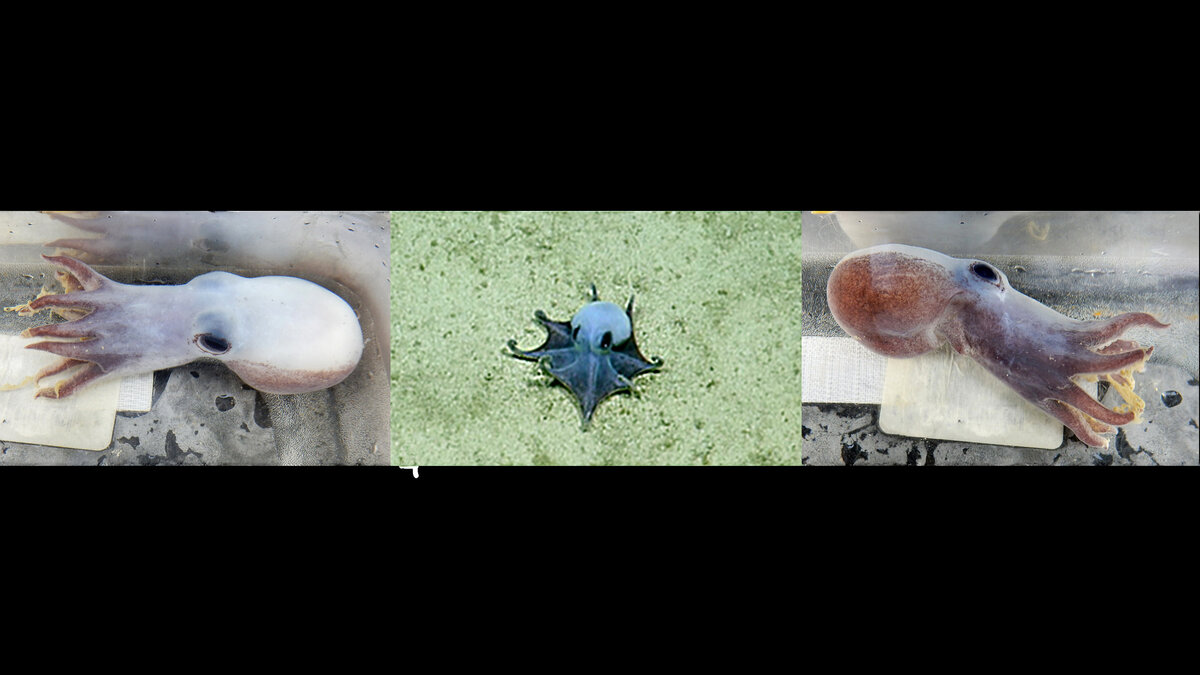
A Golf-Ball-Sized Blue Octopus From 6,000 Feet Down Is New to Science
In 2015, researchers aboard the E/V Nautilus spotted a tiny blue octopus near Darwin Island. Eleven years later, it has a name: Microeledone galapagensis.
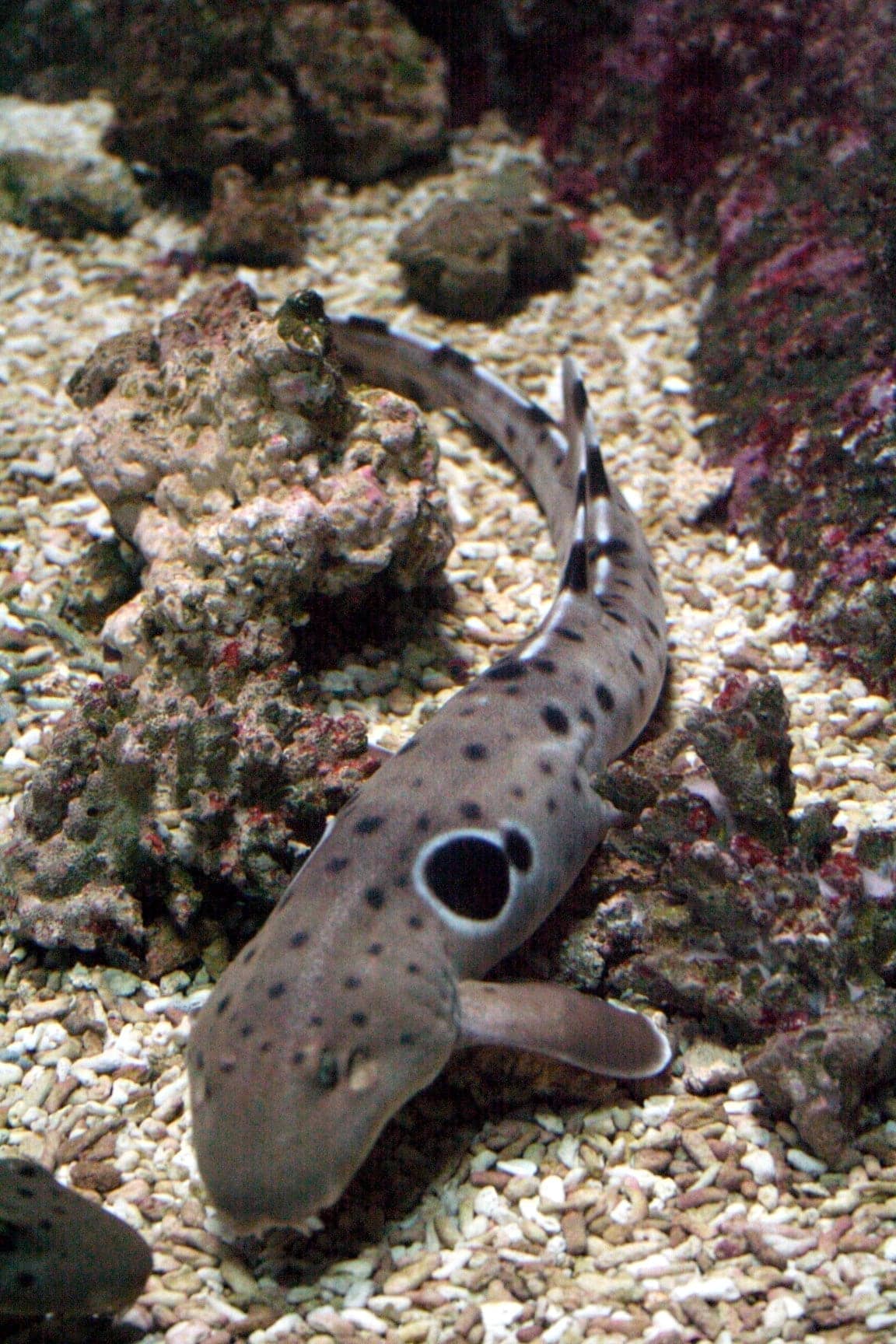
This Shark Walks on Four Fins. Scientists Just Found a New One.
Marine biologists surveying the waters of eastern Papua New Guinea have identified a tenth species of walking shark. Hemiscyllium dudgeonae uses its fins to crawl across the seafloor, and like its cousins, its tiny home range makes it vulnerable to extinction before most people even learn its name.
Mysteries solved
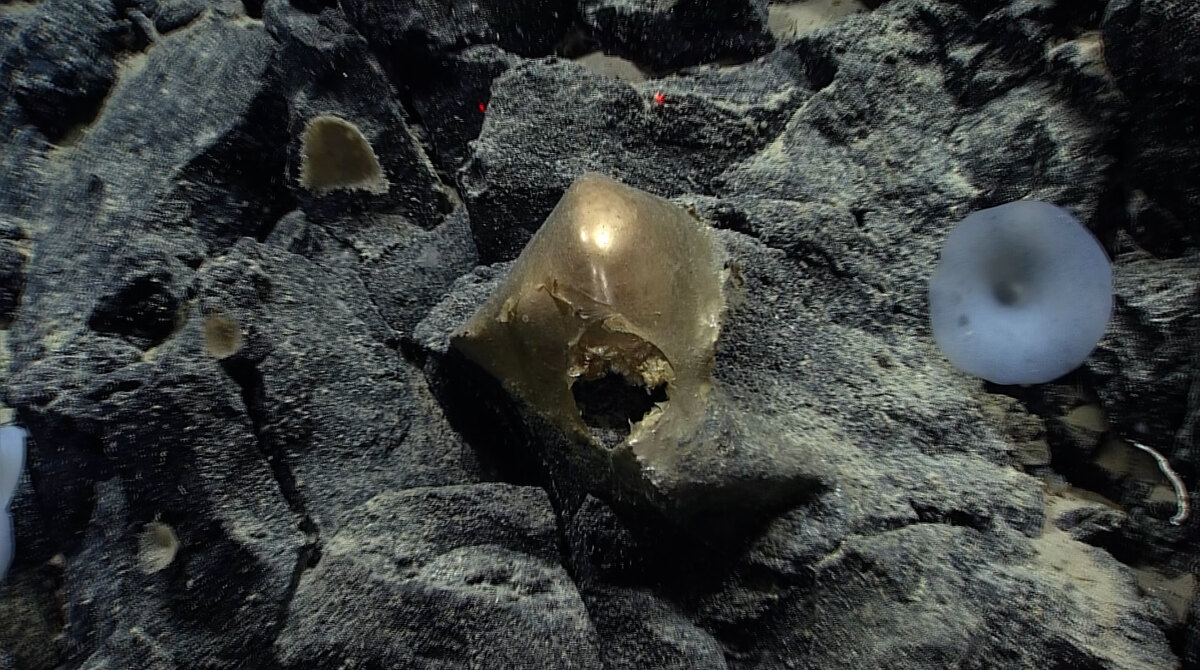
Not everything in the deep sea is a new species. Sometimes the strangest objects turn out to be something already known, just seen in a new way. In 2023, a NOAA expedition near Alaska recovered a shiny golden orb from more than 3,000 meters depth that sparked months of speculation online and in the press. DNA analysis and CT scans eventually identified it as a rare deep-sea anemone, solving one of the most visually striking marine mysteries in recent years.