AI Found 118 Hidden Planets in NASA TESS Data. The Neptunian Desert Just Got Its First Head Count.
Using a new AI pipeline called RAVEN trained on realistic simulations, astronomers at the University of Warwick validated 118 new exoplanets from 2.2 million stars observed by NASA TESS mission. The haul includes ultra-short-period planets that orbit in under 24 hours and the first direct measurement of how rare Neptunian desert planets really are.
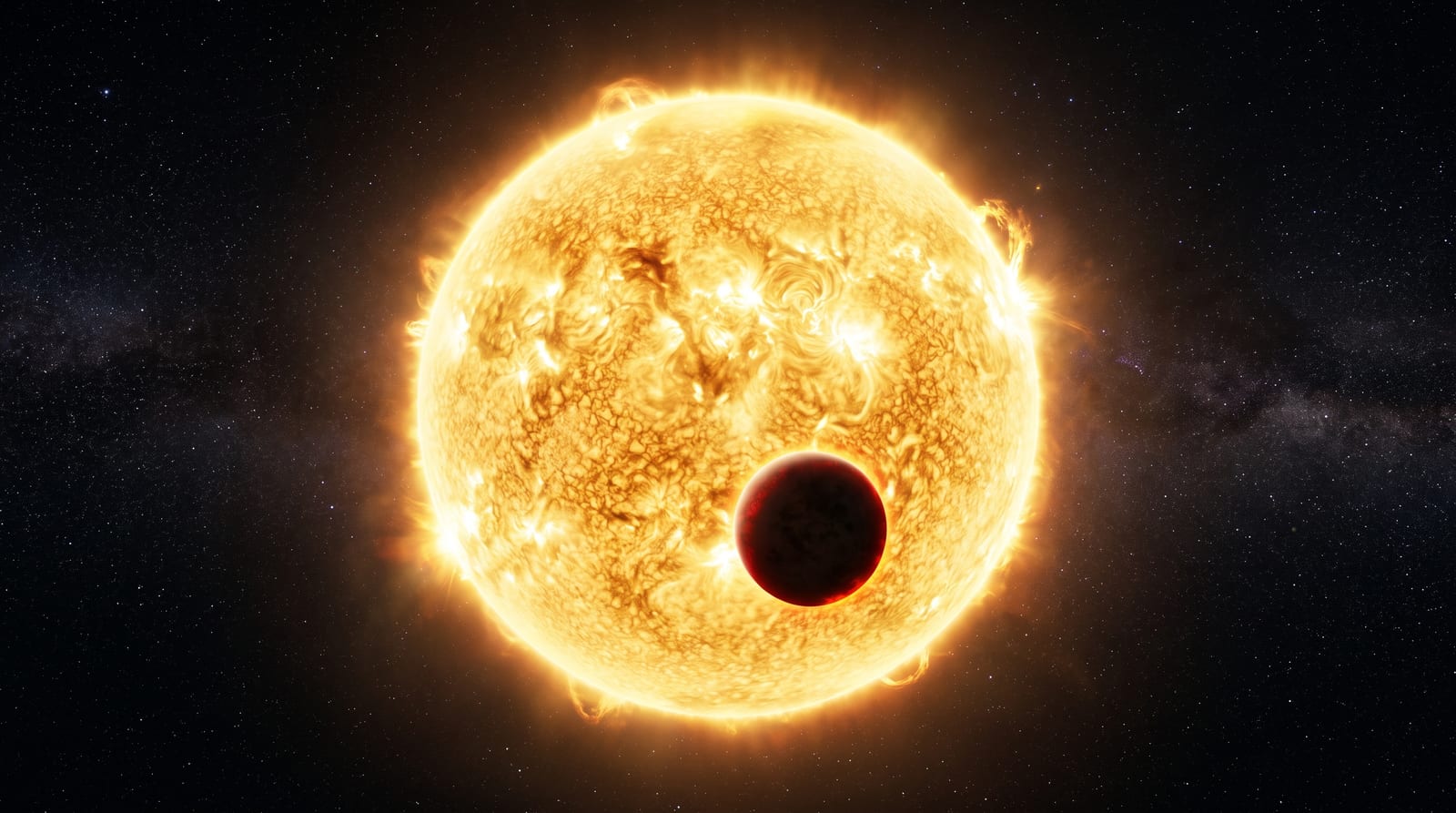
In the spring of 2026, a team of astronomers at the University of Warwick published something unusual: not a single planet discovery, but a pipeline. They called it RAVEN. It is an artificial intelligence system trained on hundreds of thousands of simulated planets, and it was designed to solve one of the hardest problems in modern astronomy.
The problem is not finding planets. It is confirming them.
NASA's TESS mission has identified tens of thousands of candidate exoplanets by watching for the tiny dips in starlight that occur when a planet crosses in front of its star. But most of those candidates are not planets. They are eclipsing binary stars, instrument noise, or other astrophysical signals that happen to look like a transit. Sorting the real planets from the impostors is a labor-intensive process that requires expert vetting, follow-up observations, and statistical validation.
RAVEN, which stands for RAnking and Validation of ExoplaNets, automates the entire pipeline. It scans TESS light curves for transit signals, uses a machine learning model trained on realistic simulations to separate planets from false positives, and statistically validates the best candidates. In its first application to 2.2 million stars from TESS's first four years, it validated 118 new planets, 31 of which had never been detected before. It also flagged over 2,000 high-quality candidates for follow-up, nearly 1,000 of them entirely new.
"Using our newly developed RAVEN pipeline, we were able to validate 118 new planets, and over 2,000 high-quality planet candidates," said Dr. Marina Lafarga Magro, a postdoctoral researcher at Warwick and lead author of the validation study. "This represents one of the best characterized samples of close-in planets and will help us identify the most promising systems for future study."
The Neptunian desert measured for the first time
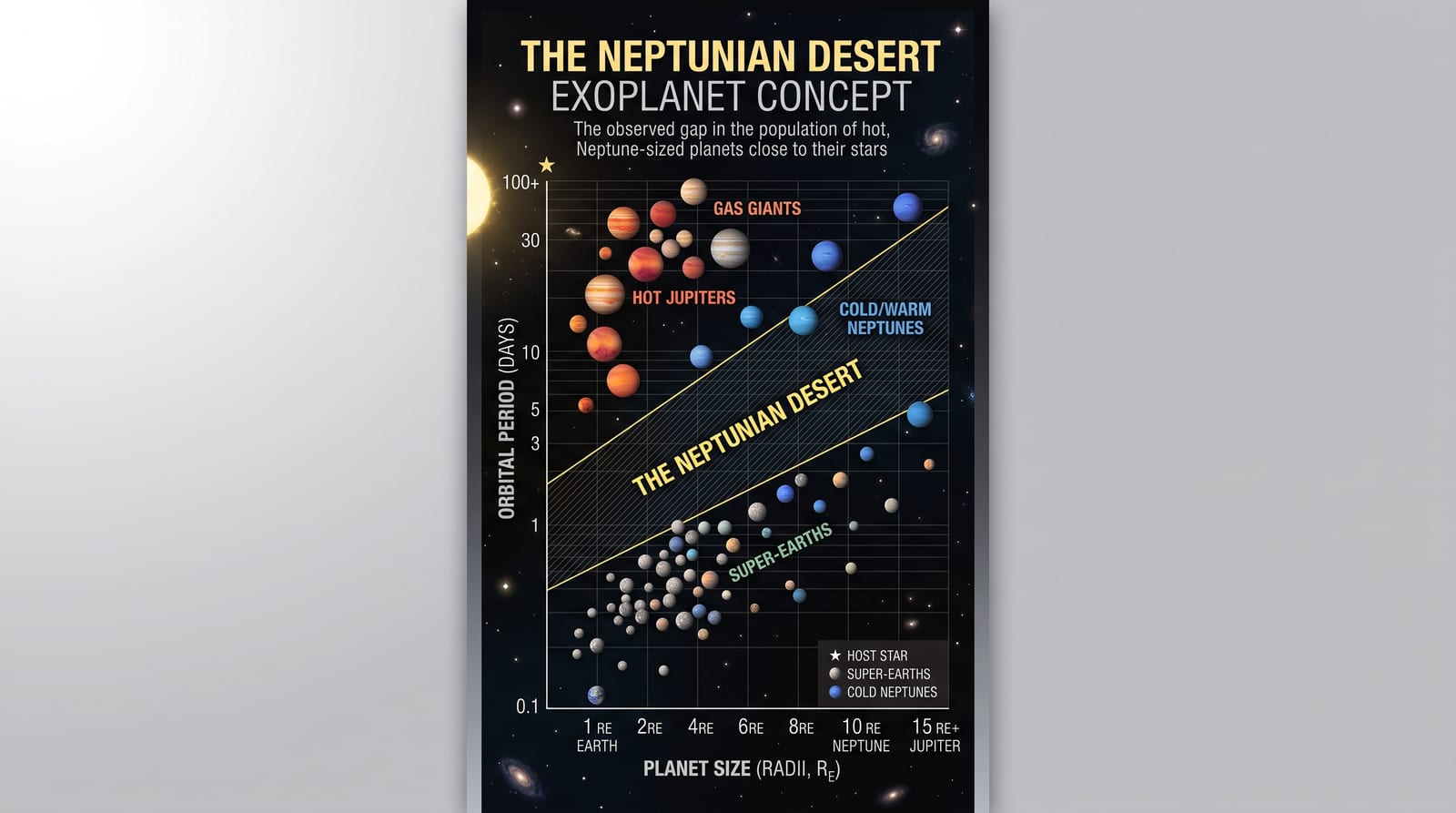
The new planets included several rare types, including ultra-short-period worlds that orbit their stars in less than 24 hours and planets sitting in a region called the Neptunian desert. The desert is a zone very close to stars where Neptune-sized planets are almost never found. Theory says planets this close should not be large enough to hold onto their atmospheres, yet some survive. Until now, no one had measured how rare they actually are.
In a companion study also published in MNRAS, the team made the first direct measurement. Neptunian desert planets appear around just 0.08 percent of Sun-like stars.
"For the first time, we can put a precise number on just how empty this desert is," said Dr. Kaiming Cui, a postdoctoral researcher at Warwick and lead author of the population study. "These measurements show that TESS can now match, and in some cases surpass, Kepler for studying planetary populations."
How to train an AI planet hunter
What makes RAVEN different from previous automated vetting tools is the quality of its training data. The team created hundreds of thousands of realistic simulations of planetary transits, eclipsing binary signals, and other astrophysical events that can look like transits. They trained the machine learning model on these simulations, teaching it to recognize the subtle differences between a real planet and an impostor.
"The challenge lies in identifying if the dimming is indeed caused by a planet in orbit around the star or by something else, like eclipsing binary stars, which is what RAVEN tries to answer," said Dr. Andreas Hadjigeorghiou, who led the pipeline's development. "Its strength stems from our carefully created dataset of hundreds of thousands of realistically simulated planets and other astrophysical events that can masquerade as planets."
RAVEN is also designed to handle the entire workflow in one pass, from signal detection to statistical validation. Most existing tools handle only part of the pipeline. By integrating everything into a single system, RAVEN eliminates handoffs between tools and reduces the risk of errors propagating through the chain.
A population map with ten times less uncertainty
With 118 newly validated planets to work with, the team could move beyond individual discoveries and study the population as a whole. They found that roughly 9 to 10 percent of Sun-like stars host a planet orbiting within 16 days. That number aligns with what NASA's Kepler mission found a decade ago. But RAVEN's measurement has uncertainties up to ten times smaller.
The improvement matters because it allows astronomers to test planet formation models with much sharper precision. The frequency of planets at different sizes and orbital periods is a direct constraint on how planetary systems form and evolve. A model that predicts the right number of planets but the wrong distribution in orbital period or size can be ruled out with data this precise.
"RAVEN allows us to analyze enormous datasets consistently and objectively," said Dr. David Armstrong, associate professor at Warwick and senior co-author on both studies. "Because the pipeline is well-tested and carefully validated, this is not just a list of potential planets. It is also reliable enough to use as a sample to map the prevalence of distinct types of planets around Sun-like stars."
Beyond TESS: RAVEN's next targets
The team has released interactive catalogs and tools so other researchers can explore the results and identify promising targets for follow-up. The next step may be even bigger: the team is already discussing applying RAVEN to ESA's PLATO mission, scheduled to launch in late 2026.
PLATO is designed specifically to find Earth-sized planets in the habitable zones of Sun-like stars. Its expected data volume will dwarf TESS's output. An automated pipeline like RAVEN, capable of processing millions of light curves consistently, will be essential to handling the flood of data.
"Together, these studies demonstrate how large astronomical data and new AI developments go hand in hand," the team wrote. RAVEN generates new discoveries while stress-testing machine learning on difficult real-world problems. The planets it found are the immediate result. The method itself may be the longer-term contribution.
Sources
- AI Approach Uncovers Dozens of Hidden Planets in TESS Data (University of Warwick, March 2026) - press release with quotes from Lafarga Magro, Hadjigeorghiou, Cui, and Armstrong
- Automatic Search for Transiting Planets in TESS-SPOC FFIs with RAVEN: Over 100 Newly Validated Planets and Over 2000 Vetted Candidates (MNRAS, 2026) - Lafarga Magro et al., the primary RAVEN validation paper
- Demographics of Close-In TESS Exoplanets Orbiting FGK Main-Sequence Stars (MNRAS, 2026) - Cui et al., the population study measuring planet occurrence rates
- RAVEN: RAnking and Validation of ExoplaNets (arXiv, September 2025) - Hadjigeorghiou et al., the technical paper describing the RAVEN pipeline architecture
- NASA TESS Mission Overview - mission design, survey strategy, and discovery statistics for the Transiting Exoplanet Survey Satellite
- Powerful AI Finds 100+ Hidden Planets in NASA Data (ScienceDaily, May 2026) - summary of the twin MNRAS publications with additional context on the Neptunian desert measurement
Related on Impossible Universe
- JWST Caught an Ultra-Hot Jupiter Getting Roasted. The Temperature Spike Was Worse Than Expected. - JWST watches a planet's atmosphere flash-heat during its extreme 111-day orbit
- JWST Saw Dawn and Dusk on a Hellish Exoplanet. The Two Faces Could Not Be More Different. - JWST reveals dramatic temperature and chemical differences between the two faces of an ultra-hot Jupiter
- JWST Found Salt Clouds on the Pink Planet. After a Decade, We Finally Know What's in Its Sky. - atmospheric detection on a planet that had resisted ground-based study for a decade
- Jupiter-Sized Planets Lighter Than Cotton Candy: The Puffiest Worlds Ever Found - two gas giants with densities lower than cotton candy challenge planet formation models
- The Greatest Cosmic Movie Ever Made. Rubin Observatory Just Started Its 10-Year Survey of the Sky. - how automated surveys and AI are transforming astronomy across the board
Hero image: Generated illustration for Impossible Universe. Ultra-short-period planet artist concept: NASA, ESA, and A. Schaller (for STScI). Both papers published in Monthly Notices of the Royal Astronomical Society (MNRAS). The RAVEN pipeline is open for community use and has been made available alongside interactive catalogs for follow-up targeting.