Sun and Solar Physics: The Star We Live With
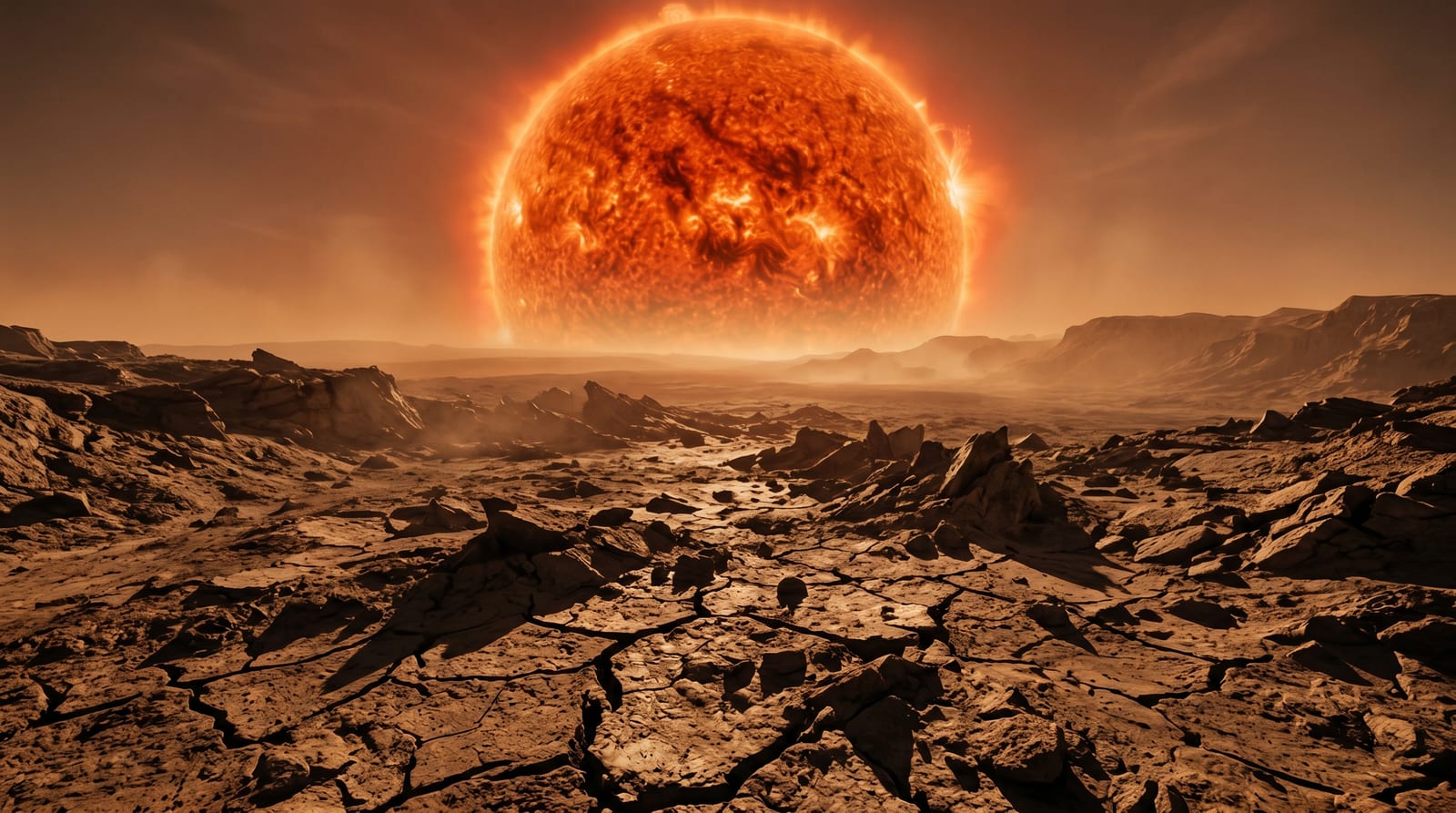
The Sun is the only star we can study up close, and the only one whose tantrums reach us directly. Its surface has now been photographed at resolutions that reveal whirlpools tens of kilometers across. A spacecraft flies through its outer atmosphere at hundreds of thousands of miles per hour. Its 11-year activity cycle can be predicted years in advance from a single switch-off moment. And in roughly 5 billion years, it will swell into a red giant. This collection follows the star from its visible surface to the edge of its future. Use the links below to jump to a specific angle, or scroll through the full collection.
The sharpest look at the surface
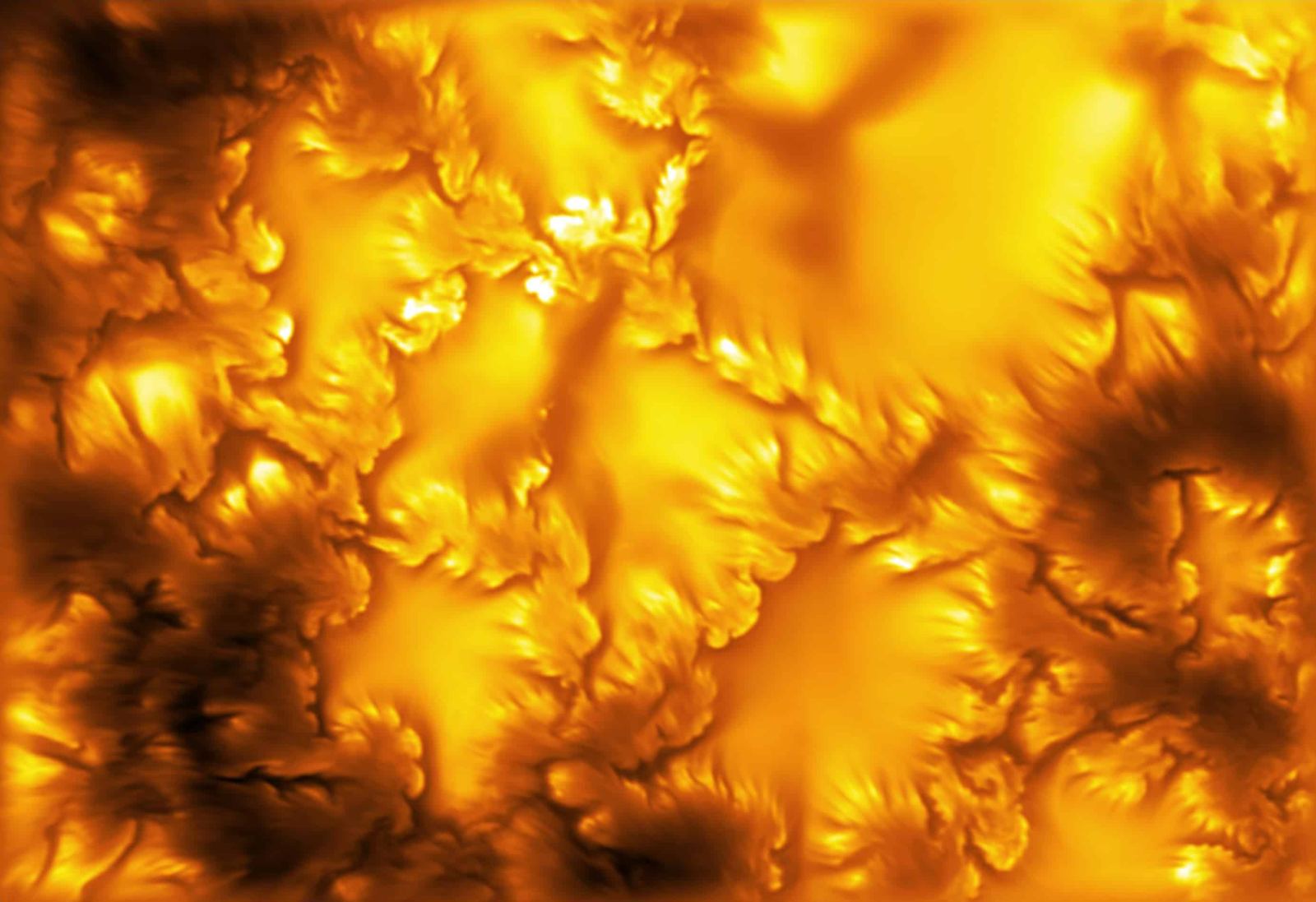
The Daniel K. Inouye Solar Telescope on Haleakalā, Maui, produced the highest-resolution images of the Sun's surface ever captured, and they show something never seen there before: small, swirling, whirlpool-like vortices at the edges of magnetic structures, each only tens of kilometers across. They are Kelvin-Helmholtz instabilities, the same fluid physics that curls breaking ocean waves, caught for the first time in the solar photosphere. The vortices could help explain the oldest puzzle in solar physics: why the corona is millions of degrees hotter than the surface beneath it, and how the Sun stores the magnetic energy behind flares and coronal mass ejections.
Touching the corona
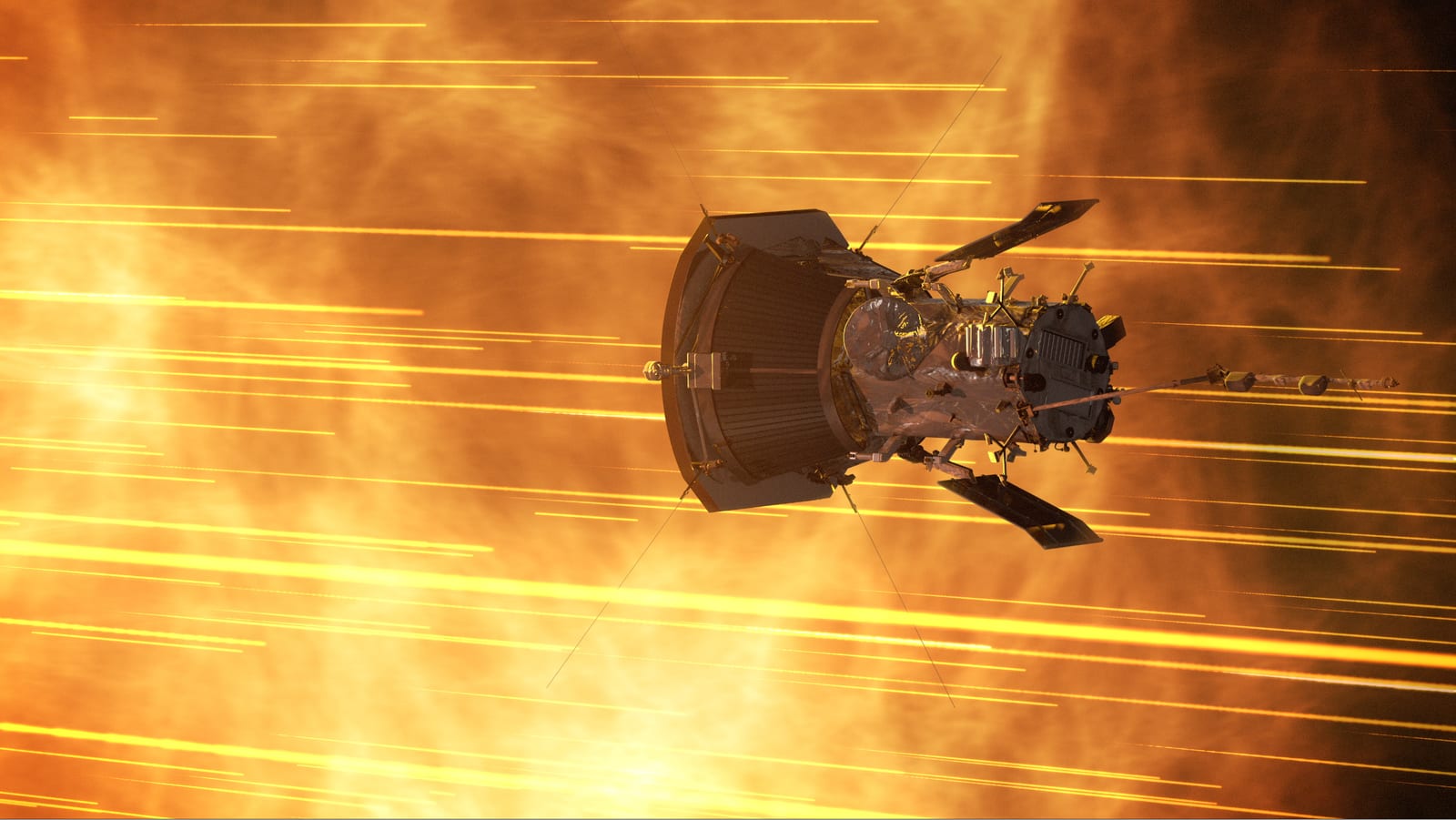
The sharpest images are one way to study the Sun. Flying through it is another. Parker Solar Probe, the fastest object ever built, has now made 28 close passes through the corona, matching its own records in June 2026: 3.8 million miles from the solar surface at 430,000 mph, with its heat shield at an estimated 1,700 degrees Fahrenheit. The mission samples the solar wind and magnetic structures directly, where the vortices seen from the ground may feed their energy, and its observations track the same 11-year cycle that shapes space weather at Earth.
The cycle and space weather
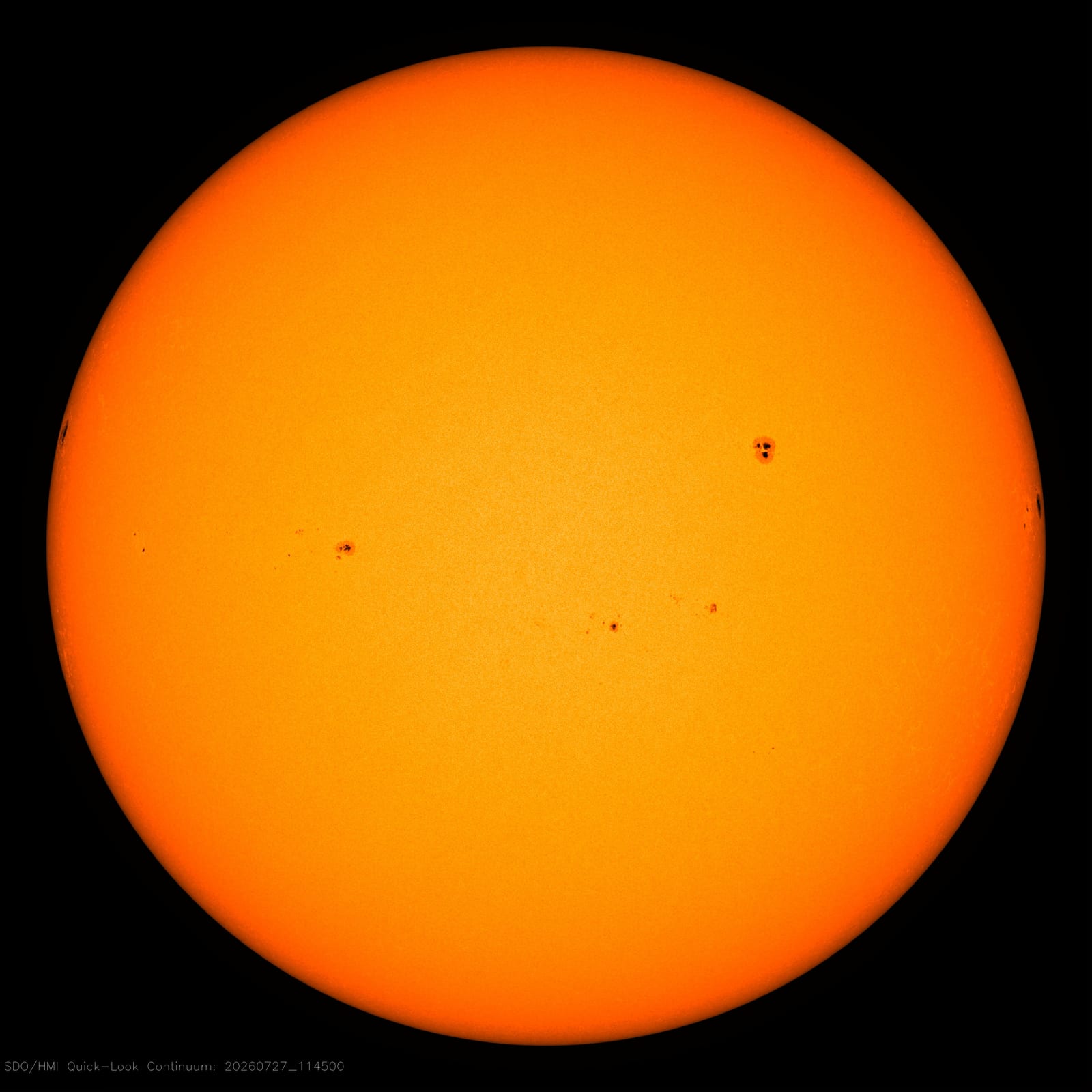
The Sun's magnetic activity rises and falls on an 11-year cycle, and its most extreme space weather does not fade away gradually. Researchers at the University of Warwick found that it switches off suddenly at a specific point in every cycle, and that the number of sunspots at that moment predicts how active the next cycle will be up to seven years before it peaks. The result, presented at the Royal Astronomical Society's National Astronomy Meeting in 2026, gives forecasters a way to anticipate the geomagnetic storms that can disrupt power grids, satellites, and GPS.
The far future
For decades, astronomers assumed Earth would be swallowed when the Sun becomes a red giant in about 5 billion years. A new model using improved tidal physics, and observations of a nearby star, suggests our planet might escape by drifting outward as the aging Sun sheds mass. The question of Earth's ultimate fate is one of the few solar stories that plays out on timescales far beyond any cycle, and it connects the physics of stellar interiors to the planet under our feet.